What are the key points of Angelica sinensis cultivation and management techniques?
How do you manage Angelica sinensis during cultivation? For detailed guidance on cultivating Angelica sinensis, you can refer to the following methods for management: 1. Thinning and final thinning of seedlings When the seedlings are 3 cm tall, carry out the first thinning, and after another half month carry out the second thinning. When the seedlings are 10 cm tall, carry out final thinning. For dibble seeding, keep 2-3 strong seedlings per hole. 2. Intertillage and weeding Angelica sinensis 1...
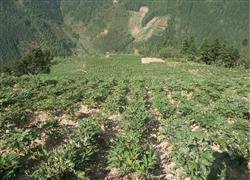
How do you manage Angelica sinensis during cultivation? Please provide detailed guidance.
For cultivating Angelica sinensis, you can refer to the following methods for management:
1. Thinning and final thinning of seedlings When the seedlings are 3 cm tall, carry out the first thinning, and after another half month carry out the second thinning. When the seedlings are 10 cm tall, carry out final thinning. For dibble seeding, keep 2-3 strong seedlings per hole. 2. Intertillage and weeding Angelica sinensis
1. Thinning and final thinning of seedlings When the seedlings are 3 cm tall, carry out the first thinning, and after another half month carry out the second thinning. When the seedlings are 10 cm tall, carry out final thinning. For dibble seeding, keep 2-3 strong seedlings per hole.
2. Intertillage and weeding Angelica sinensis grows slowly at the early stage of emergence, while weeds grow rapidly, so weeding should be carried out promptly. From emergence to row closure, weeding should be done in stages 3-4 times. The first weeding is carried out when the seedlings are about 5 cm tall, the second after final thinning, and the third when the seedlings are 20-25 cm tall, that is, before row closure. Combine weeding with loosening the soil to prevent soil compaction, improve aeration, moisture and temperature conditions, and promote root development. Weeding should follow the principle of "deep in the middle, shallow at both ends," that is, when the seedlings are young and after the Start of Autumn, deep hoeing is not suitable. This is because after the Start of Autumn the root system of Angelica sinensis is mostly enlarged and rich in sugars, and once damaged it easily causes root rot. At this time, if there are weeds, they should be pulled out promptly.
3. Topdressing Angelica sinensis has a relatively high fertilizer requirement throughout its life. In addition to applying sufficient base fertilizer, it should also be topdressed in a timely manner. The suitable time for topdressing is in late June during the peak leaf growth period and in August during the root growth period; these are the two peak periods of fertilizer demand. The amount of topdressing should be greater during the root growth period than during the leaf growth period and the greening period. Usually potassium dihydrogen phosphate, diammonium phosphate and nitrogen-phosphorus-potassium compound fertilizer are used for topdressing.
4. Drainage and irrigation In the early growth stage, except for appropriate watering during drought, watering is generally controlled. If there is excessive rain, ditches should be dredged promptly for drainage, especially in the late growth stage; the field must not accumulate water, otherwise root rot is easily caused.
5. Hilling When Angelica sinensis grows to the middle and late stages (after August), the root system begins to develop and grows rapidly. Hilling at this time can promote the development of the roots, help increase yield and quality, and can be combined with loosening the soil.
Click to get more Angelica sinensis cultivation techniques
Click to get more medicinal herb cultivation techniques