What precautions should be taken when growing Angelica sinensis with plastic film mulching?
What should be noted when growing Angelica sinensis with plastic film mulching? Please introduce Angelica sinensis, of the Apiaceae family, a perennial herb with a fleshy root. Its leaves are several times pinnately compound. It flowers in summer, with white flowers in compound umbels. The fruit is oblong-elliptical, with broad wings on the lateral ribs. It is produced in Gansu, Shaanxi, Sichuan, Hubei, Yunnan, Guizhou and other provinces of China. In...
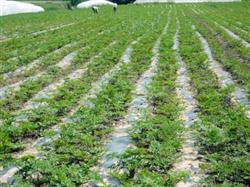
What should be noted when growing Angelica sinensis with plastic film mulching? Please introduce
Angelica sinensis, of the Apiaceae family, is a perennial herb with a fleshy root. Its leaves are several times pinnately compound. It flowers in summer, with white flowers in compound umbels. The fruit is oblong-elliptical, with broad wings on the lateral ribs. It is produced in Gansu, Shaanxi, Sichuan, Hubei, Yunnan, Guizhou and other provinces of China. In traditional Chinese medicine, the root is used as medicine; it is warm in nature and sweet, bitter and pungent in taste, with the functions of enriching the blood and invigorating the body, regulating menstruation and relieving pain, and is mainly used to treat blood deficiency, irregular menstruation, dysmenorrhea, amenorrhea, rheumatic arthralgia, traumatic injuries, carbuncles and sores, etc. The root contains volatile oil and other components; the volatile oil can calm and regulate the activity of the uterus. The water-soluble components of Angelica sinensis have an excitatory effect on the uterus as well as an analgesic effect.
The cultivation technique of plastic film mulching for Angelica sinensis is an effective measure for achieving "two highs and one excellent" in Angelica sinensis production. Using plastic film mulching and its supporting techniques for Angelica sinensis can achieve obvious effects of increasing yield and income.
1. Choose a good previous crop field. Choose fertile, loose, deep soil with relatively high organic matter content on shady terraced fields. A wheat stubble field is best, and continuous cropping should be avoided. Deeply plow and turn the previous crop field; before sowing, combine with plowing, apply fertilizer and ridge.
2. Apply sufficient base fertilizer. Apply 5000 kg of farmyard manure per mu, 10-100 kg of oil residue, and apply deeply in a concentrated way before sowing in combination with plowing and turning. Apply 20-50 kg of diammonium phosphate and 10-15 kg of ammonium nitrate per mu as chemical fertilizer, applied in a concentrated way into the ridges in combination with ridging.
3. Ridge and cover with film. Choose ultra-thin film or strong micro-film 70-80 cm wide and 0.008 cm or 0.005 cm thick, with a dosage of 3-5 kg per mu. The ridge surface is required to be 60 cm wide, the ridge spacing 40 cm, and the ridge height 10 cm, and it should be straight, flat and smooth. Cover with film immediately after ridging, and the film covering should be stretched, firm and tight.
4. Plant in time. One day before planting, after shaking off the soil from the selected superior seedlings, use 1.5 kg of Angelica root preservative per mu to dip the roots, letting the liquid coat the seedlings, and plant after drying; or use 5 kg of ethoprophos granules per mu mixed with 50-60 kg of fine sand and scatter it on top of the seedlings at transplanting. Plant 2 rows per ridge, with a row spacing of 40 cm and a plant spacing of about 25 cm, keeping about 5000 seedlings per mu. When planting, use a hole punch to make holes on the ridge, with the holes staggered in a triangular pattern, then move the Angelica seedlings into the holes, planting two seedlings per hole, with the top bud of the seedling head 2-3 cm from the plastic film, firm the soil and seal the opening tightly.
5. Release the seedlings in time. About 10 days after transplanting, use an iron nail to break up the hard soil layer on top of the seedlings in the early morning, then sprinkle a little fine soil on top of the seedlings to prevent the sun from burning the young buds.
6. Field management. (1) Check seedlings, fill gaps and thin seedlings in time, leaving one healthy seedling per hole. (2) Hoe weeds in the furrows frequently, and remove weeds under the film in time. (3) Use 50 g of potassium dihydrogen phosphate per mu; when the seedlings are weak and show signs of nutrient deficiency, add 0.5 kg of urea, mix with 45 kg of water, and spray once every 7 days for a total of 2-3 sprays. (4) Angelica sinensis under plastic film mulching should be harvested appropriately late around Frost's Descent.
Click to get more Angelica sinensis cultivation techniques
Click to get more medicinal herb cultivation techniques