Ginger Cultivation Techniques: What Is Yellow Ginger Stem Base Rot?
What is yellow ginger stem base rot? Here is an introduction and control methods. Damage characteristics of yellow ginger stem base rot: Yellow ginger stem base rot is a fungal disease caused by Fusarium. The fungus survives saprophytically in the soil for long periods, spreads through water flow and cultivation, and invades through root and stem wounds or directly through cracks at branching points and openings at the stem base of aging seedlings...
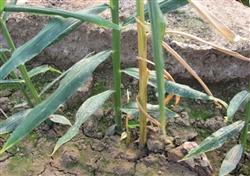
What is yellow ginger stem base rot? Here is an introduction and control methods
Damage characteristics of yellow ginger stem base rot:
Yellow ginger stem base rot is a fungal disease caused by Fusarium. The fungus survives saprophytically in the soil for long periods, spreads through water flow and cultivation, and invades through root and stem wounds or directly through cracks at branching points and openings at the stem base of aging seedlings. During the growing period, fields with frequent rain, high humidity, high temperatures, extensive management and poor ventilation suffer severe disease. In the early stage of the disease, water-soaked lesions of varying sizes appear on the stems near the soil surface, then gradually expand; in the later stage the lesions encircle the stem base completely, the subcutaneous tissue becomes loose and black, and gradually rots; the aboveground stems and leaves turn black, and the stems wither and die, but the leaves do not fall.
(1) In terms of cultivation methods: plots where yellow ginger has been grown as a single crop for a long time suffer severe disease, and vice versa. Second, paddy fields and flat dam land suffer severe disease, while sloping land suffers mild disease. Third, ridge cultivation with trellising suffers mild disease, while flat planting and planting without trellising suffer severe disease.
(2) Plots with rational application of phosphorus and potassium fertilizers and microelement fertilizers such as boron and zinc suffer mild disease.
(3) Yellow ginger is drought-tolerant, fertilizer-tolerant, and afraid of water and waterlogging; therefore, under conditions of high temperature and high humidity, poor ventilation and stagnant moisture, the disease is severe, and vice versa.
Integrated control measures for yellow ginger stem base rot:
In view of the occurrence characteristics of yellow ginger stem base rot, the principle of giving priority to agricultural technical measures and supplementing them with chemical control is adopted. By selecting disease-resistant varieties, applying fertilizer rationally, rotating crops, using high-ridge cultivation, trellis cultivation and supplementary chemical control, yellow ginger stem base rot can be effectively controlled.
(1) Select disease- and insect-free, non-rotted seed tubers to ensure full and vigorous seedlings. When sowing, for every 100 kg of seed, use 200 g of carbendazim, add 100 kg of water, soak the seed for 4-5 minutes, and sow after drying.
(2) In plots with severe disease occurrence, when preparing the land, apply per mu 1-1.5 kg of 70% thiophanate-methyl, 50% carbendazim, 50% dexon or thiram mixed with 30 kg of fine soil and broadcast it into the soil. Applying lime to disinfect acidic soil can prevent soil-borne diseases.
(3) Adopt crop rotation with gramineous crops for more than 2 years.
(4) Apply decomposed farmyard manure to increase soil organic matter and improve the soil, apply heavy phosphorus and potassium fertilizers, and apply boron and zinc fertilizers appropriately to enhance plant disease resistance. Generally apply per mu 1500-2000 kg of farmyard manure, 50 kg of phosphate fertilizer, 25 kg of potash fertilizer or 75-100 kg of special fertilizer for yellow ginger, mainly as base fertilizer.
(5) Use ridge cultivation with trellising to improve soil aeration and promote underground stem growth. Make ridges 1 m wide and 20 cm high; after the seedlings reach 30 cm in height, build an "A"-shaped trellis with 4 bamboo poles per sq m to promote ventilation, light penetration and moisture flow, promote leaf photosynthesis, and prevent and control disease.
(6) Apply chemical control in good time. In the early stage of the disease, use 75% chlorothalonil 1000-fold solution, 50% carbendazim, 50% thiophanate-methyl and 86.2% copper hydroxide 500-800-fold solution, and drench the roots at the diseased parts, 50-100 ml per plant, once every 10 days, twice in succession.
Click to get more ginger cultivation techniques
Click to get more vegetable cultivation techniques