What is ginger bacterial wilt? A detailed guide to ginger cultivation techniques
What is ginger bacterial wilt? Please provide a detailed introduction. Ginger bacterial wilt is a bacterial disease caused by Pseudomonas solanacearum. Once this disease occurs in a ginger field, it causes reduced yields in mild cases and total crop loss in severe cases. In recent years, the disease has worsened year by year and has become an important factor restricting large-scale ginger production. Through several years of research and field...
What is ginger bacterial wilt? Please provide a detailed introduction
Ginger bacterial wilt is a bacterial disease caused by Pseudomonas solanacearum. Once this disease occurs in a ginger field, it causes reduced yields in mild cases and total crop loss in severe cases. In recent years, the disease has worsened year by year and has become an important factor restricting large-scale ginger production. Through several years of research and field trials, we have demonstrated that comprehensive control measures can effectively control the occurrence and spread of ginger bacterial wilt.
1. Symptoms of damage
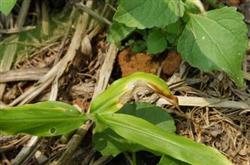
The ginger bacterial wilt pathogen mainly infects the underground stems and roots. After the fleshy stem is infected, it initially becomes water-soaked, the epidermis turns yellowish-brown and loses its luster, and the internal tissue gradually softens and rots, leaving only the outer skin. Squeezing the diseased part exudes a dirty-white, rice-water-like juice with a foul odor. Infected roots also turn light yellowish-brown and gradually rot. Infected aboveground stems turn dark purple, and the internal tissue turns brown and rots, leaving only fibers. Leaves wilt, leaf margins curl, and the color turns pale yellow until the entire plant droops and dies.
2. Routes of transmission
Long-distance spread of this pathogenic bacterium mainly occurs through contaminated ginger seed pieces. Field transmission usually spreads through irrigation water, insect pests, diseased soil and diseased plant residues carried on farm machinery and tools, and agricultural operations. Contaminated ginger seed pieces develop disease during the growing period and become the central diseased plants in the field, spreading the disease further. The disease is prone to occur in hot, humid weather with alternating rain and sunshine, especially when soil temperature fluctuates greatly, which favors the occurrence of the disease. The aboveground part grows poorly, turns yellow, and wilts; as the disease worsens, the plant dies.
3. Comprehensive control
(1) Crop rotation: Choose fertile plots with good drainage and irrigation for rotation, with one rotation every three years.
(2) Ginger seed piece treatment: Before sprouting, soak seed pieces in 1:1:100 Bordeaux mixture for 20 minutes, in 500 ppm streptomycin sulfate for 48 hours, or fumigate with 40% formalin at 100 times dilution for 6 hours. The liquid level should be 5-10 cm above the ginger seed pieces.
(3) Formula fertilization: Apply heavy organic fertilizer, increase phosphorus and potassium fertilizer, avoid excessive nitrogen fertilizer, and promote the use of high-quality farmyard manure. The suitable soil levels are 1% organic matter, 80 ppm available nitrogen, 50 ppm available phosphorus, and 100 ppm available potassium.
(4) Reasonable close planting: Plant about 5,500 hills per mu, prevent excessive density, change the field microclimate, improve ventilation and light conditions, and reduce field humidity. Reduce the number of hoeing operations to prevent accidental injury.
(5) Eradicate diseased plants: Promptly remove central diseased plants from the field and transport them outside the field for centralized destruction. Do not discard them randomly in the field. Drench the diseased holes and surrounding area with 5% copper sulfate, streptomycin sulfate, or other chemicals, or spread quicklime on the diseased holes and surrounding area. Fill and firm the diseased holes with soil, and build soil ridges around the diseased holes to prevent water flow from spreading the pathogen.
(6) Chemical control: Before the flood season arrives, drench the roots twice with 1,000 times diluted Kewenling at an interval of 15-20 days to prevent the occurrence of ginger bacterial wilt. From early July to the end of August, spray once every 10 days. You may choose 50% metalaxyl-copper 500 times dilution, or 1:1:100 Bordeaux mixture, or 75% xijunjing 500 times dilution for uniform spraying of the whole plant. Use 50-75 kg of spray solution per mu, which can effectively control the occurrence and spread of ginger bacterial wilt.
Click to get more ginger cultivation techniques
Click to get more vegetable cultivation techniques