Ginger Growing Techniques: How to Manage Ginger in Summer and Autumn
How do you manage ginger in summer and autumn? Please give guidance. Ginger grows fastest in summer and autumn, has the greatest impact on yield composition, and suffers the most severe damage from pests and diseases, especially ginger blast, which causes plants to wither and die, ginger rhizomes to rot, and leads to reduced yield. Therefore, summer and autumn management of ginger must be strengthened to ensure normal growth of ginger, so as to obtain...
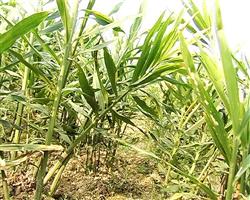
How do you manage ginger in summer and autumn? Please give guidance
Ginger grows fastest in summer and autumn, has the greatest impact on yield composition, and suffers the most severe damage from pests and diseases, especially ginger blast, which causes plants to wither and die, ginger rhizomes to rot, and leads to reduced yield. Therefore, summer and autumn management of ginger must be strengthened to ensure normal growth of ginger, so as to obtain high yield. The specific management technical measures are as follows:
1. Cover the bed surface. In summer and autumn, apply decomposed composted garbage fertilizer, pond mud, burnt soil or other miscellaneous soil fertilizers around the plants, 2-3 kg per plant, then cover the bed surface with dry straw or other weeds, with a grass thickness of 5-6 cm, to cover exposed ginger rhizomes, keep the soil moist, and promote ginger rhizome development.
2. Apply fertilizer in time. In summer and autumn, a nitrogen-phosphorus-potassium compound fertilizer must be applied to the roots once a month, 50-60 grams of nitrogen-phosphorus-potassium compound fertilizer per plant each time, diluted with water and drenched on. At the same time, every 15-20 days, spray the leaves once with an 800-fold water solution of vegetable-specific Gaomeishi organic humic acid active liquid fertilizer, spraying the leaves wet until water drips.
3. Shade and protect from sun. Ginger likes a cool environment and avoids direct strong light. In summer and autumn when sunlight is strong, a shade net with a light transmittance of only about 50 percent must be used for covering, or a shade shed about 1 m high should be built and covered with branches and leaves on top, to prevent direct strong light, maintain ventilation, and create a cool environment for ginger growth.
4. Prevent and control pests and diseases. In summer and autumn, a mixed liquid of 600-fold Dexon and 1500-fold Shennongsu chelated fertilizer must be drenched on the roots once a month, about 3-5 kg per plant each time, to prevent ginger blast. At the same time, every 15-20 days, spray the leaves once with a mixed liquid of 1000-fold Lorsban and 800-fold thiophanate-methyl, or a mixed liquid of 1000-fold Nongdile and 800-fold Ridomil, spraying the leaves wet until water droplets begin to drip down, to prevent and control other pests and diseases.
5. Pay attention to drainage. Ginger fears waterlogging. High soil moisture and much accumulated water will cause root rot and death. Therefore, in summer and autumn, drainage work must be done well. After heavy rain, the accumulated water in the ginger garden must be drained away promptly to prevent water accumulation.
Click to get more ginger growing techniques
Click to get more vegetable growing techniques