What causes missing corn seedlings?
What are the causes of missing corn seedlings? Please provide an introduction and control methods. The causes of missing corn seedlings are: Do not soak seeds to speed germination. Once corn seed coating agent dissolves in water, it not only becomes ineffective but also inhibits seed germination. Do not sow too deep. The suitable sowing depth for summer corn is 3-5 cm. If sown too deep, the soil temperature drops...
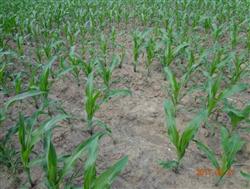
What are the causes of missing corn seedlings? Please provide an introduction and control methods
The causes of missing corn seedlings are:
Do not soak seeds to speed germination. Once corn seed coating agent dissolves in water, it not only becomes ineffective but also inhibits seed germination.
Do not sow too deep. The suitable sowing depth for summer corn is 3-5 cm. If sown too deep, the soil temperature drops, making the seeds prone to rotting. Even if they manage to emerge, the seeds buried too deep will consume a large amount of nutrients before emergence, and the corn seedlings after emergence will have weak root systems and poor nutrient absorption capacity, forming weak seedlings. Therefore, when sowing summer corn, maintain a suitable sowing depth under the condition of ensuring adequate soil moisture.
Burning straw is prohibited. After wheat harvest, in order to facilitate farming, some farmers leave the wheat straw in the field, spread it out evenly and set it on fire. Because burning kills microorganisms in the soil that are beneficial to crop growth, it also decomposes a large amount of nutrients in the soil, reducing soil fertility and soil moisture content, making it difficult for corn to emerge. Therefore, burning straw is strictly prohibited after wheat harvest.
Avoid mixing seed and fertilizer. When sowing with manual or animal power, fertilizer is applied together with the seeds, which easily causes fertilizer burn to the seedlings. Seeds and fertilizer should be kept about 10 cm apart. Currently, most mechanical sowing of corn can achieve separation of seed and fertilizer; machinery that does not separate seed and fertilizer should be abandoned.
Control armyworms. Armyworms are the main pests during wheat maturity. Some farmers only focus on wheat harvest and corn sowing, often neglecting the control of armyworms after sowing. The mature larvae remaining in the field and the newly hatched larvae begin to bite the newly emerged corn seedlings after the corn emerges. When armyworms occur severely, they can eat all the corn seedlings in an entire field, leaving no choice but to destroy the crop and replant. Therefore, after corn emerges, if armyworm damage is found, pesticide should be applied promptly for control.
Click to get more corn planting techniques
Click to get more food crop planting techniques