How are pests controlled during cotton cultivation?
How do you control pests when growing cotton? Please explain the methods. The following methods can be used to control pests when growing cotton: 1. **Integrated control of cotton field spider mites** The cotton region is one of the areas with the most severe occurrence of cotton spider mites nationwide. In particular, after plastic film cotton planting, conditions were created for cotton spider mites to enter cotton fields early, ...
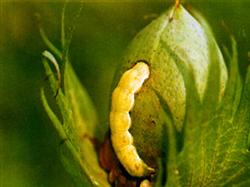
How do you control pests when growing cotton? Please explain the methods
The following methods can be used to control pests when growing cotton:
1. **Integrated control of cotton field spider mites** The cotton region is one of the areas with the most severe occurrence of cotton spider mites nationwide. In particular, after plastic film cotton planting, conditions were created for cotton spider mites to enter cotton fields early, causing the occurrence of spider mites to show a clear trend of increase and aggravation, often causing serious losses to cotton production.
(2) The main species of spider mites in cotton fields include Tetranychus turkestani, Tetranychus dunhuangensis, Tetranychus truncatus, and Tetranychus cinnabarinus, with Tetranychus turkestani being the most widely **distributed.
Cotton spider mites generally inhabit the underside of leaves, mainly moving, feeding, and causing damage on the back of leaves, piercing into the leaf mesophyll with their mouthparts to feed on sap and chlorophyll. In years with a large overwintering population and high survival rate, spider mites generally occur early and severely during the seedling stage, so spider mite control must be done well from the seedling stage.
(2) Agricultural control Autumn plowing and winter irrigation, crop rotation with gramineous crops, planting mite-resistant varieties, sprinkler irrigation to suppress spider mites, protecting natural enemies (such as mite-eating ladybugs, mite-eating thrips, mite-eating gall midges, minute pirate bugs, etc.), and planting disease-resistant varieties such as Zhong 24, 27, 36 and Zhong 38.
(3) Seed treatment Use 48% chlorpyrifos long-acting slow-release agent + "Tianda 2116" special seed soaking and dressing type for seed dressing. Do not let the seed sit in a sealed pile.
(4) Control of central mite plants Use 48% chlorpyrifos long-acting slow-release agent and other insecticides, dilute with water to 10 times, and smear on the red-green junction of the cotton stem. The smeared length is 2-5 cm. Do not smear around the entire stem to avoid phytotoxicity; spot and patch targeted treatment, using 2.0% Tianda abamectin + 2.5% lambda-cyhalothrin or 48% chlorpyrifos long-acting slow-release agent + 3% acetamiprid for control.
For field control, the pesticides are the same as above.
The integrated control of spider mites in other cotton regions is the same as above.
2. Integrated control of cotton aphids There are six species of aphids that harm cotton in cotton fields: cotton aphid, black aphid, cotton long-tube aphid, Hovenia aphid, peach aphid and bean root aphid, which migrate into cotton fields to cause damage in May.
(1) Agricultural control Planting cotton adjacent to wheat or intercropped with rapeseed changes the single ecological structure of farmland and is conducive to the protection and reproduction of natural enemies.
(2) Eliminate overwintering aphid sources First, eliminate aphids on indoor flowers in winter; second, eliminate aphids indoors and outdoors on Catalpa speciosa, pomegranate, grape, walnut, Rhamnus, etc. Every year in early spring, before winged aphids form, use 3% acetamiprid 1500 times + 2.5% lambda-cyhalothrin solution for control.
For control of cotton aphids on bridge hosts, cucumbers, gourds and other vegetables grown in greenhouses and plastic sheds are all bridge hosts after cotton aphids overwinter, so spray early with 2% Tianda abamectin 4000 times solution + 2.5% Kung Fu 1500 times solution for control.
(3) Control of central aphid plants Use 48% chlorpyrifos long-acting slow-release insecticide, dilute with water to 10 times, and smear on the red-green junction of the cotton stem. The smeared length is 2-5 cm. Do not smear around the entire stem to avoid phytotoxicity; the spot and patch occurrence period is the best period for control, and the initiative in control work should be seized. For spot and patch spraying, 3% acetamiprid + 2.5% lambda-cyhalothrin has good control efficacy.
(4) Large-area control Control must be targeted to the problem. According to actual conditions, choose the urine-washing mixture with less lethality to natural enemies (urea: washing powder: water = 0.5:2:100), 2% Tianda abamectin, 3% Tianda acetamiprid, 2.5% Kung Fu, Saidan, Actara, etc. When using the urine-washing mixture, the water volume per mu must reach more than 60 kg.
3. Control of cotton bollworm
(1) Agricultural control Autumn plowing and winter irrigation, shoveling ridges and removing pupae, clearing weeds around fields, planting corn and sunflowers on canal ridges. Reasonable fertilization, avoiding excessive nitrogen fertilizer, and timely spraying "Tianda 2116" and potassium dihydrogen phosphate during cotton growth and development significantly reduce overwintering insect population density and egg numbers.
Plant new transgenic insect-resistant cotton varieties.
Trapping and killing adults: using high-frequency vibrating insect-killing lamps, sex pheromone lures for moth trapping, sugar-vinegar trapping, and willow branch grass bundle trapping all have good effects.
(2) Biological control Artificially release Trichogramma to destroy cotton bollworm eggs, and protect natural enemies of cotton bollworm, such as ichneumon wasps, braconid wasps, green lacewings, ladybugs, mantises, birds, beneficial bacteria, fungi and viruses, etc. Suppress cotton bollworm eggs and larvae.
(3) Scientifically apply pesticides According to the control threshold of 8-10 first-instar larvae per 100 cotton plants, first consider biological pesticides such as BT, 2% abamectin, 25% diflubenzuron, 20% tebufenozide, monosultap, and pesticides with less lethality to natural enemies such as Saidan, 2.5% lambda-cyhalothrin, etc.
4. Control of cotton thrips
(1) Agricultural measures Autumn plowing and winter irrigation, clearing weeds on canal ridges around cotton fields in early spring to reduce insect sources.
(2) Chemical seed dressing Use 48% chlorpyrifos long-acting slow-release emulsifiable concentrate at 0.5 kg per 100 kg of seed + "Tianda 2116" special seed soaking and dressing type 250 g. After dressing, dry and sow. Do not let the seed sit in a sealed pile.
(3) Chemical control In early spring, spray 2% abamectin 4000 times solution + 2.5% Kung Fu emulsifiable concentrate 1500 times solution on overwintering hosts such as scallions and garlic near cotton fields to eliminate thrips breeding bases.
(4) Seedling-stage control When the insect count reaches 15-20 per 100 plants at the seedling stage, carry out chemical control. Generally, control should be carried out immediately after cotton seedlings emerge uniformly. The pesticides used are the same as above.
5. Integrated control of tarnished plant bug
(1) Agricultural control Eliminate Chenopodiaceae weeds around field edges, reasonably arrange cotton field adjacent crops, do not plant adjacent to sugar beet, spinach, rapeseed, alfalfa, flax, or wasteland, and it is best to plant adjacent to wheat.
Pay attention to irrigation and fertilization, carry out timely chemical regulation, spray "Tianda 2116" cotton special type to prevent excessive cotton growth. The first irrigation should be later, apply chemical fertilizers reasonably, and prevent excessive nitrogen fertilizer.
(2) Chemical control Spray 2% Tianda abamectin 4000 times solution + 2.5% Kung Fu emulsifiable concentrate 1500 times solution in cotton fields and around them to eliminate breeding bases, with good control efficacy.
(3) Seedling-stage control When the insect count reaches 15-20 per 100 plants at the seedling stage, carry out chemical control. Generally, control should be carried out immediately after cotton seedlings emerge uniformly. The pesticides used are the same as above.
Click to get more cotton cultivation techniques
Click to get more grain crop cultivation techniques