What causes early bolting in Angelica sinensis?
Why does Angelica sinensis bolt early? Please explain the reasons. 1. Causes of early bolting in Angelica sinensis. 1.1 Seeds that are too plump, or seeds produced by early-bolting plants (commonly known as "gunpowder seeds", [flower] seeds or fire seeds) used for raising seedlings, are prone to early bolting after transplanting. According to the experience of herbal farmers, Angelica sinensis seedling cultivation has very strict requirements for seeds...
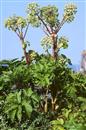
Why does Angelica sinensis bolt early? Please explain the reasons
1. Causes of early bolting in Angelica sinensis
1.1 Seeds that are too plump, or seeds produced by early-bolting plants (commonly known as "gunpowder seeds", [flower] seeds or fire seeds) used for raising seedlings, are prone to early bolting after transplanting.
According to the experience of herbal farmers, Angelica sinensis seedling cultivation has very strict requirements for seeds. Different seeds produce different seedlings. Using primary-umbel seeds, fully mature seeds, dough-stage seeds, or even, as some herbal farmers do, mixing seeds produced by early-bolting plants into reserved seed before sowing, all tend to cause bolting. Moreover, under the same cultivation conditions, the bolting period of (flower) seedling plants is 10-15 days earlier than that of reserved-seed plants, and the bolting rate is 30%-40% higher. Because fully mature seeds, (flower) seeds and primary-umbel seeds are all relatively strongly developed seeds and are an important basis for forming large and robust seedlings, they possess the conditions for stage development, which speeds up the qualitative change of both the vernalization stage and the photoperiod stage. Therefore, the bolting rate is high.
1.2 Raising seedlings too early makes the seedling age too long and the seedling roots too large and too heavy, with excessively sufficient nutrition, making them prone to developing into early-bolting plants.
The seedling growth period of Angelica sinensis is generally 90-110 days, and the fresh weight of 100 roots is 40-70 g. Sowing for seedling cultivation is generally from mid-June to mid-July, that is, between the Summer Solstice and the Great Heat, which is relatively suitable for sowing. Seedlings are generally lifted in early to mid-October, that is, around Cold Dew and Frost's Descent, when the temperature drops to 0°C, and the young seedlings gradually enter dormancy and can be lifted and stored for transplanting the following year. If seedlings are raised too late, the growth period is too short, nutrition is insufficient, the seedlings are tender, prone to rot, and not easy to store through the winter. Therefore, after mastering the suitable sowing period, sow a few days later as appropriate.
1.3 Seedling size is related to early bolting
Large seedlings, forked seedlings, older seedlings, seedlings overwintered in the field, and seedlings lifted too late all possess the conditions to accept the vernalization stage and winter low temperatures, and are prone to early bolting. At transplanting, using small seedlings within the suitable seedling age range gives a very low early bolting rate, while using large seedlings gives a high bolting rate. For this reason, herbal farmers in Minxian mostly use small seedlings with a diameter below 0.50 cm. However, seedling size must correspond to seedling age. If the seedling weight is very small but the seedling age is old, the bolting rate of the small seedlings is still very high; on the contrary, large seedlings that are very large but have a very young seedling age rarely bolt.
1.4 Cultivation conditions also affect bolting
Adverse external conditions such as drought, poor soil, lack of fertilizer, low-mountain sites, shady slopes, flatland planting, early planting, and severe pests and diseases can easily cause Angelica sinensis plants to accelerate the transition through the two stages of development and bolt early. This is because in the individual development process of Angelica sinensis there are obvious stages. When it changes from vegetative growth to reproductive growth, that is, bolting and flowering, it must pass through the vernalization stage and the photoperiod stage. The main developmental condition of the vernalization stage is a low temperature of 0-5°C; the main developmental condition of the photoperiod stage is a long day length of more than 12 hours. When environmental conditions such as water, fertilizer and temperature are favorable, vegetative growth dominates and the developmental process is correspondingly delayed; when environmental conditions are unfavorable for its growth, the plant shifts early to the reproductive growth stage, bolting and flowering and setting seed ahead of time. This is a kind of adaptability of plants to environmental conditions.
1.5 Sowing density also affects early bolting
The sowing rate of Angelica sinensis is generally 4-5 kg per mu, sometimes as much as 7.50 kg. If the sowing rate is too small, the seedlings emerge too sparsely, and they easily grow into large seedlings and forked seedlings, and the number of usable seedlings produced is small, with a high early bolting rate. If the sowing rate is too large, the seedlings
emerge too densely. Although more seedlings are formed, the proportion of unusable small seedlings is high, most of them cannot meet the requirements for transplanting seedlings, and after planting they are not easy to survive, or they survive but turn green slowly. Therefore, the sowing rate should be adjusted according to the germination rate.
2. Prevention and control of early bolting in Angelica sinensis
According to the causes of early bolting in Angelica sinensis, targeted measures can be taken to control it. The main measures are:
2.1 Starting from stage development, controlling the main conditions for qualitative change of stages
Starting from stage development, as long as the normal progress of the qualitative change of either the vernalization stage or the photoperiod stage is controlled, early bolting can be controlled. In production, controlling the vernalization stage is far easier than controlling the photoperiod stage. This is because controlling the vernalization stage can be carried out during winter seedling storage, when the seedlings are relatively concentrated and it is convenient to do so. That is, during seedling storage, first sterilize, control the storage humidity at 60%-65%, and keep the temperature preferably at -7 to 10°C.
2.2 Starting from nutritional conditions, controlling seedling size
According to the fertility of the soil, apply less or more phosphorus and potassium fertilizer, and control the seedling diameter at 0.20-0.50 cm.
2.3 Take comprehensive measures for control in the three production links of seedling storage, seed reservation and seedling cultivation.
When reserving seed, remove the main stem of the reserved plants at the early bolting stage to promote extensive development of basal lateral branches, forming many stalks of uniform vigor, so as to reduce individual differences among seeds and make the degree of seed development relatively moderate and uniform. On the other hand, control the maturity of the seeds by using staged harvesting and selecting medium-maturity milk-stage seeds for seed reservation.
Keep the seedling storage temperature at -7-10°C. At the same time, improve seedling cultivation conditions so that 100 seedlings weigh 40-70 g and the seedling diameter is 0.20-0.50 cm, or change the cultivation system by direct sowing in autumn, winter or spring, or transplanting after raising seedlings in solar greenhouses, and other methods can all prevent early bolting in Angelica sinensis.
2.4 Advocate saving one's own seed and raising one's own seedlings
Because at present, herbal farmers still mainly raise Angelica sinensis seedlings on virgin wasteland, while some herbal farmers in flatland areas can only buy seedlings from the market or raise seedlings from seed, but the seeds and seedlings bought from the market are of unknown origin and their low bolting rate cannot be guaranteed. Therefore, it is best to save seed and raise seedlings oneself every year. If buying from the market, it is best to ask an acquaintance to make the connection, to ensure that the seedlings and seeds are those with a low bolting rate.
Click to get more Angelica sinensis cultivation techniques
Click to get more medicinal herb cultivation techniques