How to Grow Radishes: How Do You Grow Radishes for an Autumn-Winter Harvest?
How do you grow radishes for an autumn-winter harvest? Please explain the growing methods. The radish itself is a semi-cold-hardy vegetable that prefers mild, cool conditions, especially a climate with a large temperature difference between day and night. The optimum air temperature for the growth of radish leaves is 15-20°C, and the optimum soil temperature for the fleshy root to swell is 13-18°C. It also requires long daylight hours and deep, fertile soil. 1. ...
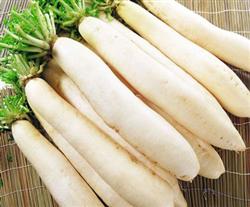
How do you grow radishes for an autumn-winter harvest? Please explain the growing methods.
The radish itself is a semi-cold-hardy vegetable that prefers mild, cool conditions, especially a climate with a large temperature difference between day and night. The optimum air temperature for the growth of radish leaves is 15-20°C, and the optimum soil temperature for the fleshy root to swell is 13-18°C. It also requires long daylight hours and deep, fertile soil.
1. Land preparation and fertilization When growing radishes, base fertilizer should be the main source, with 70%-80% applied as base fertilizer. The base fertilizer is mainly well-rotted barnyard manure, compost, night soil, and phosphate and potassium fertilizers, applied together (5000 kg per 667 sq m). Applying only chemical fertilizer makes the roots taste bitter, while applying only night soil makes them not sweet and prone to excessive top growth. Plow deeply to 30 cm, break up the soil and level the ground. Large radishes are mostly grown on high ridges, with a ridge spacing of 50-60 cm and a plant spacing of 30 cm; small and medium radishes can be grown on flat beds, with a row spacing of 17-20 cm and a plant spacing of 10-15 cm.
2. Careful sowing If autumn radishes are sown too early, pests and diseases are severe; if sown too late, yields decline, so they should be sown at the right time. Choose excellent varieties suited to local growing conditions. Water thoroughly at sowing; the ideal soil moisture content is 80%, and cover the seed with 1.5-2 cm of soil. The sowing rate is 500-1000 g per 667 sq m; for large radishes sown in hills, the amount used is smaller, about 400-500 g. If heavy rain falls after sowing, the soil often forms a hard crust, so loosen the soil promptly to break the crust.
3. Thinning and final spacing After the radish seedlings emerge, carry out the first thinning when the cotyledons unfold; seedlings sown in hills need thinning even earlier, leaving 3-4 seedlings per hill. At 2-3 true leaves, thin the second time; at 4-5 true leaves, thin the third time, keeping the strongest seedlings.
4. Appropriate topdressing Autumn-winter radishes are generally topdressed three times: once at the seedling stage, once at the rosette stage, and once at the peak stage of fleshy root growth, applying 10-20 kg of ammonium phosphate or compound fertilizer per 667 sq m each time. Wood ash is best spread in the field after watering at the peak growth stage, at 100 kg per 667 sq m.
5. Timely watering At emergence, give a light watering, then cultivate to conserve soil moisture; in dry weather, water lightly. Before the seedlings "break their belly" (the roots begin to expand), they should not be watered much; keep the soil alternately dry and moist. When leaf growth reaches its peak and the fleshy roots begin to swell, water timely and in appropriate amounts, but still wait until the soil surface turns pale before watering, and do not water until it is dry. During the peak stage of fleshy root growth, supply water fully and evenly; the available soil moisture content should be maintained at 70%-80%, and the relative air humidity is best kept at 80% or even 90%, to ensure high yield and good quality. A moderate amount of watering can also be done in the late stage of fleshy root growth to prevent hollow heart. In the dog days, water mostly in the evening. When there is a lot of rain, pay attention to drainage.
6. Cultivation and weeding Cultivation and weeding should be done promptly in the early growth period. Later, pull out any weeds as soon as they appear. Dead and yellowed old leaves must also be removed to improve ventilation.
7. Pest and disease control ① The main radish diseases are viral disease and black rot. The main measure against viral disease is controlling aphids and preventing high temperatures and drought. Black rot is a disease caused by the black rot bacterium, with the main symptoms being blackening at the center of the root and blackening and rotting of the vascular bundles in the fleshy root. The pathogen overwinters on seeds and diseased plant residues and is spread by rain and insects. Resistant varieties should be chosen; generally, green radishes are affected lightly and white radishes severely. Seeds can also be treated by soaking in warm water at 50°C for 30 minutes, or by soaking in a chemical solution, spraying, and so on. ② For cutworms, spray with a chemical solution, or make grass piles to trap and kill them.
Click to get more radish growing techniques
Click to get more vegetable growing techniques