What are the common diseases in autumn radish cultivation?
What diseases affect autumn radish? Please give an introduction. The common diseases of autumn radish include viral disease, soft rot, downy mildew, etc. For detailed information, please refer to the following: Downy mildew symptoms: The disease is more severe in the middle and late stages, mainly damaging the leaves. The disease spreads from the lower leaves to the upper leaves. In the early stage, irregular chlorotic yellow spots appear on the leaf surface...
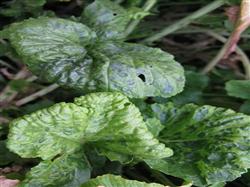
What diseases affect autumn radish? Please give an introduction.
The common diseases of autumn radish include viral disease, soft rot, downy mildew, etc. For detailed information, please refer to the following:
Downy mildew
Symptoms: The disease is more severe in the middle and late stages, mainly damaging the leaves. The disease spreads from the lower leaves to the upper leaves. In the early stage, irregular chlorotic yellow spots appear on the leaf surface, which then expand into angular yellow-brown lesions. When humid, white mold grows on the underside or both sides of the leaves. In severe cases, the lesions merge and cause the leaves to dry up.
Disease pattern: This disease is a fungal disease. When the temperature is around 16°C, the relative humidity is above 70%, the variety is susceptible, and the pathogen source is present, the disease can spread rapidly. Generally, sowing too early, poor variety resistance, excessive close planting, high field humidity, extensive management, and continuous cropping fields result in more severe disease.
Control methods: Carry out crop rotation with non-cruciferous vegetables for more than 2 years; remove diseased plant residues and dispose of them in a centralized manner; timely topdressing and watering to enhance resistance. In the early stage of the disease, spray with 72.2% Previcur water agent at 600-800 times dilution, or 75% chlorothalonil wettable powder at 500 times dilution, or 64% oxadixyl-mancozeb at 500 times dilution for control, spraying once every 7-10 days, for 2-3 consecutive sprays.
Soft rot
Symptoms: Mainly damages roots, leaves, and petioles. When the roots are infected, it often starts at the root tip, initially appearing as brown water-soaked soft rot, then gradually spreading upward, causing the core to become soft, rotten, and decayed. When leaves and petioles are infected, they also show water-soaked soft rot. After drought, the disease stops spreading, and new leaves cluster at the root tip. The boundary between diseased and healthy parts is obvious. Brown juice often seeps out, causing the entire radish to turn brown and soft-rotted.
Disease pattern: This disease is a bacterial disease. The pathogen mainly exists in the soil and infects through wounds. It is prone to occur at 25°C-30°C.
Control methods: Carry out crop rotation with non-cruciferous vegetables for more than 3 years; try to avoid causing wounds; adopt ridge cultivation or high-bed deep-furrow planting. In the early stage of the disease, spray with 72% agricultural streptomycin sulfate wettable powder at 3000-4000 times dilution or 12% copper green emulsifiable concentrate at 600 times dilution for control, spraying once every 10 days, for 1-2 consecutive sprays.
Viral disease
Symptoms: The disease can occur at the seedling stage. Diseased plants are short and small, with wrinkled, uneven, twisted leaves or mosaic patterns of alternating yellow and green.
Disease pattern: The virus of this disease is mainly transmitted by insects (such as aphids and flea beetles), and can also be transmitted by sap through leaf rubbing. In fields with extensive management, high temperature, drought, large populations of aphids and flea beetles, poor plant growth, and poor disease resistance, the disease is severe.
Control methods: Pull out diseased plants as early as possible and strengthen field management. Timely spray with 10% imidacloprid wettable powder at 2000 times dilution to control aphids; spray with 90% crystalline trichlorfon at 1000 times dilution to control flea beetles; in the early stage of the disease, spray with antivirus agent No. 1 at 250 times dilution or 20% virus A wettable powder or zhibingling No. 2 at 1000 times dilution for control, once every 10 days, for 2-3 consecutive sprays.
Click to get more radish cultivation techniques
Click to get more vegetable cultivation techniques