How to fertilize cotton effectively in the mid-to-late stage?
How to fertilize cotton well in the mid-to-late stage? Please introduce. In the mid-to-late stage of cotton, you can refer to the following fertilization methods: 1. Increasing the application of cotton boll fertilizer is of great significance. Every year from August to September is the season when cotton sets a large number of bolls. In order to set more bolls and large bolls, and to achieve full bolls on the lower and middle branches and bolls covering the top, it is necessary to seize the opportunity to apply sufficient cotton boll fertilizer. First...
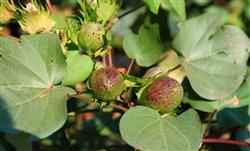
How to fertilize cotton well in the mid-to-late stage? Please introduce
In the mid-to-late stage of cotton, you can refer to the following fertilization methods:
1. Increasing the application of cotton boll fertilizer is of great significance. Every year from August to September is the season when cotton sets a large number of bolls. In order to set more bolls and large bolls, and to achieve full bolls on the lower and middle branches and bolls covering the top, it is necessary to seize the opportunity to apply sufficient cotton boll fertilizer. First, the concentrated boll-setting period of cotton is the peak period of fertilizer demand for cotton. If fertilizer supply is insufficient at this time, even cotton with very good leaf color will show fertilizer deficiency, quickly turning yellow and senescing prematurely. Second, during the concentrated boll-setting period of cotton, excessive vegetative growth or "secondary growth" generally does not easily occur. This is because, after cotton sets bolls, the direction of nutrient transport shifts from the main stem to the cotton bolls, and the cotton bolls have the capacity to bear nutrients; therefore, increasing the application of boll fertilizer at this time will not trigger secondary growth in cotton. Third, the boll-setting period of cotton is the second peak of carbon content in the cotton plant body, while nitrogen content declines, soluble sugars increase, and the carbon-to-nitrogen ratio is at its maximum, so the demand for nutrients is greatest. There is no fear of excessive growth, only fear of starving the plants. Fourth, the middle and upper parts of cotton have good ventilation and light transmission, and the boll-setting rate is high, generally more than 10 percentage points higher than that of the lower part; increasing the application of boll fertilizer can significantly raise the boll-setting rate, promote cotton boll growth, greatly improve cotton yield and quality, and markedly increase the return on investment.
2. In view of the growth characteristics of cotton in the mid-to-late stage, the following four points should be mastered in cotton fertilization: First, change the mindset and fully recognize the great significance of increasing the application of boll fertilizer. Second, change from applying a small amount of fertilizer to applying sufficient boll fertilizer. Generally, in mid-August, apply no less than 15 kg per mu of Zhongde brand 30-8-12 long-acting compound fertilizer. Third, supplement fertilizer through the leaves by spraying Shima brand "Guowang" (600 times) + "Liangguosu" (5000 times) on the foliage. Fourth, change the fertilization method from broadcasting after rain to trenching and band application or hole application with a shovel, so as to improve fertilizer efficiency and prevent fertilizer deficiency in the late stage of cotton, which can cause premature senescence. 3. Do not mistake premature senescence for early maturity. Correctly distinguishing early maturity from premature senescence in cotton is very important for cotton production. Misdiagnosing early maturity as premature senescence and increasing the amount of fertilizer will cause cotton to remain green and mature late in the late stage, increasing input and reducing income. Misdiagnosing premature senescence as early maturity and relaxing management will lead to reduced cotton yield and income. Therefore, cotton farmers should grasp the difference between early maturity and premature senescence in cotton. In early-maturing cotton, the cotton plants show early development, and the entire growth period is correspondingly advanced, with early squaring and flowering, and early boll setting and boll opening. The upper fruiting branches of the cotton plant can grow three fruiting nodes, and the differences in traits such as the number of bolls set and boll weight on the upper fruiting branches compared with the middle fruiting branches are very small. The upper leaves of the cotton plant turn yellow normally, but before all cotton bolls open, they do not fall or fall only slightly. In prematurely senescent cotton plants, the upper fruiting branches cannot extend fully and grow only 1 to 2 fruiting nodes, with fewer bolls set and smaller than middle bolls; when bolls open, the upper leaves yellow and fall, and some cotton plants have the upper half dead, with no or few top-covering bolls. Generally speaking, early-developing cotton fields and potassium-deficient fields are prone to premature senescence. In early-developing cotton fields, the cotton plants square early, the nutrient supply center shifts to squares and bolls, vegetative growth is inhibited, and premature senescence occurs; potassium deficiency in the field leads to the occurrence of stem blight, causing the upper branches and leaves of the cotton plant to die. Therefore, for early-developing cotton fields, boll fertilizer should be applied heavily. For cotton fields showing a trend of premature senescence in the late stage, once symptoms of premature senescence are found, Shima brand "Guowang" (600 times) + "Yecui" (900 times) should be sprayed on the foliage immediately to quickly supplement nitrogen and potassium fertilizer and promptly curb the harm of premature senescence. At the same time, boll fertilizer should be increased immediately, and fertilizer and water management should be strengthened to prevent fertilizer deficiency in the late stage of cotton. Yantai Agricultural Means of Production Technology Co., Ltd. Telephone: 0535-6857828. Techniques for using foliar fertilizer in the mid-to-late stage of cotton. Most cotton farmers generally apply their last topdressing in late July. At this time, cotton is in its peak growth season, with large numbers of squares, flowers, and bolls forming, and there are still more than 2 months before harvest, requiring a large supply of nutrients. However, July to September is the rainy season in North China, with abundant rain. Cotton roots remain in a state of water supersaturation for a long time, and some cotton is even frequently flooded and suffocated, resulting in poor root growth, which leads to an inability to absorb and supply nutrients to cotton. Therefore, this causes a large number of square and boll shedding, yellowing and premature senescence of leaves, and widespread occurrence of red-leaf stem blight and other physiological diseases.
To solve the above physiological diseases appearing in the mid-to-late stage of cotton, scientifically and rationally applying foliar fertilizer is a very effective means.
1. In July and August, due to abundant rain, cotton growth is not vigorous (the rows cannot close in time) and leaves turn yellow, which can lead to insufficient nutrient supply to cotton bolls and cause square and boll shedding. At this time, if Shima brand "Yecui" (diluted 900 times) + "Liangguosu" (6000 times) can be sprayed once every 10 days for a total of 2 times, the leaves can quickly turn green, thereby reducing square and boll shedding.
2. When cotton suffers phytotoxicity due to spraying "insecticides", "fungicides", or "hormones", spraying Shima brand "Yecui" at 900 times can relieve the symptoms.
3. When cotton has severe flower and boll shedding during the flowering and boll-setting period, spraying Shima brand "Huabao" (900 times) once every 10 days can significantly reduce square and boll shedding, increase pre-hot-season bolls, and increase yield. If "Huabao" + "Liangguosu" + Aizengmei at 3000 times are used in combination, it can promote cotton pollination, and the effect of preventing shedding is even better. 4. In August, cotton often develops red-leaf stem blight. This is a physiological disease caused by a comprehensive nutrient deficiency syndrome mainly involving potassium deficiency, and it can cause a large number of leaves to fall. At this time, spraying Shima brand "Guowang" + "Liangguosu" (6000 times) for a total of 2-3 times, once every 10 days, can not only prevent and control red-leaf stem blight, but also promote cotton boll expansion, increase fiber length, and reduce the harm of Fusarium and Verticillium wilt.
Click to get more cotton cultivation techniques
Click to get more food crop cultivation techniques