How to Grow Salvia miltiorrhiza (Danshen)? Detailed Explanation of Key Points of Medicinal Herb Cultivation Techniques
How to grow the medicinal herb Danshen (Salvia miltiorrhiza)? How many planting methods are there for Danshen? Danshen is a perennial herbaceous plant, Salvia miltiorrhiza Bge., of the genus Salvia in the family Lamiaceae. Common names: Xueshen, Zi Danshen, Honggen, etc. Danshen has strong adaptability and prefers warm, humid conditions and a sunny environment. It is cold-tolerant and shade-tolerant...
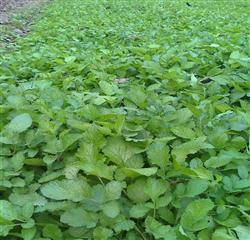
How to grow the medicinal herb Danshen (Salvia miltiorrhiza)? How many planting methods are there for Danshen?
Danshen is a perennial herbaceous plant, Salvia miltiorrhiza Bge., of the genus Salvia in the family Lamiaceae. Common names: Xueshen, Zi Danshen, Honggen, etc. Danshen has strong adaptability and prefers warm, humid conditions and a sunny environment. It is cold-tolerant, shade-tolerant, drought-sensitive, and intolerant of waterlogging. At temperatures below 3°C, its physiological activity is relatively weak and growth is extremely slow; above 5°C it begins to sprout; above 16°C it grows rapidly. The annual full growth period of Danshen is about 220 days. Under normal years, the growth cycle is 1-2 years. For one-year-old Danshen, the yield per mu is about 500 kg of dried roots; at a market price of 8 yuan/kg (current market price 12 yuan/kg), the annual income per mu is 4000 yuan.
I. Site Selection and Land Preparation
(1) Site Selection
Danshen has low soil requirements, but for high yield and quality, it is best to choose loam or sandy loam with deep soil layers, loose texture, rich organic matter, and good drainage.
For the nursery plot, it is best to choose flat land that is easy to irrigate and drain, with a deep and relatively fertile slightly acidic sandy loam or loam.
(2) Land Preparation
Before winter, apply 1000 kg of decomposed farmyard manure per mu and 25 kg of NPK ternary compound fertilizer, deep plow 30-50 cm, harrow fine and level, make beds every 1 m, with ridges 30 cm-50 cm high, 80 cm wide at the top. If growing roots for seedling propagation, make beds 1-1.5 m wide, with length depending on the amount of seed roots.
II. Propagation Methods
Danshen propagation mainly uses three methods: root division, cuttings, and seed propagation. In production, root division and seeds are mostly used. To achieve high yield, the root division propagation method should be adopted.
(1) Root Division Propagation Method:
1. Selection and Treatment of Seed Roots
Before the Start of Winter, dig up Danshen, select thick, red root strips with no signs of rot and a diameter of 0.5-1 cm. After splitting from the stem base, cut into sections sequentially downward along the stem base, each section 8-10 cm long. It is best to use only the two sections near the root head, arrange them in their natural growth order with the top end facing up, then tie them into bundles of moderate size (200-300 plants) with straw rope. Dig a suitable cellar, spread a layer of moist soil on the cellar bottom, place the bundled seed roots on top, keeping the top ends facing up and packed tightly. After filling one layer, sprinkle a layer of wheat chaff (about 10 cm thick) on top, then sprinkle a layer of moist soil (about 3 cm thick) on top of the chaff, then arrange another layer of seed roots. Finally, cover with another layer of wheat chaff and seal the cellar. Leave a gap of about one chi between the top of the cellar and the seed roots to provide insulation.
2. Small Arch Shed Seedling Raising
After the beginning of spring, take out the seed roots from the cellar. Choose a wind-sheltered, sunny spot and make a bed 1-1.5 m wide, with appropriate length. Prepare the land well, spread decomposed farmyard manure mixed with soil at a fertilizer-to-soil ratio of 1:1, and additionally apply 3-5 kg of urea per mu. Then place the seed roots side by side into the bed, maintaining a certain slant and spacing. Sprinkle the mixed fertilizer soil on top and into the gaps, cover with a layer of fine sand (1-1.5 cm thick) on top. Build an arch shed over the bed with thin bamboo poles or tree branches, pour 45-50°C warm water to moisten thoroughly, quickly cover with plastic film, and compact the soil around the edges. Cover with straw mats at night and remove during the day. After about 80% or more have sprouted, the film can be opened at both ends at noon for ventilation and hardening. After 3-5 days, they can be transplanted to the field.
3. Field Transplanting Time
Transplant from February to mid-March in early spring, with the Awakening of Insects and the Spring Equinox being the best times.
4. Transplanting Density
On the prepared planting site, with a row spacing of 30-35 cm and a plant spacing of 15-20 cm, 8000-12000 plants per mu, dig holes 8-10 cm deep. Place the seedlings at a 30-45 degree angle to the ground, with the top end facing up; they must not be placed upside down. After planting, cultivate soil about 3 cm and compact. To ensure full stands, water first, and after the water seeps down, plant the seedlings.
(2) Seed Propagation Method
1. Seedling Raising Time
August, i.e., the 7th and 8th lunar months, is the best time for raising seedlings.
2. Seed Seedling Raising Method
First sun-dry the seeds for one day, then soak them in 45-50°C warm water, stirring constantly for 2-3 minutes, then soak in warm water for 24 hours. Evenly broadcast on the prepared seedling ridges, using 4 kg of seeds per mu. Lightly rake once with a ten-tooth rake, then pat firm with a wooden shovel or tread firm with feet. Cover with short wheat straw one finger thick and spray thoroughly with water.
3. Seedbed Management
Spray water regularly to prevent the soil surface from cracking. After seedlings emerge, control watering. When seedlings grow to 4 leaves, gently rake away the wheat straw with a bamboo rake on cloudy days or in the evening on sunny days, and promptly remove weeds and thin seedlings.
4. Field Transplanting Time
Transplanting can be done from November of the current year to February of the next year.
5. Transplanting Density
On the prepared planting ridges, with a row spacing of 30-35 cm and a plant spacing of 15-20 cm, 8000-12000 plants per 666 sq m, dig holes 10-15 cm deep. Water first, and after the water seeps dry, plant the seedlings and firm the soil. The crown must not be exposed above the ground. In dry years, irrigate with a small amount of water or secretly water at the roots to ensure a full stand.
III. Field Management
(1) Cultivation and Weeding
After early spring transplanting, to prevent moisture loss and raise soil temperature, shallow hoeing can be carried out, but not too deep. In May, June, and August, carry out cultivation and weeding once each depending on weed growth.
(2) Bud Removal
To promote root development and increase yield of Danshen, buds should be removed promptly and continuously throughout the flowering period; do not wait until flowering to remove them.
(3) Topdressing
If sufficient base fertilizer was applied, topdressing may be omitted. Depending on the growth of Danshen, apply 10-15 kg of decomposed cake fertilizer or ternary compound fertilizer during the mid-stage of field management, which can be applied together with cultivation.
(4) Drainage and Irrigation
During the rainy season, drain accumulated water promptly to prevent root rot. During the seedling stage and when the soil is dry, water promptly, and cultivate and loosen the soil promptly after watering.
IV. Pest and Disease Control
(1) Diseases
The common disease is root rot, which is prone to occur in hot, rainy seasons and in continuous cropping fields. Affected plants show poor aboveground growth, withered yellow, thin and weak stems and leaves, and blackened roots.
Control methods: (1) Ridge cultivation and timely drainage after rain; (2) Crop rotation; (3) During the disease period, use 50% carbendazim 1000-fold solution or lime-sulfur mixture for control.
(2) Insect Pests
Mainly aphids, silver-marked denier moths, white grubs, and cutworms.
(1) Controlling aphids: plant ash can be spread after rain or in the morning before dew disappears.
(2) Controlling silver-marked denier moths: use the Chinese herb Baibu (Stemona japonica), 0.5 kg per mu, decocted and diluted with water for spraying.
(3) Controlling underground pests: when planting, use phoxim or trichlorfon mixed with poisoned bait and apply into the furrows for poisoning.
V. Harvesting and Processing
(1) Harvesting
1. Harvesting Time
After planting Danshen, the best harvest time is around the Start of Winter of the current year to before sprouting in the following spring.
2. Harvesting Method
On a sunny day, use tools such as a hoe along the ridges to carefully dig out all the roots, remove the crown, and shake off the soil.
(2) Processing Method
Sun-dry the dug-out Danshen; washing with water and rain exposure are prohibited.
VI. Seed Preservation Techniques
In production, two methods are mostly used: preserving seeds and preserving seed roots.
(1) Seed Preservation Method
Seedlings raised and transplanted in the same year can flower and set seed, but in the first year there are few flowers and a low seed-setting rate, so they are generally not allowed to flower and set seed. For seed preservation, Danshen grown from seedlings transplanted and grown in the second year is generally better.
In the second year of growth of transplanted Danshen seedlings, the yield per mu can be 20-40 kg of Danshen seeds. Seeds can be set 2-3 times within a year. Danshen has an indeterminate fruiting habit; the lower part matures first, and maturation proceeds upward sequentially, with splitting and shedding, so it is impossible for all to mature. Therefore, after most of the middle part has matured, they can be picked. After sun-drying, use water selection or winnowing to keep plump seeds. Mature seeds are brown to black.
(2) Seed Root Preservation Method
Before the Start of Winter or before sprouting at planting time, select and retain robust, well-developed, pest-free Danshen plants and dig them up. Choose one-year-old lateral roots about 1 cm in diameter, thick and plump, brightly red, and without rot as seed roots. Do not choose hollow old roots or poorly grown thin roots. Remove the reed head and fine tail from the selected root strips, and cut into sections sequentially downward along the stem base, each section 8-10 cm long. It is best to use only the two sections near the root head. Store in winter, or when planting in spring, cut and place in a ventilated, dry place to air-dry for half a day before planting.
This product is cylindrical, with a bright red to reddish-brown surface, hard and brittle texture, easily broken, with a relatively flat cross-section, milky white, powdery, aromatic odor, and a slightly sweet and astringent taste.
VII. Packaging, Storage, and Transportation
(1) Packaging
Before packaging, Danshen should be checked for whether it is fully dry, whether there are impurities or other foreign matter. The packaging used should comply with medicinal packaging standards, and each package should be marked with the product name, specifications, place of origin, batch number, executive standard, production unit, production date, etc., and attached with a quality qualification mark.
(2) Storage
After processing and packaging, Danshen should be stored in a dry warehouse, with attention to insect prevention, rat prevention, moisture prevention, and mold prevention. In summer, it can be stored in a low-temperature warehouse.
(3) Transportation
Transport tools or containers should have good ventilation conditions to maintain dryness. At the same time, they should not be mixed with other toxic, harmful, or odor-absorbing substances.
Click to get more Danshen cultivation techniques
Click to get more medicinal herb cultivation techniques