How to fertilize sorghum properly for planting? Detailed methods and techniques
How to fertilize sorghum properly for planting? Please allow me to explain. Sorghum has wide adaptability to soil and strong nutrient uptake capacity. When planted on sandy loam rich in organic matter and with relatively high fertility, it is relatively easy to obtain high yields. On lean and barren dry land lacking phosphorus and low in potassium, fertilizer must be added to obtain a good harvest. During the seedling stage, sorghum plants are small and do not need much fertilizer...
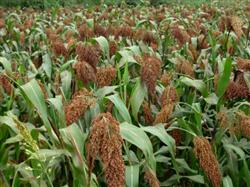
How to fertilize sorghum properly for planting? Please allow me to explain
Sorghum has wide adaptability to soil and strong nutrient uptake capacity. When planted on sandy loam rich in organic matter and with relatively high fertility, it is relatively easy to obtain high yields. On lean and barren dry land lacking phosphorus and low in potassium, fertilizer must be added to obtain a good harvest. During the seedling stage, sorghum plants are small and do not need much fertilizer, but the requirements are relatively strict. From jointing to flowering, the plants grow vigorously, and the distribution center of nutrients shifts accordingly from stems and leaves to young ears starting at jointing, and finally is stored in the ears to form grains. Therefore, ensuring sufficient nutrient supply at this time is the foundation for high yield. From flowering to maturity, the supply of nitrogen, phosphorus and potassium nutrients directly affects grain filling and maturation of sorghum. An appropriate nitrogen supply can accelerate grain filling and increase the protein content in grains, but too much or too late nitrogen can also cause delayed maturity with excessive vegetative growth, reducing yield and quality.
Generally, it is required to apply 2000 to 3000 kg of organic fertilizer per mu, 15 to 25 kg of superphosphate, 10 to 20 kg of potassium fertilizer, etc. as base fertilizer. There are two methods of base fertilizer application: broadcasting and banding. Broadcasting is mostly done before sowing in combination with plowing and harrowing the field to broadcast the base fertilizer. Banding is done by forming ridges and opening furrows before or after sowing. In addition, at sowing, applying 1000 kg of decomposed dilute manure water per mu or a small amount of nitrogen chemical fertilizer as seed fertilizer is beneficial for full stands and strong seedlings. Topdressing is mainly based on quick-acting nitrogen fertilizer, mainly jointing fertilizer and booting fertilizer. The best topdressing periods for sorghum are the jointing stage and the large trumpet stage, to promote ear differentiation and reduce floret degeneration, achieving large ears and many grains. When topdressing urea exceeds 15 kg per mu, it should be applied in stages. Sorghum topdressing is best done with more early and less late, heavily applying jointing fertilizer (at the jointing stage) and lightly applying booting fertilizer (at the booting stage). Generally, when two-thirds of the leaves are fully expanded, apply 5 to 8 kg of potassium fertilizer and 40 kg of ammonium bicarbonate per mu. Apply in furrows as banding, in holes, or by broadcasting. When broadcasting, it must be combined with deep intertillage or watering to help the fertilizer take effect. In the later growth period, appropriate foliar topdressing can be done by spraying potassium dihydrogen phosphate (at a concentration of 0.1 percent) or urea (at a concentration of 2 percent) at the early heading and grain-filling stages to promote early maturity and increase yield. In sorghum production, attention must be paid to balanced fertilization, especially the combined application of nitrogen and phosphorus, which can avoid imbalance in nutrient supply and significantly improve fertilizer efficiency. On low-yield plots, the soil itself is inherently deficient in nitrogen and phosphorus. Applying a single fertilizer often cannot perform well due to an imbalanced nitrogen-to-phosphorus ratio, causing fertilizer waste and little yield increase.
According to experimental research, combined application of nitrogen and phosphorus as seed fertilizer can promote growth and development, with fast seedling growth, more leaves, strong growth vigor, enhanced plant metabolic function, improved plant absorption capacity, significantly improved fertilizer efficiency, increased ear weight, a large yield increase range, and can multiply yield. Therefore, on low-yield soil, reasonable combination and balanced fertilization is an effective measure for economical fertilization.
Click to get more sorghum planting techniques
Click to get more grain planting techniques