What are the key measures to prevent low yields in soybean cultivation?
How can low yields be prevented in soybean cultivation? Please give guidance. In current agricultural production, soybeans are basically grown without fertilizer (especially in summer soybean production areas). The main reason is that most people believe soybeans can fix nitrogen, so growing soybeans does not require fertilizer, and they can also leave a certain amount of nitrogen for the following crop. It is precisely because of this mistaken understanding that gr...
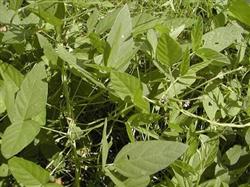
How can low yields be prevented in soybean cultivation? Please give guidance
In current agricultural production, soybeans are basically grown without fertilizer (especially in summer soybean production areas). The main reason is that most people believe soybeans can fix nitrogen, so growing soybeans does not require fertilizer, and they can also leave a certain amount of nitrogen for the following crop. It is precisely because of this mistaken understanding that soybean yields in production are relatively low, generally maintained at around 150 kg/mu. In fact, the yield level of currently promoted soybean varieties is generally 225 to 275 kg/mu, and high-yielding varieties approach 300 kg/mu. Due to no fertilization and extensive management, 70 to 100 kg of soybeans per mu are lost.
Soybeans can fix nitrogen, but the amount of nitrogen fixed is limited, and this effect occurs mainly from flowering to the pod-filling stage. In the approximately 40 days before flowering, root nodules are small and few, and nitrogen fixation is very limited; in the late pod-filling stage, root nodules senesce and nitrogen fixation declines rapidly. Generally speaking, the nitrogen provided by soybean nitrogen fixation accounts for only about 30% of the nitrogen required for soybean growth; under suitable conditions, it can reach about 50%. At present, most soybean production areas are affected by diseases such as soybean cyst nematode and root rot, and their nitrogen fixation is affected. In addition, when phosphorus is insufficient, the number of root nodules and nitrogen fixation capacity decline. Even if nitrogen fixation can provide 100% of the nitrogen required for soybean growth, soybean growth still requires phosphorus, potassium and trace elements.
According to measurements, for every 100 kg of soybean grain produced, about 8.25 kg of pure nitrogen, 1.75 kg of available phosphorus and 3.60 kg of available potassium are absorbed. Based on the current actual soybean yield level of 250 kg/mu, for soybeans to achieve a normal yield level, the grain alone requires 20.63 kg of nitrogen, 4.38 kg of phosphorus and 9.00 kg of potassium per mu. In addition to the grain requiring more nutrients, its stalks also contain much higher nitrogen, phosphorus and potassium than other grain crops. Soybean stalks contain 1.3% nitrogen, 0.3% phosphorus and 0.5% potassium. The economic coefficient of soybeans is generally between 0.25 and 0.50. Calculating 300 kg of soybean straw per mu, the straw contains about 3.90 kg of nitrogen, 0.90 kg of phosphorus and 1.50 kg of potassium respectively.
From the above analysis, it can be seen that soybeans are a crop with relatively high fertilizer requirements. Even if nitrogen fixation can provide 50% of the nitrogen required by soybeans, to achieve its proper yield, the soil and artificial inputs must still provide 13.90 kg of pure nitrogen, 5.28 kg of phosphorus, 10.50 kg of potassium and various trace elements per mu for soybeans. This does not include the nutrient consumption of leaves, pod husks, etc. In fact, the nutritional demand of soybeans is greater than this figure. General soil fertility, without artificial fertilization, can hardly meet the needs of normal soybean growth, and it is therefore difficult to bring out the yield level of soybeans.
Although soybeans have relatively high fertilizer requirements, soybeans are a deep-rooted crop and can absorb nutrients from deeper soil. In production, for plots with general fertility, a usual fertilization rate of 2 to 4 kg/mu of nitrogen, 5 to 8 kg/mu of phosphorus, 4 to 9 kg/mu of potassium and an appropriate amount of trace elements can achieve a relatively ideal yield.
The demand of soybeans for nitrogen fertilizer is roughly about 20% of the whole growth period before flowering and about 20% in the late pod-filling stage, with about 60% of the whole growth period from flowering to the middle pod-filling stage; phosphorus uptake before flowering accounts for 15% of the total, from early flowering to pod setting accounts for 60%, and from pod setting to pod filling accounts for 25%; potassium fertilizer demand accounts for more than 30% before flowering, more than 60% from flowering to pod filling, and less than 10% from pod filling to maturity. From the fertilizer demand pattern of soybeans, soybeans have the greatest demand for nitrogen fertilizer in the middle stage, and a relatively large demand for phosphorus and potassium fertilizers in the early and middle stages. Therefore, phosphorus and potassium fertilizers should be applied early, preferably as a base fertilizer.
Summer soybean cultivation mostly uses wheat as the previous crop. In order to save time, most plots are sown on the stubble without plowing in time, which brings difficulties to applying base fertilizer to soybeans. In this case, soybeans should be fertilized in combination with intertillage weeding and earthing up. Generally, a ternary compound fertilizer is applied before flowering, and the amount should be appropriately increased or decreased according to the fertilization amount of the previous crop and the soil fertility. Phosphorus and potassium fertilizers should be applied all at once, while nitrogen fertilizer can be applied in two applications, with 1/3 at the seedling stage and 2/3 at the flowering stage. After the flowering stage, due to operational difficulties, late-stage nutrient deficiency should be addressed mainly by foliar fertilization. For foliar spraying per mu, 1 kg of diammonium phosphate or 1 kg of urea plus 1.5 kg of superphosphate can be used (superphosphate should be pre-soaked for 24 hours, then filtered before spraying), mixed with 50 to 60 kg of water; or a mixed solution of 0.3% potassium dihydrogen phosphate and 0.2% urea, 50 kg per mu, sprayed from the beginning of pod setting in the evening on sunny days, once every 7 to 10 days, for 2 to 3 consecutive sprays.
Click to get more soybean cultivation techniques
Click to get more grain and oil crop cultivation techniques