Detailed Explanation of Key Points on Salvia miltiorrhiza Cultivation and Processing Techniques
How is Salvia miltiorrhiza cultivated and processed? Please give an introduction. Salvia miltiorrhiza, also known as purple salvia, red salvia, blood salvia, and red-rooted salvia, is the dried root of the Lamiaceae plant Salvia miltiorrhiza. It has the functions of dispelling blood stasis and relieving pain, activating blood and regulating menstruation, and nourishing the heart and eliminating restlessness. It is suitable for irregular menstruation, amenorrhea, ectopic pregnancy, hepatosplenomegaly, angina pectoris, restlessness and insomnia,...
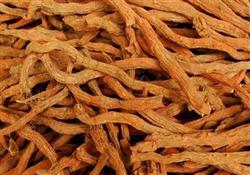
How is Salvia miltiorrhiza cultivated and processed? Please give an introduction
Salvia miltiorrhiza, also known as purple salvia, red salvia, blood salvia, and red-rooted salvia, is the dried root of the Lamiaceae plant Salvia miltiorrhiza. It has the functions of dispelling blood stasis and relieving pain, activating blood and regulating menstruation, and nourishing the heart and eliminating restlessness. It is suitable for symptoms such as irregular menstruation, amenorrhea, ectopic pregnancy, hepatosplenomegaly, angina pectoris, restlessness and insomnia, and sores and abscesses. It is a commonly used Chinese medicinal material, with an annual national demand of about 4.1 million kg. This product is mainly produced in Anhui, Shanxi, Hebei, Sichuan, Jiangsu, Liaoning, Henan, Shaanxi, Shandong, Zhejiang, and Fujian provinces. Its cultivation and processing methods are as follows:
I. Site selection and land preparation
Salvia miltiorrhiza is a deep-rooted plant, and its roots can extend more than 0.3 m into the soil layer. To facilitate root growth and development, it is advisable to choose fertile, loose, deep, slightly elevated land with good drainage for planting. For mountain cultivation, sunny low hillsides should be chosen. Salvia miltiorrhiza has low soil requirements, and yellow sandy soil, black sandy soil, and alluvial soil can all be used for planting.
Salvia miltiorrhiza is a root-type medicinal material with a long growth period. During land preparation, apply base fertilizer to the land first, and apply as much slow-release farmyard manure and phosphate fertilizer as possible as base fertilizer. It is best to apply 2500-4000 kg of decomposed barnyard manure per mu and plow it into the soil as base fertilizer. Before planting, plow and harrow again, break up the soil, level it, and make beds. Generally, the bed width including furrows is 2.5-3 m, and the bed height is 15-25 cm. When cultivating in plain areas with a high groundwater table, deeper furrow trenches need to be dug to prevent root rot; for overly long beds, a waist trench should be dug every 20 m to maintain smooth drainage.
II. Propagation methods
Seed propagation: Broadcasting is generally mostly used, and sowing from Grain in Ear to Summer Solstice and from End of Heat to White Dew in the same year of seed collection is best. The seedbed should be land that is slightly elevated, loose and fertile, and convenient for watering. For seedling raising in mountainous areas, it is best to choose east- or southeast-facing hillside land at the foot of the mountain as the seedbed to reduce sun exposure and facilitate emergence. The seedbed should first be plowed, and decomposed human feces and urine should be used as base fertilizer. The soil should be broken up finely, and high beds should be made, with a bed width of 1.3-1.66 m. Then sow the seeds evenly and shallowly on the bed surface. After sowing, tread lightly once with the foot so that the seeds adhere closely to the surface soil (no need to cover with soil), cover with a thin layer of wheat straw, and sprinkle water frequently to keep it moist. When the seedlings have 3-5 true leaves, thin them if they are found to be too dense. The thinned seedlings can be temporarily planted elsewhere and cultivated. During this period, pay attention to watering and timely apply 1-2 topdressings of dilute human feces and urine to promote seedling growth. The suitable transplanting time is from late October to early November of the same year. Before transplanting, open holes on the prepared bed surface at a spacing of 25 cm x 25 cm, with the hole depth depending on the length of the seedling roots. Plant 1-2 plants per hole, with the planting depth just slightly exposing the heart bud; do not plant too deep, and do not let the root crown be exposed above the soil. After planting, cover with soil until the hole is level, press slightly firmly, and water promptly to stabilize the roots. Early transplanting of Salvia miltiorrhiza allows early rooting, and by the time severe cold arrives it has already survived, and it turns green early the following year. Try as much as possible not to delay transplanting until the severe cold season.
Root division propagation: Carry out from Start of Spring to Awakening of Insects. Select healthy new roots about 1 cm in diameter for seed use. Before planting, first cut the roots into 5-7 cm long root segments. The planting density is 27 cm row spacing and 20 cm plant spacing. Open grooves on the bed surface, place the root segments upright in the grooves, taking care not to place the upper and lower ends upside down, and cover with level soil after planting. Seedlings generally emerge after Grain Rain. With root division propagation, flowering is later, and it is difficult to harvest seeds in the same year, but the roots grow faster.
Division propagation: From Start of Winter to Awakening of Insects of the following year, when harvesting home-grown Salvia miltiorrhiza (generally between Winter Solstice and Start of Spring), select healthy, disease-free plants, cut off the thick roots for medicinal use, and use roots thinner than a cigarette together with the rhizome head and heart leaves as planting stock for planting. Wild Salvia miltiorrhiza can also be collected and transplanted with roots and seedlings. Large seedlings can be divided into 2-4 plants according to the natural growth condition of buds and roots, and then planted.
Cutting method: Around Qingming, select thick and strong stems, cut them into segments with 2-3 nodes each, cut off part of the leaves, and insert them into the prepared bed, burying 6-10 cm in the soil so that the buds are slightly exposed above the soil surface, press the soil firmly, and water immediately. After that, spray water with a sprayer in the morning and evening to keep the bed surface moist.
III. Field management
Fertilization: After Salvia miltiorrhiza turns green in early spring, it goes through a 9-month growth period before harvest. Several topdressings are needed during growth. The first is applying seedling-promoting fertilizer when it turns green, using 750-800 kg of decomposed human feces and urine per mu diluted with water and poured on; the second is applied from mid-April to late May. For plots not retaining seeds, after cutting the inflorescences, apply 1000 kg of decomposed human feces and urine and 50 kg of cake fertilizer per mu; the third is after cutting old stems in June and July, applying root-growing fertilizer, which should be applied heavily. Apply 1500 kg of concentrated feces and urine, 20 kg of superphosphate, and 10 kg of potassium chloride per mu. The second and third topdressings are best applied in furrows or holes, and after application cover with soil to bury the fertilizer.
Loosening soil and weeding: Salvia miltiorrhiza grows slowly in the early stage, so soil should be loosened and weeds removed in time. Generally, from transplanting to before row closure, soil should be loosened and weeds removed 2-3 times. Loosen the soil shallowly rather than deeply to prevent damage to the roots.
Do well in drainage and irrigation: Throughout the entire growth period of Salvia miltiorrhiza plants, attention must be paid to clearing ditches and maintaining smooth drainage to prevent Salvia miltiorrhiza from being waterlogged during rainy seasons. Digging and clearing ditches can be done together with fertilization, covering the ditch mud on top of the fertilizer. During the dog days and during continuous autumn drought, furrow irrigation or watering can be carried out to resist drought. Furrow irrigation should be carried out in the morning and evening, and should be done quickly and drained quickly.
Removing inflorescences: For Salvia miltiorrhiza not intended for seed collection, starting from mid-April, the inflorescences that have just emerged 2 cm long should be pinched off one after another to ensure that nutrients are concentrated in the roots. Inflorescences should be removed early and frequently, preferably once every 10 days by pinching or cutting, for several times in succession.
Cutting off old stems: After seed-bearing Salvia miltiorrhiza has had its seeds cut and collected, the plant stems and leaves gradually age or wither, which is unfavorable to root growth. Cutting them off allows the leaf clusters at the stem base to regrow and promotes continued root growth. Therefore, from Summer Solstice to Minor Heat, all stems should be cut off level with the ground.
IV. Pest and disease control
Root rot: Occurs from May to November, with severe damage from June to July. Initially, individual root strips in the root system or part of the underground stem are damaged, then it spreads to the entire lower part. The damaged parts become wet and rotten, and the outer skin turns black; above ground, individual stems and branches die first at the beginning, and in severe cases the whole plant dies. Control methods: implement paddy-upland rotation or drench the roots with a 200-fold dilution of the biological pesticide Kang 120; or spray with a 800-fold dilution of 50% thiophanate-methyl, both of which have good effects.
Sclerotinia disease: Begins to occur in early May, and is especially severe from June to July. The pathogen first attacks the stem base, bud heads, and rhizome parts, causing these parts to gradually rot and turn brown; gray-black mouse-dropping-like sclerotia and white mycelium often appear on the surface of the diseased parts, the nearby soil surface, and inside the stem base. At the same time, the stems and leaves on the upper part of the diseased plant gradually turn yellow, and finally the plant dies. Control methods: spray with a mixture of jinggangmycin and carbendazim in the early stage of disease onset; a 1000-fold dilution of 50% validamycin can also be sprayed or poured.
Leaf spot disease: This is a bacterial leaf disease. It begins in early May and can continue until late autumn. The lesions on diseased leaves are dark brown, 1-8 mm in diameter, nearly round or irregular, and in severe cases the lesions are densely distributed and merge, causing the leaves to wither and die. Control methods: 1) Pay attention to ditching and drainage to reduce field humidity; 2) Strip off diseased old leaves at the stem base to improve ventilation and reduce sources of infection; 3) Spray 1:1:150 Bordeaux mixture before and after disease onset.
Small cutworm: Damages seedlings in spring. 100 g of 90% trichlorfon can be mixed with 5 kg of roasted tea seed cake as poisonous bait and scattered in the field to trap and kill them.
Silver-marked moth: Damages from May to October, especially severely from May to June. This insect bites the leaves of Salvia miltiorrhiza into holes or notches, and in severe cases the leaves are eaten completely. It is the main insect pest of Salvia miltiorrhiza. A 1000-fold dilution of 90% crystalline trichlorfon, or a 250-fold dilution of 25% DDT emulsion, or a 300-350-fold dilution of 25% chlordimeform aqueous solution can be sprayed.
Tiger moth: Occurs in late September, and the larvae feed on Salvia miltiorrhiza leaves. A 1000-fold dilution of 90% crystalline trichlorfon can be sprayed.
V. Seed retention
Salvia miltiorrhiza blooms and sets seed in alternate years. In the second year after planting, seeds begin to mature successively from late May or June. On the inflorescence, the order of flowering and seed setting is from bottom to top, and the lower seeds mature first. Seeds must be harvested in time, otherwise they will naturally scatter on the ground. When harvesting, if the area for seed retention is very small, harvest in stages and batches, that is, first strip off the calyxes of the lower several nodes of the inflorescence together with the mature seeds in the field, and leave the immature upper nodes for later harvest; if the retention area is relatively large, when two-thirds of the calyxes on the inflorescence have faded from green to yellow but are not yet completely withered, cut off the entire inflorescence, then discard the young tender top part and keep the mature seeds from the middle and lower parts. After cutting off the inflorescence, it must be sun-dried immediately, threshed to remove the seeds, and winnowed clean. Seeds dried for three sunny days have a higher germination rate after sowing and emerge more uniformly. After the seeds are sun-dried, put them in cloth bags and hang them in a cool, dry room for storage.
VI. Harvest and processing
Salvia miltiorrhiza can be harvested one year after field planting. From the end of the year when stems and leaves wither after frost until before the plants turn green again in early spring of the following year is the most suitable harvest period. Generally, it can be harvested from Start of Winter to Start of Spring. Harvesting from Winter Solstice to Minor Cold is better. If harvested too early, the roots are not substantial and contain much water, resulting in a low drying ratio; if too late, they sprout and turn green again, consuming nutrients and resulting in poor quality.
When harvesting Salvia miltiorrhiza, choose a sunny day. The root strips of this plant enter the soil relatively deeply, are brittle, and break easily, so they must be dug carefully. After the entire root is dug up, leave it in the field to expose and sun-dry. After the roots lose part of their water and become soft, shake off the soil attached to the roots and transport them back for processing.
For the Salvia miltiorrhiza transported back, cut off the branches and leaves, spread them in the sun and sun-dry until 50-60% dry, pinch the roots together one plant at a time by hand, then sun-dry until 80-90% dry and pinch again, pinch off all fibrous roots, and sun-dry until fully dry; or when half-dry, pile and sweat them for 4-5 days, then air the pile for 1-2 days, so that the inner core of the root strips changes from white to purple-black, then sun-dry until completely dry, and singe off the fibrous roots on the root strips with fire. Commodity (general goods) is considered best when fully dry, cylindrical, short and thick strips, branched, and mostly twisted; surface red-brown or red-yellow of varying shades, rough bark with many scales and easy to peel, light in weight and brittle; fracture red, yellow, or brown, loose with cracks, showing white veins; slight odor, sweet and slightly bitter taste; no rhizome head, no impurities, and no mold. Generally, 1500-2000 kg of dried goods are produced per hectare.
Click to get more Salvia miltiorrhiza cultivation techniques
Click to get more medicinal material cultivation techniques