What are the cultivation and management techniques for the Chinese medicinal herb Salvia miltiorrhiza (danshen)?
How should the Chinese medicinal herb Salvia miltiorrhiza be managed when grown? Please give some guidance. When growing the Chinese medicinal herb Salvia miltiorrhiza, it can be managed as follows: (1) Cultivation and weeding: generally cultivate and weed three times, once in April when the seedlings are about 10 cm tall; once around flowering in early June, and once in late August, while normally removing weeds as soon as they appear. (2) Topdressing: during the growing...
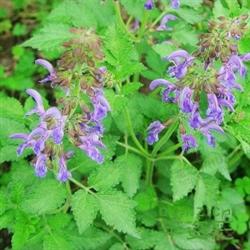
How should the Chinese medicinal herb Salvia miltiorrhiza be managed when grown? Please give some guidance
When growing the Chinese medicinal herb Salvia miltiorrhiza, it can be managed as follows:
(1) Cultivation and weeding: generally cultivate and weed three times, once in April when the seedlings are about 10 cm tall; once around flowering in early June, and once in late August, while normally removing weeds as soon as they appear.
(2) Topdressing: during the growing period, topdressing is needed three times, which can be done together with cultivation, weeding and irrigation. The first time is when Salvia miltiorrhiza turns green again, applying 5 kg of urea per 667 sq m in furrows; the second time is after the first flower spikes are cut, applying 50 kg of nitrogen, phosphorus and potassium fertilizer per 667 sq m; the third time is in August to September, spraying 0.65 kg of trace fertilizers such as manganese, boron, zinc and iron on the leaves.
(3) Irrigation and drainage: May to July is the vigorous growth period of Salvia miltiorrhiza, when water demand is relatively high. If drought occurs, water should be released from the furrow for seepage irrigation or sprinkler irrigation in time; flooding irrigation is prohibited. In continuous rainy weather, when water accumulates in the soil, it should be drained in time.
(4) Bud removal and plant control: when buds appear on the main axis and side branches of Salvia miltiorrhiza, they should be cut off in time to promote root development.
(5) Pest and disease control: the main diseases of Salvia miltiorrhiza include root rot, leaf spot and root-knot nematode disease. To prevent and control diseases of Salvia miltiorrhiza, crop rotation should be practiced; the same plot should not be planted with Salvia miltiorrhiza for more than 2 cycles, and it is best to rotate with gramineous crops. For root rot and leaf spot during the onset period, drench the roots with 800-fold dilution of 50% carbendazim or 1000-fold dilution of 70% thiophanate-methyl, 250 ml per plant, once every 7 to 10 days, for 2 to 3 consecutive times; alternatively, spray 500-fold dilution of 70% thiophanate-methyl or 600-fold dilution of 75% chlorothalonil once every 10 days, for 2 to 3 consecutive times, taking care to spray the base of the stems. The main insect pests of Salvia miltiorrhiza are white grubs and wireworms. When they occur in large numbers, drench the roots with 1000- to 1500-fold dilution of 50% phoxim emulsion or 1000-fold dilution of 90% trichlorfon, 50 to 100 ml per plant.
Click to get more Salvia miltiorrhiza cultivation techniques
Click to get more medicinal herb cultivation techniques