Detailed Explanation of Angelica Dahurica Planting Technology and Field Management Methods
How to plant and manage Angelica dahurica? Please introduce Angelica dahurica is one of the famous "eight great praying medicines," also known as Qi Baizhi. Angelica dahurica is suitable for growing in flat terrain with deep, loose, fertile, well-drained sandy loam and loam soil. 1. Sowing: Spring sowing of Angelica dahurica is around Qingming, and autumn sowing is between Chushu and Bailu...
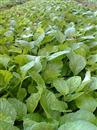
How to plant and manage Angelica dahurica? Please introduce
Angelica dahurica is one of the famous "eight great praying medicines," also known as Qi Baizhi. Angelica dahurica is suitable for growing in flat terrain with deep, loose, fertile, well-drained sandy loam and loam soil.
1. Sowing: Spring sowing of Angelica dahurica is around Qingming, and autumn sowing is between Chushu and Bailu. Open shallow furrows at a row spacing of 30 cm-35 cm, with a depth of 1.5 cm-2 cm. Spread the seeds evenly in the furrows, cover with soil and level, then press down. Use 1-1.5 kg of seed per mu.
2. Field management
(1) Thinning and final singling: When the seedlings are about 5 cm tall, begin thinning at a plant spacing of 6-9 cm. When the seedlings are 15 cm tall, carry out final singling at a plant spacing of 12-15 cm.
(2) Cultivation and weeding: Carry out cultivation and weeding along with thinning. Loosen the surface soil shallowly the first time, then deepen gradually each time after. Keep the field soil loose and free of weeds. Once the plants have grown large and closed the rows, cultivation and weeding should no longer be carried out.
(3) Topdressing: Angelica dahurica is fond of fertilizer. Before the rows close, apply 25 kg of superphosphate and 5 kg of potassium chloride per mu. After application, earth up the soil to make lodging less likely and promote growth.
(4) Watering: Irrigation and drainage. Angelica dahurica likes water but fears waterlogging in the soil. For autumn-sown Angelica dahurica, water after it turns green the following year, especially keeping sufficient moisture during the dog days. If there is waterlogging in the field during the rainy season, open ditches in time to drain it and prevent root rot and disease occurrence.
(5) Pull out bolting plants: In May of the second year after sowing, if any plants bolt and flower, pull them out in time.
3. Pest and disease control
The main diseases of Angelica dahurica include leaf spot disease, violet root rot, and root-knot nematode disease. Leaf spot disease generally occurs in May. Spray 1-2 times with 1:1:100 Bordeaux mixture or 65% zineb wettable powder at 400-500 times dilution to control the development of the disease. For violet root rot control, use 70% quintozene powder at 2 kg per mu plus 20 kg of plant ash, broadcast into the soil, then plow and sow. Crop rotation is one of the main measures for controlling root-knot nematode disease. You can mix 1.8% abamectin emulsifiable concentrate and 48% chlorpyrifos emulsifiable concentrate at a 1:1 ratio, use 120 ml per mu, and dilute with water for drenching and spraying.
The main insect pests of Angelica dahurica include aphids, red spider mites, and yellow swallowtail butterflies. When aphids occur, spray with 40% dimethoate at 1500-2000 times dilution or 50% parathion at 1000 times dilution, once every 5-7 days, for 2-3 consecutive times. To control red spider mites, begin spraying 0.2-0.3 degrees Baume lime sulfur mixture in April, once a week, for several consecutive times. For yellow swallowtail butterflies, spray with 90% trichlorfon at 800 times dilution or Qingchongjun at 500 times dilution, once every 5-7 days, for 3 consecutive times.
Click to get more Angelica dahurica planting techniques
Click to get more medicinal herb planting techniques