How to Plant Baby Bok Choy (Wrap-Hearted Mustard) in Autumn? Detailed Planting Methods
How do you plant wrap-hearted mustard in autumn? What should you pay attention to? We ask fellow gardeners for their advice. For autumn planting of wrap-hearted mustard, you can refer to the following methods: 1. Cultivation season for wrap-hearted mustard: For autumn-planted wrap-hearted mustard, when using the seedling transplant method, sowing can generally be done from July 20 to 25; when using the direct sowing method, sowing can be done from...
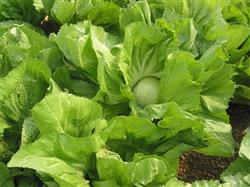 How do you plant wrap-hearted mustard in autumn? What should you pay attention to? We ask fellow gardeners for their advice.
For autumn planting of wrap-hearted mustard, you can refer to the following methods:
1. Cultivation season for wrap-hearted mustard:
For autumn-planted wrap-hearted mustard, when using the seedling transplant method, sowing can generally be done from July 20 to 25; when using the direct sowing method, sowing can be done from July 25 to the end of July. It is usually transplanted in mid-to-late August and harvested from late October to early November.
2. Selection of planting fields for wrap-hearted mustard:
Choose farmland with neutral soil, convenient drainage and irrigation, and good water quality. Prepare the soil finely, build deep furrows and high beds, with a bed width (including furrows) of 1.2 to 1.3 m. When preparing the soil and making beds, apply 1500 to 2000 kg of decomposed organic fertilizer and 30 to 40 kg of nitrogen-phosphorus-potassium compound fertilizer per mu as base fertilizer.
3. Sowing and seedling raising of wrap-hearted mustard:
There are two ways to sow wrap-hearted mustard: one is seedling transplanting, using 25 to 40 grams of seed per mu and requiring 30 sq m of seedbed; the other is direct sowing, with 2 to 5 seeds per hole, and after sowing, cover the holes with mulch to prevent rain erosion or sun exposure.
It is best to use shade netting coverage, strive for full emergence from a single sowing, and promptly carry out field management tasks such as thinning seedlings, watering, and weeding.
4. Transplanting of wrap-hearted mustard:
Plant in double rows, with a row spacing of 65 cm and a plant spacing of 25 cm, planting about 4000 plants per mu. Seedlings raised by the seedling transplant method should be transplanted with soil, and stunted seedlings, weak seedlings, and diseased seedlings should be removed. After planting, immediately drench with a 0.5% urea water solution to improve the survival rate and speed up greening and early growth.
5. Daily management of wrap-hearted mustard:
Timely replanting:After planting, when encountering high temperature and drought weather, diseased seedlings, stunted seedlings, and dead seedlings are prone to appear, so gaps should be filled in promptly, striving for balanced and early growth across the whole field.
Fertilization and watering:Because wrap-hearted mustard grows rapidly after turning green, it needs a continuous supply of fertilizer and water. Before head formation (from planting to head formation), apply fertilizer about every 10 days, drenching 750 to 1000 kg of human manure and urine per mu, or drenching 8 to 10 kg of ammonium bicarbonate plus 8 to 10 kg of superphosphate dissolved in water, for 3 to 4 applications in a row.
When the head-forming rate of wrap-hearted mustard reaches about 5%, a heavy head-forming fertilizer can be applied, using 20 to 30 kg of urea and 15 kg of potassium chloride dissolved in water and drenched per mu. For fields with fast growth and low fertility, 15 to 20 kg each of ammonium bicarbonate and superphosphate can also be dissolved in water and poured every 7 to 10 days.
6. Pest and disease control for mustard:
At sowing time, use a 1000-fold dilution of 50% phoxim to control underground pests. From emergence to before harvest, mainly control cabbage caterpillars, diamondback moths, and tobacco cutworms, using a 2000-fold dilution of 20% fenvalerate plus a 1000 to 1200-fold dilution of 3.5% phoxim-cypermethrin moth killer, or a 1500-fold dilution of 5% chlorfluazuron, or a 1500 to 2000-fold dilution of 0.6% abamectin for control.
In the early stage of head formation, spray agricultural streptomycin at 200 mg/kg to control soft rot, spraying once every 7 to 10 days, for 2 to 3 sprays in a row.
Click to get more mustard planting techniques
Click to get more vegetable planting techniques