When is the best time to control the soybean pod borer?
When is the best time to control the soybean pod borer? Here is an introduction. The soybean pod borer is a major pest in soybean production. In ordinary years the pod damage rate is 5%-10%, and in severe years it can reach 30%-60%. Damaged beans not only reduce yield but also degrade quality. Mastering the right timing and methods for controlling the soybean pod borer can...
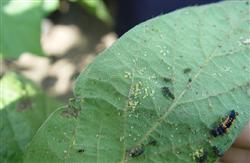
When is the best time to control the soybean pod borer? Here is an introduction.
The soybean pod borer is a major pest in soybean production. In ordinary years the pod damage rate is 5%-10%, and in severe years it can reach 30%-60%. Damaged beans not only reduce yield but also degrade quality. Mastering the right timing and methods for controlling the soybean pod borer can keep the pod damage rate below 2%-3%.
The soybean pod borer has one generation per year, overwintering as a mature larva in a cocoon in the soil. In late July of the following year it rises to the surface soil and pupates. It begins to emerge as an adult in late July and early August, with the peak emergence in mid-August. After mating, the adult lays eggs on tender pods. The eggs hatch into larvae after 6-7 days, and the larvae crawl on the pod for several hours before entering the pod to feed. The larval stage lasts 20-30 days, and in September they begin to leave the pods and enter the soil.
I. Control during the peak adult emergence period
To grasp the peak adult emergence period, forecasting must first be done well. Starting in early August, survey the number of adult moths every day in the afternoon before sunset. When the number of moths in the field suddenly increases and they appear in clusters, this is the peak adult emergence period (in most years from August 12 to August 18). Control methods: First, fumigation with dichlorvos sticks. Use 100-150 mL of 80% dichlorvos emulsifiable concentrate per mu, cut corn cobs or sunflower stalk pith into segments about 5 cm long, soak them thoroughly in the dichlorvos solution, and at a density of one stick every 4 rows and every 5 m forward, clip the sticks onto the soybean branches. This fumigation method is suitable for soybean fields with lush growth and dense canopy between rows, and the control effect can reach over 90%. The second method is spraying. Use 25% kuanshaling emulsifiable concentrate or other pyrethroid insecticides, 25-30 mL per mu, diluted with water, and use a knapsack sprayer with the nozzle pointing upward to spray from the base of the soybean plant upward, so that the lower branches and leaves and the undersides of the top leaves are covered with the pesticide. This method of controlling adults works very well regardless of how the soybeans are growing.
II. Control before the larvae enter the pods
After the soybean pod borer larvae hatch, the time they crawl on the pods generally does not exceed 8 hours. This time is very difficult to grasp. Therefore, to control the larvae, field investigation is necessary, and the pesticide can be applied once eggs are seen on the soybean pods. For larval control, pyrethroid insecticides diluted with water are generally used for spraying. The spray should be uniform, especially ensuring that the pod-bearing parts are covered with the pesticide. This method can achieve about 80% control of the larvae.
III. Control after soybean harvest
Soybeans are generally harvested in September, when some pod borers have not yet left the pods. If threshing is not done in time, the pod borers can continue to damage the beans inside the pods and leave the pods and enter the soil one after another. Before the harvested soybeans are moved to the threshing yard, use a 1500-fold dilution of mieshabi emulsifiable concentrate or other insecticides to wet the soil at the base of the soybean stack, to a wet soil depth of about 3 cm, then compact it with a wooden roller, and then stack the harvested soybeans on top. In this way, the pod borers that leave the pods later can be killed in the pesticide-treated soil layer at the base of the stack.
The commonly used control methods after soybean harvest are: First, thresh while harvesting, which can prevent the pod borers from continuing to damage the beans inside the pods after harvest. Second, apply pesticide to the base of the soybean stack before stacking after harvest, to reduce next year's pest sources. Third, carry out autumn plowing and autumn harrowing of the soybean field, to destroy the overwintering sites of the pod borers that left the pods and entered the soil before harvest, increasing their mortality rate.
Click to get more soybean cultivation techniques
Click to get more grain and oil crop cultivation techniques