How to control bean hawkmoth in soybean cultivation
How to control bean hawkmoth when growing soybeans? Please introduce the soybean bean hawkmoth: Damage symptoms The bean hawkmoth feeds on leaves as larvae. Young larvae eat them into a net-like, notched pattern, and after the third instar the larvae can eat all the soybean leaves, preventing the plants from setting pods, which has a huge impact on yield. Occurrence pattern From mid-to-late July to August...
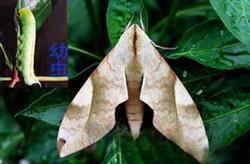
How to control bean hawkmoth when growing soybeans? Please introduce
Soybean bean hawkmoth:
Damage symptoms The bean hawkmoth feeds on leaves as larvae. Young larvae eat them into a net-like, notched pattern, and after the third instar the larvae can eat all the soybean leaves, preventing the plants from setting pods, which has a huge impact on yield.
Occurrence pattern From mid-to-late July to early August is the peak period for adult egg-laying, from late July to late August is the peak period for larval damage, and in early September the light yellow mature larvae enter the soil to overwinter.
Life habits Adults: Adults hide by day and come out at night, and have a strong phototaxis to blacklight lamps. They begin activity in the evening and have strong flying ability and strong migratory ability. They mate at night, and lay eggs 3 days after mating. Eggs are mostly scattered on the underside of soybean leaves, generally 1 to 2 eggs per leaf, and the egg stage is about 7 days before hatching into larvae. Larvae: Larvae are photophobic, mostly staying on the underside of leaves or on branches and stems during the day, and feeding strongly at night; on cloudy days they can feed all day. 1st to 2nd instar larvae eat little and generally do not move between plants to cause damage; after the 4th instar they have the habit of moving to cause damage, and 5th instar larvae have an explosive increase in food intake, eating about more than 90% of their total food consumption. The larval stage is 30 to 35 days.
Occurrence conditions Drought is unfavorable to the occurrence of the bean hawkmoth. It occurs more severely in silt soils where plants grow densely, the terrain is low-lying, and the soil is fertile; early-maturing soybean varieties suffer more severe damage. During pupation and emergence, if rainfall is moderate, the occurrence will be severe. If there is too much rain, the occurrence period is delayed.
Control methods Trapping and killing adults: Taking advantage of the adults' strong phototaxis, set up blacklight lamps to trap and kill adults, which can reduce the number of eggs laid in soybean fields and reduce damage. Chemical control: The appropriate time to control bean hawkmoth larvae should be before the 3rd instar. Use 4.5% beta-cypermethrin at 1500 to 2000 times dilution per mu, or 50% phoxim emulsifiable concentrate at 1500 times dilution for spraying, with 50 kg of spray liquid per mu. Because the larvae have the habit of hiding by day and coming out at night, the spraying time should be chosen after 5 p.m.
Click to get more soybean cultivation techniques
Click to get more grain and oil crop cultivation techniques