Summer control methods for the soybean stem miner fly
How to control the stem miner fly when planting soybeans in summer? Please give an introduction. The bean stem miner fly belongs to the order Diptera and the family Agromyzidae, and is a widely distributed boring pest of legumes. The newly hatched larvae enter through the leaf veins and the tender parts of the leaf stalks, then bore into the branches and main stem to feed on the pith and xylem. If control is not timely, in light outbreak years the damage rate of soybean plants...
How to control the stem miner fly when planting soybeans in summer? Please give an introduction
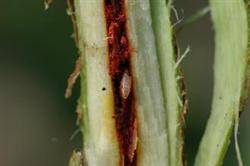
The bean stem miner fly belongs to the order Diptera and the family Agromyzidae, and is a widely distributed boring pest of legumes. The newly hatched larvae enter through the leaf veins and the tender parts of the leaf stalks, then bore into the branches and main stem to feed on the pith and xylem. If control is not timely, in light outbreak years the damage rate of soybean plants is 25-35%, and in heavy outbreak years the damage rate of soybean plants is 95-100%; when damage is light, the soybean plants are short and weak, with fewer branches and pods. The beans are small, and when damage is severe the entire soybean plant wilts and breaks off. According to measurements, this can reduce yield by 26-44%.
I. Occurrence period:
The stem miner fly has 4 generations a year, especially the 2nd-3rd generations, which are large in number and cause severe damage. The peak period of overwintering-generation adults is in early June. The peak period of the first-generation larvae is at the end of late June, boring and causing damage on spring-sown soybeans. The peak period of adults is at the end of late July and early August, boring and causing damage to soybeans at the initial flowering stage. The peak period of adults is in mid-August, when soybeans are at full flowering stage. The third-generation larvae are in late August, during the period from the end of flowering to the initial pod stage of soybeans, which is also the peak of damage; the peak period of adults is in early September. The peak period of the fourth-generation larvae is at the end of mid-September, damaging late-sown soybeans and mung beans.
II. Control measures:
1. Agricultural control. Try to use early-maturing, high-yield varieties, sow early without missing the farming season, improve the insect resistance of the plants, and thereby reduce damage.
2. Sugar-vinegar trapping. During the peak emergence period of adults, generally put 375 grams of brown sugar, 500 ml of vinegar, 125 ml of white liquor, and 0.5 grams of trichlorfon into a basin, add 500 ml of boiling water, dilute it, and place it in the field to trap and kill adults from 6-9 am and 5-7 pm, which can reduce damage.
3. Chemical control. Mainly control adults and newly hatched larvae. You can use 10% Dachengong wettable powder 15-20 grams/mu or 40% dimethoate emulsifiable concentrate 50-75 ml/mu, or 50% phoxim emulsifiable concentrate 50 ml/mu, mixed with 50 kg of water, and begin spraying twice consecutively at the full flowering stage of soybean seedlings, spraying once every 10 days; if seedlings emerge after the summer solstice, spraying should be advanced to the initial flowering stage, spraying once every 10 days, and three consecutive sprays are sufficient.
Click to get more soybean planting techniques
Click to get more grain and oil crop planting techniques