How should field management be done after planting Angelica dahurica?
How to manage Angelica dahurica well after planting? Please give guidance. The following methods can be used for management after planting Angelica dahurica: Cultivation and watering: If drought occurs after emergence, water appropriately to keep the topsoil moist; for autumn sowing, water once before freezing. Around Minor Snow, cover the bed surface with a layer of farmyard manure or horse manure, which both keeps warmth and fertilizes the field...
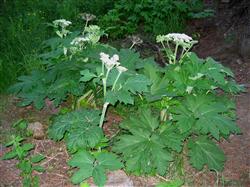
How to manage Angelica dahurica well after planting? Please give guidance
Management after planting Angelica dahurica can refer to the following methods:
Cultivation and watering: If drought occurs after emergence, water appropriately to keep the topsoil moist; for autumn sowing, water once before freezing. Around Minor Snow, cover the bed surface with a layer of farmyard manure or horse manure, which both keeps warmth and fertilizes the field. After the ground thaws the following spring, level the bed surface and repair the bed edges. After Angelica dahurica turns green again, shallow hoeing and loosening the soil help preserve moisture; water during drought to keep the soil moderately moist.
Thinning and final thinning: When the seedlings are 6-10 cm tall, thin them to a spacing of about 10 cm between plants. During final thinning, remove overly large and weak seedlings, and keep strong seedlings. Overly large seedlings tend to bolt, flower, and set seed, after which the root withers and cannot be used as medicine. Combine final thinning with shallow loosening of the soil and weeding. After final thinning, water less. During the growing period, generally hoe 6-7 times to keep the soil loose and the field free of weeds.
Topdressing: Scientific fertilization is key to improving the yield and quality of Angelica dahurica. Too much fertilizer leads to excessive growth, easily causing bolting and flowering and reducing yield; insufficient fertilizer leads to poor growth. Apply topdressing 4 times throughout the growing period. The first and second times are done together with thinning, applying 1500 kg of thin human and livestock manure water each time. The third time is after final thinning, applying 2500 kg of human and livestock manure water per mu, plus 30 kg of superphosphate. The fourth time is during the root and rhizome enlargement stage, applying 3000 kg of human and livestock manure water per mu, plus 150 kg of stove ash, broadcast on the bed surface, and cover with soil after application.
Remove bolting seedlings: In May-June of the following year after sowing Angelica dahurica, a few plants grow excessively and are about to bolt and flower; they should be removed promptly. Once Angelica dahurica flowers, it becomes hollow or has rotten roots and cannot be used medicinally; even the seeds it produces do not germinate and cannot be used for seed.
Pest and disease control: Integrated control measures should be adopted for Angelica dahurica pests and diseases, applying as little pesticide as possible or none at all. When necessary, use the minimum effective dose, and prohibit the use of highly toxic pesticides and high-residue pesticides.
Adopt health-promoting cultivation. That is, through a series of cultivation and management measures such as selecting resistant varieties, crop rotation, watering, and fertilizing, improve the resistance of Angelica dahurica itself to pests, diseases, and stress, and prevent or reduce the occurrence of pests and diseases.
Click to get more Angelica dahurica planting techniques
Click to get more medicinal herb planting techniques