How should Pinellia ternata be planted to achieve a high yield?
How can Pinellia ternata be planted to get a high yield? Please give an introduction. To get a high yield from planting Pinellia ternata, you need to understand its growth habits. Refer to the following: 1 Morphological characteristics. A perennial herb, the underground tuber is spherical to flattened-spherical, 1-2 cm in diameter, with numerous fibrous roots below. The leaf of a 1-year-old plant is a single leaf, and the leaves of 2-3-year-old plants are deeply lobed...
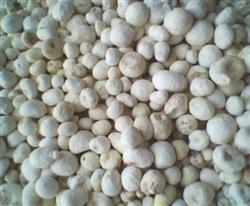
How can Pinellia ternata be planted to get a high yield? Please give an introduction.
To get a high yield from planting Pinellia ternata, you need to understand its growth habits. Refer to the following:
1 Morphological characteristics
A perennial herb, the underground tuber is spherical to flattened-spherical, 1-2 cm in diameter, with numerous fibrous roots below. The leaf of a 1-year-old plant is a single leaf, and the leaves of 2-3-year-old plants are deeply divided into three leaflets, with petioles 6-10 cm long. The spadix is terminal; the lower part of the spathe is green, the inside is blackish purple, tubular, not opening, and the upper part is blade-like. The berry is green. The flowering period is June-August, and the fruiting period is August-September.
2 Growth habits
Pinellia ternata originally grew wild on hillsides, in damp grassy areas of stream valleys, under forests, and in fields. It likes a shady and humid climate, is not tolerant of drought or saline-alkali conditions, and fears waterlogging. It grows well in soil with a deep layer, loose structure, good drainage and aeration, and rich organic matter. 3 Propagation method Direct sowing by tuber propagation, sown from late August to early September. Before sowing, apply enough base fertilizer, applying 1500-2000 kg of high-quality barnyard manure per mu, level the ground and make beds, open furrows 12-15 cm deep at a row spacing of 15-20 cm, evenly scatter the tubers in the furrows at a spacing of 5-6 cm and cover with soil. The seed rate per mu is 200-250 kg (fresh weight). Seedlings emerge in 15-20 days, and the seedlings are 10-25 cm tall.
4 Field management
4.1 Weeding: after seedling emergence, remove field weeds at any time along with loosening the soil.
4.2 Topdressing: apply high-quality farmyard manure once during the mid-growth stage, with 1000-1200 kg of topdressing per mu, along with a small amount of phosphorus and potassium fertilizer.
4.3 Watering: when drought is severe, water 1-2 times, each time moistening the soil layer to 10 cm. After irrigation, loosen the soil in time to eliminate soil compaction.
4.4 Disease control: the main disease of Pinellia ternata is white spot disease, which occurs in April-May. In the early stage of the disease, spray 50% thiophanate-methyl wettable powder at 500 times dilution, or 50% carbendazim wettable powder at 500-1000 times dilution, or 50% tebuconazole wettable powder at 500 times dilution, once every 7-10 days, for a total of 2-3 sprays.
5 Harvesting and processing
The medicinal part is the tuber. It can be harvested in both summer and autumn. During harvesting, carry out screening. Wash the large tubers clean of soil, remove the outer skin and fibrous roots, and sun-dry or oven-dry them under strong sunlight; after processing they are used for medicinal purposes. Small tubers can be kept as seeds.
6 Precautions
6.1 Strictly prevent trampling by people and livestock during the seedling stage.
6.2 Continuous cropping is not allowed.
Click to get more Pinellia ternata planting techniques
Click to get more medicinal herb planting techniques