How to Grow Leaf Mustard? Detailed Growing Methods
How to grow leaf mustard? What should be noted when growing leaf mustard? Here is an introduction to leaf mustard growing methods for reference: 1. Selection of the mustard cultivation season: Leaf mustard is not tolerant of heat or severe cold, and is suitable for cultivation under cool and humid climate conditions. Early sowing can be done at the end of August or early September, while late sowing can be done in late...
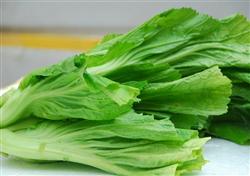 How to grow leaf mustard? What should be noted when growing leaf mustard? Here is an introduction
Leaf mustard growing methods can be referenced as follows:
1. Selection of the mustard cultivation season:
Leaf mustard is not tolerant of heat or severe cold, and is suitable for cultivation under cool and humid climate conditions. Early sowing can be done at the end of August or early September, and late sowing can be done in late September; generally, harvest occurs from March to April of the following year.
Leaf mustard generally yields 6000-8000 jin per mu, with high yields reaching 12000 jin. It is advisable to choose varieties that are not prone to bolting, raise seedlings in a cold frame, and transplant after the last frost.
If the autumn sowing period is advanced, the seedling stage occurs under relatively high temperature conditions, its growth rate and growth amount increase, the root system develops better, and the yield can be increased.
However, with early autumn sowing, because the temperature is still high and the conditions are relatively dry, aphid damage is more serious and viral disease is easily transmitted. Therefore, varieties with relatively strong disease tolerance can be sown appropriately early, while varieties susceptible to disease should be sown appropriately late.
2. Sowing and seedling-raising methods for leaf mustard:
Leaf mustard is mostly raised as seedlings and then transplanted. The seedbed should preferably be chosen far from vegetable production bases, especially far from cruciferous vegetables, to reduce the spread of viral disease by aphids. The soil should preferably be loam with good water and fertilizer retention; sandy soil heats up quickly and loses water quickly, which does not meet leaf mustard's requirement for stable, moist soil and easily leads to the occurrence of viral disease.
After the seedbed soil is plowed, it should be fully exposed to the sun. Apply 45000 kg of compost per hectare plus phosphate fertilizer, plant ash, and other materials as base fertilizer, so that the soil is loose and nutrients are sufficient, which helps seedling growth. Before sowing, rake it level, make beds 1.3 m wide and 15 cm high, and water thoroughly. Use 50 g of seed per mu of field, with a sowing rate of 0.5 kg per mu.
Because early autumn sowing is affected by hot weather or showers, which affects emergence and seedling growth, the sowing rate can be appropriately increased; for late sowing, because the climate is mild and the seedling survival rate is high, the amount can be appropriately reduced. The seedlings raised per mu of seedbed are enough for planting about 15-20 mu of land.
After sowing, cover with fine soil to a thickness of about 0.5 cm. For early sowing, it is advisable to cover with grass to retain moisture and prevent rainwater from caking the soil and hindering emergence. Once emergence begins, the covering must be removed in time. When the first true leaf appears, carry out the 1st thinning; when there are 2-3 true leaves, carry out the 2nd thinning, with a seedling spacing of about 15 cm, and apply dilute liquid fertilizer. During the seedling stage, special attention should be paid to thoroughly controlling aphids to reduce viral disease.
3. Transplanting methods for leaf mustard:
Leaf mustard does not have strict soil requirements and can be cultivated in all types of soil, but when cultivated in seasons or regions with relatively high temperatures, it is best to choose moist loam with good water and fertilizer retention. Sandy soil does not retain water and fertilizer well, tends to heat up, is prone to viral disease, and causes poor plant growth. The row and plant spacing for field planting vary by variety.
Generally, for early-maturing varieties and those with a smaller plant spread, the row spacing is 33-40 cm and the plant spacing is 25-33 cm; for mid- and late-maturing varieties and those with a larger plant spread, the row spacing is 40-46 cm and the plant spacing is 25-33 cm
. After field planting, leaf mustard roots slowly. Whether it survives quickly after field planting is related to whether the seedlings are robust and to the transplanting technique. When planting, injure the roots as little as possible, do not let the roots twist or be suspended in air, and be sure to spread the root system out in the soil layer to facilitate growth. After field planting, water promptly to settle the roots. Generally, 8000-10000 plants are transplanted per mu, or 6000 plants when intercropped in cotton fields.
4. Field management of leaf mustard:
In autumn and winter there is more cloudy and rainy weather, so irrigation is generally not carried out, and attention should also be paid to drainage. Leaf mustard is grown for its leaves, so fertilizer should be mainly nitrogen fertilizer, but phosphorus and potassium fertilizers should also be appropriately combined to improve disease resistance and increase yield. This is especially true for leaf mustard whose main product is a thickened midrib and petiole, for which phosphorus and potassium fertilizers should be applied.
In general, in addition to base fertilizer of 15000 kg of compost per hectare, 300-450 kg of superphosphate, and 1500-2250 kg of plant ash, topdressing should also be applied 3-4 times during the growing period. From after field planting and survival until before the product organ thickens, apply 2-3 times, from dilute to concentrated, requiring about 60000 kg of livestock manure and 300-450 kg of urea.
Before fertilizing, carry out intertillage and weeding. For leaf mustard cultivated in early autumn, because the early temperature is relatively high and growth is fast, topdressing should be done in time. In cold winter, fertilizing is not advisable, otherwise it is prone to freezing damage. For late-maturing varieties, fertilizer and irrigation should be applied in time after spring warms up, so as to avoid premature bolting. Stop topdressing and irrigation before harvest to avoid excessively high water content in the product.
5. Harvesting of leaf mustard
Late-maturing varieties sown in autumn or late autumn are harvested from February to April. The appropriate harvest time should suit processing requirements. They should be harvested after they are fully thickened and mature.
Leaf mustard for processing has its own harvest standards depending on the type of processed vegetable, such as the large-leaf mustard used as the raw material for Guizhou yancai, which is harvested when the shortened stem and flower stalk are thickened, sturdy, crisp and tender, and the petiole is fully thickened; the small-leaf mustard used as the raw material for Sichuan Yibin yacai, which is harvested when the petiole and midrib are fully thickened and before the flower stalk has emerged; the large-leaf mustard used as the raw material for Nanchong dongcai, which should be harvested when the shortened stem is 7-16 cm high and before the flower stalk has emerged; and heading mustard, which is harvested when the head is fully compact.
Click to get more mustard cultivation techniques
Click to get more vegetable cultivation techniques