What should generally be paid attention to when growing mustard greens?
What should generally be paid attention to when growing mustard greens? Zhongdi Web has summarized the three key points to note in mustard green cultivation, for reference by readers. Note 1, Sowing and raising seedlings: Mustard greens are generally raised as seedlings first, then transplanted. But for fast-growing cultivation, direct sowing is mostly used, with some raised as seedlings and then transplanted. Mustard green seeds are tiny, so the seed...
 What should generally be paid attention to when growing mustard greens?
Zhongdi Web has summarized the three key points to note in mustard green cultivation, for reference by readers.
Note 1, Sowing and raising seedlings:
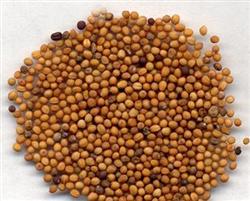
Mustard greens are generally raised as seedlings first, then transplanted. But for fast-growing cultivation, direct sowing is mostly used, with some raised as seedlings and then transplanted. Mustard green seeds are tiny, so the seedbed should be prepared with special care.
Sowing should be uniform, with 8 to 9 seeds per 10 square cm. Sufficient base fertilizer should be applied before sowing; if no base fertilizer was applied, 50% to 60% human manure and urine can be applied after sowing. Because summer temperatures are high, a somewhat larger amount of seed should be sown. After sowing, cover with soil 0.5 to 1 cm thick, and add a shade net to retain moisture, removing it after the seedlings emerge.
Before the seeds emerge, watering should be done in the morning and evening. When the seedlings grow to 2 to 3 true leaves, start thinning them, with a spacing of 3.3 to 3.3 cm, and apply rotted, diluted human manure and urine.
Note 2, Planting density:
The plant and row spacing for cultivation depends on the variety and growing season, generally 23 to 26 cm, with 7000 to 9000 plants per mu.
Note 3, Field management:
If mustard greens encounter drought after transplanting, they should be irrigated to keep the seedlings alive. In the south, autumn and winter are often cloudy and rainy, so irrigation is generally not advisable, and attention should also be paid to drainage.
Leaf mustard is grown for its leaves, so fertilization should be mainly nitrogen fertilizer, but phosphorus and potassium fertilizer should also be appropriately combined to improve resistance and increase yield. This is especially true for leaf mustard whose main product is the enlarged midrib and petiole, which should be given phosphorus and potassium fertilizer. In general, besides applying 20 kg to 30 kg of superphosphate per mu and 200 to 300 kg of plant ash per mu, topdressing should also be done 3 to 4 times during the growing period; from after the transplanted plants survive until before the product organs enlarge, apply 2 to 3 times, from light to concentrated, with about 20 to 30 kg of urea per mu.
Before fertilizing, carry out intertillage and weeding. For leaf mustard cultivated in early autumn, because the early temperature is relatively high and growth is fast, fertilizer should be applied in time; especially for early-maturing varieties, they must not run out of fertilizer early. For leaf mustard sown around White Dew, the period for heavy fertilizer application should be between late October and early November; half a month before harvest, watering and fertilizing should be stopped to avoid excessively high water content, so that the tissues are firm and processing quality is improved.
Click to get more mustard green cultivation techniques
Click to get more vegetable cultivation techniques