What Is Pepper Anthracnose? Understanding the Disease's Characteristics in One Article
What is pepper anthracnose? What methods can be used to control pepper anthracnose? Please help explain. Anthracnose is a major disease of peppers, spreading quickly under high temperature and high humidity conditions, with a long period of damage, often causing considerable losses. Peppers can develop anthracnose throughout the entire growth period, and anthracnose mainly damages leaves and fruits...
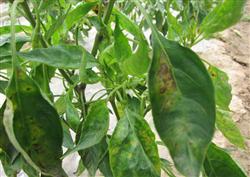 What is pepper anthracnose? What methods can be used to control pepper anthracnose? Please help explain
Anthracnose is a major disease of peppers, spreading quickly under high temperature and high humidity conditions, with a long period of damage, often causing considerable losses.
Peppers can develop anthracnose throughout the entire growth period. Anthracnose mainly damages leaves and fruits, and mature fruits and old leaves are most susceptible. When leaves are affected, nearly circular water-soaked brown spots appear along the leaf margins, with the center of the lesion light gray and bearing concentric rings of small black dots (the pathogen's acervuli). When fruit stalks are affected, irregular brown sunken spots form, which tend to crack when dry. Affected fruits tend to shrivel, and the lesions become membranous and easily rupture.
Causes of pepper anthracnose:
The optimum temperature for the development of the pepper anthracnose pathogen is 27°C, with a relative humidity of about 95%.
When the rainy season arrives early and temperature and humidity are suitable, the disease occurs and spreads easily.
The pathogen invades through wounds and spreads through wind and rain and piercing-sucking pests such as aphids and leafhoppers.
High planting density, excessive nitrogen fertilizer, poor drainage and poor ventilation and light penetration accelerate the spread of the disease.
High temperature and drought in summer and severe sunscald tend to worsen the spread of the disease in the later stage.
Fields with continuous cropping or incomplete garden cleanup have abundant inoculum sources, and the disease is severe.
Disease resistance varies greatly among varieties; generally, chili peppers are more susceptible than sweet peppers.
Control methods for pepper anthracnose:
1. Seed disinfection method for pepper seeds: soak seeds in a 100-fold dilution of Nongkang 120 4% pyrimidine nucleoside antibiotic aqueous solution for 12 hours, remove and air-dry until half-dry before sowing; alternatively, pre-soak in cold water for 1-2 hours first, then soak in 55°C warm water for 10 minutes, then place in cold water to cool, and sow after promoting germination.
2. Carry out a 2-3 year rotation with gramineous crops such as wheat and corn.
3. Control method through cultivation management: practice rational close planting according to variety characteristics and fertilizer and water conditions; ventilate and dehumidify greenhouses and sheds promptly to avoid high temperature and high humidity; drain water promptly after rain and remove diseased and dead plants promptly; apply more phosphorus and potassium fertilizer to improve the plants' disease resistance.
4. Chemical control method: in the early stage of the disease, choose a 600-fold dilution of Nongkang 120 4% pyrimidine nucleoside antibiotic aqueous solution, or a 200-fold dilution of 2% Wuyi mycin aqueous solution, or an 800-fold dilution of 80% thiram-zinc wettable powder (Tanzhifumei), or a 600-fold dilution of 75% chlorothalonil wettable powder for spray control, once every 10-15 days, for 3-4 consecutive applications.
Click to get more pepper growing techniques
Click to get more vegetable growing techniques