What are the methods for topdressing summer corn?
How should corn be topdressed when planted in summer? Please explain. Corn is a high-yield crop with a relatively large fertilizer requirement, so scientific fertilization is essential to meet corn's nutrient needs throughout the entire growth period and achieve the goals of high quality and high yield. In recent years, due to the widespread promotion of hard stubble sowing technology, the area and amount of base fertilizer used for summer corn have been relatively...
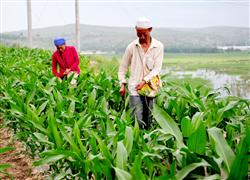
How should corn be topdressed when planted in summer? Please explain
Corn is a high-yield crop with a relatively large fertilizer requirement, so scientific fertilization is essential to meet corn's nutrient needs throughout the entire growth period and achieve the goals of high quality and high yield. In recent years, due to the widespread promotion of hard stubble sowing technology, the area and amount of base fertilizer used for summer corn have been relatively small, so topdressing is especially important for raising the production level of summer corn. For this reason, corn expert Liu Pingshe suggests that the following four points should be grasped well when topdressing summer corn.
First, fertilization must be combined. In addition to requiring large amounts of nitrogen fertilizer, summer corn also depends on phosphate fertilizer and potassium fertilizer to achieve high yields. Zinc fertilizer also has an obvious yield-increasing effect. Therefore, topdressing summer corn must combine nitrogen, phosphorus, potassium and micronutrient fertilizers, and soil testing and formula fertilization should be carried out according to the target yield and on the principle of supplementing whatever is lacking and however much is lacking. For fields with a yield of 600 kg per 667 sq m, medium fertility and no base fertilizer applied, generally about 40 kg of urea, about 25 kg of diammonium phosphate and about 15 kg of potassium sulfate should be topdressed per 667 sq m, along with supplemental zinc fertilizer.
Second, fertilization should be split. Split fertilization can not only improve fertilizer use efficiency, but also meet the growth and development needs of summer corn at different growth stages. In particular, it plays an important role in preventing fertilizer shortage and premature aging in the later stage and in improving the seed-setting rate and grain weight. The first fertilization is generally at the 7-leaf stage, applying all the diammonium phosphate and 40% of the nitrogen fertilizer, and supplementing zinc fertilizer if no zinc fertilizer was applied as base fertilizer. The second is generally at around the 13-leaf stage, applying the remaining 60% of the nitrogen fertilizer.
Third, fertilization should focus on key areas. For fields sown late with small or weak seedlings, or for small and weak seedlings that are reseeded or transplanted, they should be given "extra food and extra drink", that is, appropriately more fertilizer, to promote growth and development and help weak seedlings start early and grow quickly.
Fourth, broadcast fertilization should be avoided. To improve fertilizer use efficiency, topdressing should generally be applied in holes or in furrows, and watered promptly after application when soil moisture is poor. In production, some farmers, in order to reduce labor and improve efficiency, generally apply fertilizer with irrigation water or before rain by taking advantage of rainfall, and the effect is also quite good.
Click to get more corn planting techniques
Click to get more food crop planting techniques