How to manage corn during the seedling stage? Key technical points explained in detail
How do you manage corn well during the seedling stage? Please advise. Corn seedling stage management mainly includes the following points for reference: 1. Prepare in advance for transplanting and filling in seedlings to ensure a full stand. After corn emerges, check the emergence situation in time, and if missing seedlings or broken rows are found, reseed or replant in time. Double plants can also be left nearby to remedy missing seedling spots...
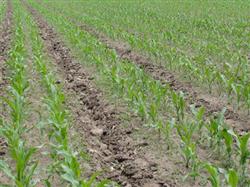
How do you manage corn well during the seedling stage? Please advise
Corn seedling stage management mainly includes the following points for reference:
1. Prepare in advance for transplanting and filling in seedlings to ensure a full stand
After corn emerges, check the emergence situation in time, and if missing seedlings or broken rows are found, reseed or replant in time. Double plants can also be left nearby to remedy missing seedling spots.
2. Master the timing of thinning and final thinning
Thinning and final thinning are generally carried out when corn grows to 3-4 leaves, removing weak, white, yellow, diseased, inferior and mixed seedlings. During final thinning, the outer rows and field edges can be left slightly denser to give full play to the marginal advantage. When thinning and final thinning, the pulled seedlings should be cleared out of the field in time. Thinning and final thinning should be done on a sunny afternoon; diseased seedlings, insect-bitten seedlings and poorly developed seedlings are more likely to wilt in the afternoon, making them easier to identify and eliminate. For those head smut-infected seedlings that are short with dense leaves, thick at the bottom and thin at the top, curved, and with dark green leaves, they should be thoroughly removed.
3. Master the timing of root-pruning to promote strong growth
Corn root-pruning should follow the root-pruning principle of "prune dark, not yellow; prune fat, not thin; prune wet, not dry." That is, prune strong seedlings with dark green leaves, fertile soil and sufficient soil moisture. Otherwise, do not prune. For fields with weak seedling growth, not only should root-pruning not be carried out, but fertilizer and water measures should also be taken in time to promote the seedlings to become strong.
4. Timely control of insect pests.
There are many kinds of insect pests during the corn seedling stage, especially in summer corn. At present, the main insect pests harming corn at the seedling stage include cutworms, aphids, thrips, cotton bollworms, wheat stem flies, etc., and pest control should be done in time.
For corn seedling stage management, there are also weeding, fertilizing, etc. Most farmers are already able to do these tasks well. On the basis of the above four key points to pay attention to, doing conventional work such as fertilizing well will surely make corn growth unexpectedly good.
Click to get more corn planting techniques
Click to get more food crop planting techniques