How to cultivate Pinellia ternata? A detailed explanation of the key planting techniques
How to cultivate Pinellia ternata well? A detailed introduction. Pinellia ternata is a commonly used precious traditional Chinese medicine, mainly supplied commercially by harvesting wild resources. In recent years, due to changes in the environment, climate, and resources, the contradiction between supply and demand has become increasingly tense. Because cultivation development has been slow, the market has long been in short supply, and prices have remained stable and continued to ris...
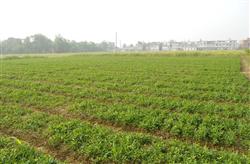
How to cultivate Pinellia ternata well? A detailed introduction
Pinellia ternata is a commonly used precious traditional Chinese medicine, mainly supplied commercially by harvesting wild resources. In recent years, due to changes in the environment, climate, and resources, the contradiction between supply and demand has become increasingly tense. Because cultivation development has been slow, the market has long been in short supply, and prices have remained stable and continued to rise. In many places, Pinellia pedatisecta is used as a substitute. In southern provinces such as Jiangxi and Guangxi, cultivation of Pinellia pedatisecta has appeared. The state has repeatedly ordered that Pinellia pedatisecta be listed as a counterfeit, prohibiting pharmaceutical factories from using the counterfeit Pinellia pedatisecta instead of Pinellia ternata as a raw material. Due to various reasons, its wild resources are being dug up less and less, resulting in supply falling short of demand. Artificial cultivation is limited in improving yield and quality by problems such as low reproductive capacity and variety degeneration, and cannot promptly supply the strong market demand. The amount available on the market has decreased year by year, while domestic medicinal use and export volume have increased substantially year by year, and its selling price has risen higher and higher. In the winter medicine market of 2005, it sold for 55-65 yuan/kg, up 33.3% from the same-period price of 45 yuan. Both export and domestic sales were in tight demand, with no extra goods available, making it a hot variety in medicine market trading, with good market and cultivation prospects. With traditional methods, cultivating Pinellia ternata generally yields 500-750 kg of fresh tubers per mu, with a drying ratio of 25%-30%, and an annual yield of 125-200 kg. However, according to high-yield practical experience from production areas, high-yield fields average 850-1500 kg of fresh tuber yield per unit area, an increase of 50%-100%, a significant yield increase, with an output value of more than 10,000 yuan per mu and considerable benefits. Therefore, for medicinal farmers to obtain relatively high yields and high benefits from cultivating Pinellia ternata, in addition to good routine field management, they must also grasp the following key links:
According to the biological characteristics of Pinellia ternata, develop production according to local conditions. Pinellia ternata likes a warm and humid climate, can tolerate cold and shade, but is not drought-tolerant and fears strong light. Taking advantage of this characteristic, Pinellia ternata can be interplanted on gently sloping mountain land with half shade and half sun, or in wheat fields or broadleaf fruit tree forests, and can also be intercropped with tall-stalk crops such as corn, rapeseed, sorghum, and beans. In this way, Pinellia ternata is managed at the same time as crops or economic forest fruits are managed, which both rationally utilizes the land and increases comprehensive benefits.
Excellent seeds are an important guarantee for achieving high yields in cultivating Pinellia ternata. So what are the quality conditions that determine excellent seeds? First, select excellent individual plants with pure variety, no pests or diseases, and robust growth as mother plants for seed collection. Second, the mother plants used for seed collection should be cultivated separately, and water and fertilizer management should be strengthened. Third, to prevent variety mixing, separate harvesting and separate storage are also required. Finally, promptly harvest mature, plump, large, and heavy tubers as seeds. Apply modern biological methods to tissue culture of the excellent Pinellia ternata seed bulbs obtained through careful selection and breeding, establish a rapid asexual propagation system for excellent Pinellia ternata clones, and screen out Pinellia ternata varieties with excellent traits, which can not only mass-produce excellent Pinellia ternata seedlings, but also shorten the field growth period. Then combine the use of bulbils and tubers for propagation to increase the propagation coefficient.
According to experiments, when buds are forced at 20-25°C, and planted when most bud sheaths turn white and covered with plastic film, seedlings emerge 30 days earlier than when neither bud forcing nor film covering is used; those not subjected to bud forcing but only covered with film emerge 25 days earlier. At the same time, bud forcing plus film covering increased yield by 52.6% compared with the control, and no bud forcing with only film covering increased yield by 29.8% compared with the control. Planting after buds are forced enables Pinellia ternata planting material to complete the internal physiological changes before germination in advance. Covering with plastic film increases ground temperature and reaches the temperature required for seedling emergence earlier, so buds quickly grow out of the ground. Bud forcing plus film covering not only preserves soil moisture, increases temperature, and advances seedling emergence, but also makes the soil loose with good air permeability, more conducive to root growth and development, enabling the plants to resist drought and waterlogging and always maintain vigorous absorption and physiological functions, laying the foundation for tuber enlargement and high yield of Pinellia ternata.
The plastic film used can be ordinary agricultural plastic film (thickness 0.014 mm), or high-density film (thickness 0.008 mm). When covering with film, make the film flat and closely adhere to the ridge of the bed, and compact it with soil, achieving tightness, flatness, and strictness. When the temperature stabilizes at 15-18°C and about 50% of seedlings have emerged, the plastic film should be removed to prevent high temperatures inside the film from scorching young seedlings. Before removing the film, seedlings should first be hardened. The method is to uncover both ends of the bed at noon for ventilation and heat dissipation, seal them again in the evening, and after several consecutive days remove the film entirely.
When gradually entering the high-temperature season in late June, how to keep the bed surface moist and delay the withering of the aboveground part of Pinellia ternata as much as possible is an important measure for increasing Pinellia ternata yield. According to experiments, covering with rice and wheat straw (chaff) in mid-May and mid-June each year resulted in only 5% seedling collapse in late July and good growth, while the control group had 78% seedling collapse. In this way, covering relatively prolongs the growth period, and the photosynthesis period is also relatively prolonged. More photosynthetic products accumulate in the tubers, and the tubers produced grow large and have high yield, increasing yield by 123.78% compared with the control. Moreover, weeds in the covered area were significantly reduced compared with the uncovered control area, and the incidence of leaf rot was significantly reduced, which is also an important reason for the yield increase of Pinellia ternata. If rainfall is heavy and the flood season is continuously rainy, with excessive soil moisture, not only should the second covering not be applied, but the wheat straw applied the first time should also be removed promptly to prevent underground tuber rot and yield reduction.
Pinellia ternata plants are short, and during the growth period the soil should be loosened and weeds removed frequently to avoid weed infestation. The depth of intertillage should not exceed 5 cm to avoid damaging roots. Because the roots of Pinellia ternata grow around the tubers, and its root system is concentrated in the 12-15 cm surface soil layer, intertillage should be shallow rather than deep, and weeds should be removed early, when small, and completely. When Pinellia ternata is planted in early spring and covered with plastic film, while its seedlings emerge, more than 10 kinds of weeds such as green foxtail, crabgrass, goosegrass, lovegrass, nutgrass, amaranth, small bindweed, lambsquarters, and purslane also emerge, and in large quantities, often causing difficulties in seedling emergence and growth and development after the film is removed, affecting the yield of Pinellia ternata. Therefore, acetochlor can be selected to control pre-emergence weeds of Pinellia ternata. Spraying herbicide on the ground in early spring and then covering with plastic film has a good control effect on many weeds (for specific usage and dosage, follow the drug instructions). In addition, in artificial cultivation of Pinellia ternata, different herbicides can be selected according to different seasons. For spring-planted Pinellia ternata, quizalofop is suitable, and for autumn planting, either quizalofop or acetochlor can be used.
Practice shows that spraying sodium sulfite solution during high-temperature and drought periods can increase the yield of Pinellia ternata. This is because when the summer temperature continues to reach as high as 30°C, due to high temperature and strong light, the respiration of Pinellia ternata becomes too strong, and the substances consumed exceed those accumulated by photosynthesis, leading to destruction of the protoplast structure of cells and "seedling collapse." For Pinellia ternata production, "seedling collapse" shortens the growth period of Pinellia ternata and seriously affects its yield. Therefore, taking measures in production to delay or reduce summer "seedling collapse" of Pinellia ternata is an important condition for achieving high yield and high quality. In cultivation, in addition to taking appropriate shading and spraying irrigation water to reduce light intensity, air temperature, and ground temperature, a 0.01% solution of the plant respiration inhibitor sodium sulfite can also be sprayed, and a mixed solution of 0.01% sodium sulfite, 0.2% urea, and 2% superphosphate can also be sprayed to inhibit the respiration of Pinellia ternata and reduce the consumption of photosynthetic products, thereby delaying and reducing "seedling collapse" and achieving obvious yield-increasing benefits.
Click to get more Pinellia ternata cultivation techniques
Click to get more medicinal herb cultivation techniques