Can dry Pinellia ternata be intercropped in fruit orchards?
Can Pinellia ternata be intercropped in fruit orchards? Please give an introduction. Pinellia ternata is best suited for intercropping in fruit orchards, because it prefers shaded environments. During hot seasons, when exposed to direct sunlight, the plants are prone to lodging (seedlings turn yellow and wither), causing the tubers to stop growing. In the hot summer, the dense foliage of fruit orchards serves as a natural...
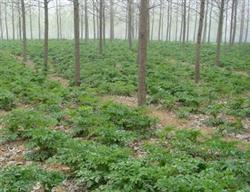
Can Pinellia ternata be intercropped in fruit orchards? Please give an introduction
Pinellia ternata is best suited for intercropping in fruit orchards, because it prefers shaded environments. During hot seasons, when exposed to direct sunlight, the plants are prone to lodging (seedlings turn yellow and wither), causing the tubers to stop growing. In the hot summer, the dense foliage of fruit orchards serves as a natural protective umbrella during the vigorous growth period of Pinellia ternata, providing favorable conditions for normal tuber growth. Pinellia ternata can be cultivated in both northern and southern parts of China. Suitable medicinal herb fields and fruit orchards for intercropping include woody medicinal plants such as Euodia rutaecarpa, bitter orange (Citrus aurantium), gardenia (Gardenia jasminoides), magnolia bark (Magnolia officinalis), eucommia (Eucommia ulmoides), phellodendron (Phellodendron amurense), biond magnolia flower (Magnolia biondii), and ginkgo (Ginkgo biloba), as well as fruit trees such as citrus, navel orange, peach, pear, jujube, apple, and grape. According to local farmers' production practices, intercropping Pinellia ternata in fruit orchards can generate an income of about 4,000 yuan per 667 sq m (1 mu), which is a 3- to 5-fold increase in benefit compared with intercropping conventional crops.
Key cultivation techniques
1. Sowing. The sowing period is from February to April in spring. Before sowing, plow the land once (note that a certain distance should be kept from the trees during plowing so as not to damage the roots), and apply 100 kg of phosphate fertilizer and 30 kg of compound fertilizer per 667 sq m of fruit orchard as base fertilizer in combination with plowing. Then level and harrow the soil finely, and open shallow furrows on the ground parallel to the tree rows, with a furrow spacing of 15-18 cm and a furrow width of 6-8 cm. Then place tubers in each furrow at a plant spacing of about 10 cm, with the buds facing upward. After planting, cover with soil, preferably so that the tubers are not visible.
2. Weeding. One or two days after planting the Pinellia ternata tubers, spray 50% acetochlor emulsifiable concentrate in a timely manner, which can inhibit the growth of annual grass weeds. During the plant growth period, if there are many weeds, use shuanshate or 8% haloxyfop-R-methyl herbicide for control.
3. Fertilization. Because Pinellia ternata has relatively narrow row spacing, it is inconvenient to apply additional fertilizer after sowing. Therefore, sufficient base fertilizer should be applied. When the seedlings are 20 cm tall, apply 10 kg of urea diluted in 1,000 kg of water (or thin human and livestock manure water) per 667 sq m and splash it onto the soil surface.
4. Disease prevention. Newly planted Pinellia ternata plots have relatively few pests and diseases. Sometimes leaf spot disease and viral disease may occur, which can be controlled with Bordeaux mixture at 1:1:120 and 65% zineb at 500 times dilution, respectively.
5. Harvesting. Pinellia ternata can be dug up 6-7 months after sowing. When the stems and leaves wither and turn yellow, choose a sunny day and carefully dig up the tubers, shake off the mud and sand, and place them in baskets. After bringing them back, separate the fresh tubers by size. Those with a diameter below 1 cm can be kept as seed and stored mixed with moist fine sand. Tubers with a diameter above 1 cm are peeled and sun-dried to become commercial products.
Click to get more Pinellia ternata cultivation techniques
Click to get more medicinal herb cultivation techniques