Detailed Guide to Spinach Cultivation Techniques and Fertilization Methods
How to fertilize spinach? How many times does spinach need fertilizing during cultivation? Please allow me to explain: spinach cultivation is divided into spring spinach, summer spinach, autumn spinach and overwintering spinach, and the fertilization methods differ for vegetables grown in each season. For detailed methods, please refer to the following list: Spinach fertilization is divided into base fertilizer and topdressing. 1. Base fertilizer for spring spinach...
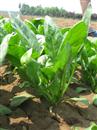 How to fertilize spinach? How many times does spinach need fertilizing during cultivation? Please allow me to explain
Spinach cultivation is divided into spring spinach, summer spinach, autumn spinach and overwintering spinach, and the fertilization methods for vegetables grown in each season differ. For detailed methods, please refer to the following list:
Spinach fertilization is divided into base fertilizer and topdressing
1. Base fertilizer: Spring spinach is sown early, so the soil can be prepared and fertilized the previous year, applying 4000-5000 kg of decomposed organic fertilizer per 667 sq m, deep plowing 20-25 cm, raking level and making beds; sowing can be done when the soil thaws to a depth of 7-10 cm in early spring. Compost and chemical fertilizer can be mixed and broadcast as a base fertilizer. Apply 3000-4000 kg of compost, 30-35 kg of superphosphate, 20-25 kg of ammonium sulfate and 10-15 kg of potassium sulfate per 667 sq m, deep plow the soil 20-25 cm, rake level and make beds.
For autumn spinach, apply 4000-5000 kg of organic fertilizer and 25-30 kg of superphosphate per 667 sq m, deep plow the soil 20-25 cm, and make raised beds or flat beds. For overwintering spinach, choose soil with deep tillage layers, fertile texture, high humus content and good fertilizer and water retention, and apply more organic fertilizer than in other seasons: 5000 kg of decomposed organic fertilizer and 25-30 kg of superphosphate can be broadcast per 667 sq m, deep plow the soil 20-25 cm, and mix soil and fertilizer thoroughly to loosen the soil and promote seedling emergence and root development.
2. Topdressing: In the early growth stage, spring spinach generally does not need fertilizer or water, which helps it absorb nutrients from the soil. By the middle and late growth stages, the uptake of fertilizer and water increases, and 15-20 kg of ammonium sulfate can be applied with irrigation water per 667 sq m.
Because spring spinach has a short growth period, sufficient nitrogen fertilizer can make the leaves grow vigorously and delay the bolting stage.
Summer spinach is sown in the high-temperature season. After 2-3 true leaves appear, apply quick-acting nitrogen fertilizer 1-2 times, with 10-15 kg of ammonium sulfate per 667 sq m, and water promptly after fertilizing. A 0.3% urea foliar spray can also be used to supplement nitrogen.
After autumn spinach seedlings emerge and grow to 4-5 true leaves, apply quick-acting nitrogen fertilizer 2-3 times in stages. Apply 20-25 kg of ammonium sulfate or 10-12 kg of urea with irrigation water per 667 sq m to promote thicker leaf growth, increase yield and improve quality.
Because overwintering spinach has a longer growth period, it should be fertilized, and this can be done in 3 stages: before winter, during overwintering and in early spring. The pre-winter growth period is about 50-60 days; apply 1 topdressing together with irrigation, applying 10-15 kg of ammonium sulfate with water per 667 sq m. When watering with "freezing water", apply another 1000-1500 kg of dilute manure water. No topdressing is needed during the overwintering dormancy period.
The early spring growth period is 30-40 days. When the spinach leaves turn green and the heart leaves begin to grow, water lightly once. After the spinach enters the vigorous growth period, topdress promptly, applying 10-15 kg of ammonium sulfate per mu together with watering. Supplying sufficient fertilizer and water during this period can delay bolting, increase yield and improve quality.
Click to get more spinach cultivation techniques
Click to get more vegetable cultivation techniques