What is leaf spot disease in cilantro cultivation?
What is cilantro leaf spot disease? What harm does leaf spot disease do to cilantro? Here is an introduction and control methods. Harm of cilantro leaf spot disease: Leaf spot disease mainly damages leaves, petioles and stems. When leaves are infected, small olive to brown, irregular or nearly round spots initially appear, with distinct edges; after expansion, the center turns gray, and black small granules, which are the pathogen fruiting bodies, grow on the spots...
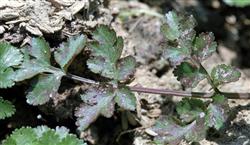 What is cilantro leaf spot disease?What harm does leaf spot disease do to cilantro?Here is an introduction and control methods
Harm of cilantro leaf spot disease:
Leaf spot disease mainly damages leaves, petioles and stems. When leaves are infected, small olive to brown, irregular or nearly round spots initially appear, with distinct edges; after expansion, the center turns gray, and black small granules, which are the pathogen fruiting bodies, grow on the spots.
In severe cases, the spots merge into patches, causing the leaves to dry up. When petioles and stems are infected, the spots are striped or long oval brown lesions, slightly sunken.
Causes of cilantro leaf spot disease:
Under conditions of high humidity with water droplets, conidia germinate, produce germ tubes, and invade through stomata or directly penetrate the epidermis. This disease belongs to the high-temperature range disease group; warm and humid conditions favor its occurrence, and in production, 20-25°C and rainy conditions lead to severe disease. In addition, clear days with dew at night, or temperatures suddenly rising and falling or being too high or too low, causing poor host growth and reduced disease resistance, can all cause the disease to occur or become epidemic.
Control methods for cilantro leaf spot disease:
1. Use disease-free seeds or disinfect seeds: If seeds carry the pathogen, first place the seeds in 48-49°C warm water and soak for 30 minutes, stirring constantly so the seeds are heated evenly. After soaking, immediately place them in cold water to cool, then dry and sow.
2. Strengthen management: The bed surface should be level, plant at appropriate density, thin seedlings and weed in time. Pay attention to ventilation and light transmission, reduce field humidity, and strictly prohibit flood irrigation.
3. Immediately remove diseased residues after harvest to reduce sources of inoculum.
4. At the early stage of disease onset, begin spraying 50% Lide wettable powder 1000-fold solution, or 40% enhanced Ridomil wettable powder 1000-fold solution, 50% carbendazim plus wanmeiling wettable powder 1000-1500-fold solution, or 75% chlorothalonil wettable powder 600-fold solution, once every 7-10 days, for 2-3 consecutive treatments. Stop applying the pesticide 7 days before harvest.
Click to get more cilantro cultivation techniques
Click to get more vegetable cultivation techniques