Cotton Cultivation Techniques: How to Manage Cotton in August?
How to manage cotton in August? Please explain the methods. August is the period from full bloom to boll opening in cotton. It is the key period for preserving summer bolls and striving for autumn bolls. The main tasks of cotton field management are to improve ventilation and light penetration in the cotton field, maintain root vitality, prevent excessive vegetative growth and late maturity, and prevent premature senescence. 1. Apply top-dressing fertilizer. Normal growth...
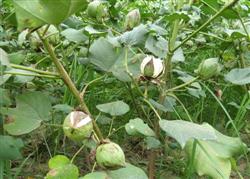
How to manage cotton in August? Please explain the methods
August is the period from full bloom to boll opening in cotton. It is the key period for preserving summer bolls and striving for autumn bolls. The main tasks of cotton field management are to improve ventilation and light penetration in the cotton field, maintain root vitality, prevent excessive vegetative growth and late maturity, and prevent premature senescence.
1. Apply top-dressing fertilizer
Cotton fields with normal growth that have received a heavy application of flowering and boll fertilizer are usually given one top-dressing of fertilizer around the 10th. For cotton fields that set many bolls early on, in order to meet the nutrient demands of a large boll load and increase boll weight, top-dressing is usually required. At the same time, for cotton fields where too many squares and bolls were shed early and yield depends on late bolls, in order to strive for autumn bolls, a second top-dressing is usually needed. The timing for top-dressing is usually around August 5 and August 20, with about 5 kg of urea applied per mu each time. Apply after rain or in combination with irrigation.
2. Pay attention to late-season watering
August is the peak boll-setting period for cotton. At this time the temperature is still very high, light is intense, and water consumption is relatively large. In areas along the river, autumn drought tends to occur after the beginning of autumn, which often cannot meet the cotton's water needs. Therefore, attention should be paid to the development of drought conditions and timely watering should be carried out.
3. Pruning
Pruning during this period, in addition to topping the main stem and continuing to remove vegetative branches and superfluous buds, also requires one round of tipping the fruiting branches. In local cotton areas, it is usually necessary to tip the middle and lower fruiting branches of the cotton field by mid-August. For upper fruiting branches that have reached more than 5 fruiting nodes, the tips can also be removed.
4. Pest control
Late August is usually the peak outbreak period for cotton bollworm, tobacco cutworm, and red spider mite. They can be controlled with 48% chlorpyrifos 60 mL diluted in 50 kg of water for spraying, and 15% pyridaben 20 mL diluted in 50 kg of water for spraying, respectively. In August, cotton plants are relatively large, so the water volume per mu must not be reduced. When spraying, the requirement is to "turn over both sides and spray thoroughly on all four sides." Spraying after 4 PM until evening gives the best results, with emphasis on spraying the undersides of leaves.
5. Pick rotten bolls
In cotton fields with excessively dense canopy closure and in years with more rainy weather later in the season, large numbers of rotten bolls often occur, seriously affecting yield and quality. Among cultivation measures, options include pruning away a small number of empty lower fruiting branches, appropriately widening row spacing, and building high ridges and hilling soil in cotton fields converted from paddy fields; all are effective methods for preventing rotten bolls. In large-scale production, timely picking of rotten bolls is advocated. Generally, cotton bolls over 45 days old are basically mature. Therefore, in late August, if continuous rainy weather occurs, promptly remove bolls that are over 40 days old and whose boll shells have faded, turned yellow, or begun to develop black spots, and dry them in the sun to obtain cotton with relatively good boll opening.
Click to get more cotton cultivation techniques
Click to get more food crop cultivation techniques