Cotton Cultivation Techniques: How to Manage Cotton During the Flowering and Boll Stage?
How to manage cotton during the flowering and boll stage? Please explain the management methods. Cotton can be managed during the flowering and boll stage by referring to the following methods: 1. Fertilization: During the flowering and boll stage, a large number of cotton bolls form, and this is the period when cotton needs the most nutrients in its entire life cycle. Heavily applying flowering and boll fertilizer is a key measure to preserve summer bolls, strive for autumn bolls, and prevent premature aging. The topdressing amount should generally account for 50% or more of the total topdressing...
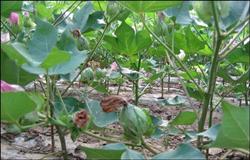
How to manage cotton during the flowering and boll stage? Please explain the management methods.
Cotton can be managed during the flowering and boll stage by referring to the following methods:
1. Fertilization: During the flowering and boll stage, a large number of cotton bolls form, and this is the period when cotton needs the most nutrients in its entire life cycle. Heavily applying flowering and boll fertilizer is a key measure to preserve summer bolls, strive for autumn bolls, and prevent premature aging. The topdressing amount should generally account for 50% or more of the total topdressing. The timing, amount, and method of fertilization should be flexibly controlled according to factors such as climate, soil, and cotton growth conditions. If the weather is dry and base fertilizer and bud fertilizer were applied sparingly, and the cotton plants are growing weakly, boll fertilizer should be applied early and heavily, so that "flowers are fertilized for bolls to use." If the weather is rainy and bud fertilizer was applied heavily, and the cotton plants are growing vigorously, boll fertilizer should be applied later. Generally, it is applied at the full flowering stage when 1-2 cotton bolls have set on the lower part of the cotton plant, typically by applying 10-13.3 kg of urea per mu, together with 5-7 kg of potassium fertilizer, deeply applied in furrows or in controlled holes. To prevent premature aging of cotton plants and encourage more boll setting, after the full flowering stage, a topping fertilizer should also be applied according to soil fertility and the appearance of the cotton plants. Generally, from late July to early August, after cotton topping, apply 2.7-3.3 kg of urea per mu; if the base fertilizer is sufficient, the soil is fertile, and the cotton field has vigorously growing plants, the topping fertilizer may be omitted.
2. Pruning: (1) Remove superfluous buds. New buds that grow from the leaf axils at the base of fruit branches and at fruit nodes are collectively called superfluous buds. Superfluous buds should be removed whenever they appear, so as to avoid wasting nutrients, causing shading, and affecting bud and boll development. (2) Topping. Topping is the most important measure in cotton field pruning techniques. Timely topping can break the apical dominance of the cotton plant, change the transport and distribution of nutrients within the plant, enable it to set more buds and bolls, and increase boll weight. Topping can also effectively control plant height, improve ventilation and light conditions, and help increase yield and promote early maturity. Topping is generally done from late July to early August. Only the terminal bud should be removed; pulling off a whole handful is strictly prohibited. It should also be done in stages so that the whole field grows uniformly. (3) Remove side tips. Removing the growing points of each fruit branch controls the lateral growth of fruit branches, with an effect similar to topping. Generally, the lower fruit branches retain 2-4 fruit nodes, the middle ones retain 3-4 fruit nodes, and the upper ones retain 4-5 fruit nodes. When the fruit branches reach the planned number of fruit nodes, their terminal buds are removed.
3. Irrigation and drainage: During the flowering and boll stage, the leaf area is at its largest. This coincides with the high-temperature season, and leaf transpiration is intense, making it the period when cotton plants need the most water in their entire life cycle. If drought occurs at this time and the soil lacks water, it will cause a large number of buds and bolls to shed and lead to premature aging. Therefore, during the flowering and boll stage, timely watering and irrigation are essential when drought occurs. Furrow irrigation is generally used, and after each watering, timely intertillage should be carried out to preserve soil moisture. In addition, if there is excessive rain, attention should be paid to drainage to avoid bud and boll shedding.
4. Intertillage and hilling: During the flowering and boll stage, intertillage combined with topdressing can reduce weed damage, enhance soil permeability, and prevent premature root aging. Intertillage should be shallow rather than deep, so as not to damage too many roots, affect root absorption of water and nutrients, and cause bud and boll shedding. Hilling can be carried out together with intertillage, which is beneficial for irrigation, drainage, and lodging prevention.
5. Chemical regulation: Chemical regulation should be determined according to the growth vigor and appearance of the cotton plants. For vigorous growth, chemical regulation should be appropriately increased; for weak growth, the number of chemical regulation applications and the dosage should be reduced. Generally, at the full bud stage, apply 2-3 g of 25% mepiquat chloride per mu, mixed with 10-15 kg of water, and spray once; at the early flowering stage, apply 6-8 g of 25% mepiquat chloride per mu, mixed with 20-25 kg of water, and spray the cotton seedlings. About 7 days after topping (except for prematurely aging fields), apply 12-20 g of 25% mepiquat chloride per mu, mixed with 30-40 kg of water, and spray the tips of the upper fruit branches of the cotton plant.
Click to get more cotton cultivation techniques
Click to get more food crop cultivation techniques