What Is Cilantro Powdery Mildew? A Detailed Guide to Cilantro Cultivation Diseases
What is cilantro powdery mildew? What harm does cilantro powdery mildew cause? We also invite experienced gardeners to share their guidance on prevention and control. Zhongdi Network has compiled the harm and control methods of cilantro powdery mildew, listed below for gardeners' reference. Harm of cilantro powdery mildew: All aboveground parts of the cilantro plant can be affected, but the main damage is to the leaves...
 What is cilantro powdery mildew? What harm does cilantro powdery mildew cause? We also invite experienced gardeners to share their guidance on prevention and control
Zhongdi Network has compiled the harm and control methods of cilantro powdery mildew, listed below for gardeners' reference.
Harm of cilantro powdery mildew:
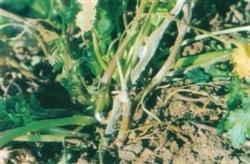
All aboveground parts of the cilantro plant can be affected, but the main damage is to the leaves, stems and flower stalks. It first appears on leaves near the ground, initially as white mold spots, which then expand on the mold spots into white powdery patches, occurring on both sides of the leaves; stem infection mostly occurs at the nodes. When conditions are suitable, the white powdery substance quickly covers the flowers and fruits, mostly spreading from the lower part of the plant upward. In the later stage, the hyphae turn from white to light brown, and many small black granules are produced on the diseased parts, namely the ascocarps of the pathogen.
Causes of cilantro powdery mildew:
The powdery mildew pathogen overwinters as cleistothecia on diseased plant debris. When conditions are suitable the following year, it produces ascospores for primary infection. After the disease develops, large numbers of conidia form on the lesions for secondary infection. Seed-producing plants are mostly infected at the flowering stage, and cleistothecia begin to form in autumn. High soil moisture, excessive nitrogen fertilizer, potassium deficiency, and plants being too densely planted or with many weeds make the disease more likely to occur.
Control methods for cilantro powdery mildew:
1. Select and breed powdery mildew-resistant varieties, and strengthen the temperature and humidity management of greenhouses.
2. After harvest, promptly remove diseased plant debris to reduce overwintering sources of inoculum.
3. In the early stage of the disease, dusting or smoke methods can be used in greenhouses. In the evening, spray 10% Duobai dust, 1 kg per 667 sq m, or apply 45% chlorothalonil smoke agent, 250 g per 667 sq m, ignited with a smoldering flame and fumigated overnight.
4. In open fields or greenhouses, you can use 30% triflumizole wettable powder at 1500-2000 times dilution, or 50% sulfur suspension concentrate at 200-300 times dilution, 2% Wuyi mycin aqueous solution or 2% Nongkang 120 aqueous solution at 150 times dilution, 15% triadimefon (Fenxiuning) wettable powder at 1500 times dilution, 25% diniconazole EC at 3000 times dilution, 15% triadimefon (Fenxiuning) wettable powder at 2000 times dilution plus 25% diniconazole EC at 4000 times dilution, 40% Fuxing EC at 9000 times dilution, once every 7-21 days, for 2-3 consecutive treatments. Stop applying the medicine 7 days before harvest.
Click to get more cilantro cultivation techniques
Click to get more vegetable cultivation techniques