What are the key points to note when growing and cultivating cilantro
What should be noted when growing cilantro? We ask experienced gardeners to share their advice. Zhongdiwang has compiled the points to note when growing cilantro, listed below for readers' reference. 1. Suitable temperature for growing cilantro: Cilantro, also known as coriander, is a cold-hardy vegetable that prefers cool conditions, with an optimum growing temperature of 12°C-26°C, but it also has fairly strong heat tolerance...
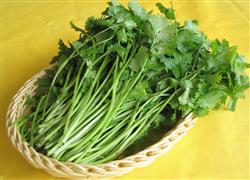 What should be noted when growing cilantro? We ask experienced gardeners to share their advice
Zhongdiwang has compiled the points to note when growing cilantro, listed below for readers' reference.
1. Suitable temperature for growing cilantro:Cilantro, also known as coriander, is a cold-hardy vegetable that prefers cool conditions, with an optimum growing temperature of 12°C-26°C, but it also has fairly strong heat tolerance.
2. Cilantro's soil requirements:Soil conditions: It is not demanding about soil, but loam with a high organic matter content is more favorable for cilantro growth.
3. Seed treatment before planting cilantro:Because the seed coat is hard, sowing by conventional methods results in slow emergence. Before sowing, the seeds can be spread on a flat surface and rubbed evenly with a not-too-hard object to crack the seed coat, after which they can be sown directly (or soaked to speed germination). Seedlings generally emerge about 8-13 days after sowing.
4. Choosing cilantro varieties:There are large-leaf varieties and small-leaf varieties. Large-leaf varieties have taller plants and larger leaves, with higher yields; small-leaf varieties have shorter plants and smaller leaves, with a strong aroma, are more cold-tolerant and highly adaptable, but yield slightly less. Small-leaf varieties are grown more often.
5. How to grow cilantro:Apply 2000-3000 jin of farmyard manure per mu, 10 kg of diammonium phosphate and 10 kg of potassium sulfate, then plow deeply and level the ground. Use drilling or broadcasting; for both drilling and broadcasting, cover the seed with 2-3 cm of soil, using 3-4 jin of seed per mu. After sowing, tread the ground once or firm it with a leveling tool, then water and keep the soil moist to aid emergence.
At the same time, note that soil crusting before cilantro emerges can prevent seedlings from pushing through. Check for seedlings promptly after sowing; if soil crusting is found when seedlings are emerging, spray water and loosen the soil without delay to help the young shoots emerge and grow normally.
6. When to plant cilantro:It can be planted in spring, summer and autumn; autumn is more suitable, and the suitable sowing period is after mid-August, when the quality of the produce is better.
7. Daily management after planting cilantro:To create suitable growing conditions for cilantro and achieve appropriate temperature and humidity, carry out careful intertillage, soil loosening and weeding several times. When the seedlings reach about 3 cm, thin them and set the final spacing.
Generally, intertillage, soil loosening and weeding are done 2-3 times over the whole growing period. The first is mostly when the seedlings are pushing through the soil, using a light hand hoe or small rake to break the soil surface lightly and loosen it, eliminating the crusted layer.
At the same time, pull out the weeds that have emerged, to help the seedlings emerge and grow. The second is done when the seedlings are 2-3 cm tall; for drilled sowing, a small flat hoe can be used to loosen the soil somewhat deeper, combined with pulling out weeds. The third is done when the seedlings are 5-7 cm tall. This early intertillage, soil loosening and weeding can promote vigorous seedling growth. Once the leaves close over the ground, no more intertillage or soil loosening is done, whether drilled or broadcast, but be sure to pull out weeds.
8. Water management for cilantro:Cilantro is not drought-tolerant; it must be watered lightly every 5-7 days, and basically 5-7 waterings are needed over the whole growing period of the plants, to keep the soil constantly moist. In the middle of the growing period, apply about 10 kg of urea per mu to ensure good growth.
Click to get more cilantro growing techniques
Click to get more vegetable growing techniques