What are the common pests and diseases during sweet potato cultivation?
What pests and diseases affect sweet potato? What damage do they cause and how are they controlled? We also ask fellow growers to share their methods. Zhongdiwang has compiled the pests and diseases of sweet potato, including hollow worm, leaf roller, and tobacco cutworm. These are listed below for fellow growers' reference. Damage caused by hollow worm to sweet potato and control methods: hollow worm generally...
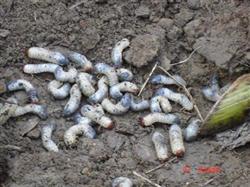 What pests and diseases affect sweet potato? What damage do they cause and how are they controlled? We also ask fellow growers to share their methods.
Zhongdiwang has compiled the pests and diseases of sweet potato, including hollow worm, leaf roller, andtobacco cutworm. These are listed below for fellow growers' reference.
Damage caused by hollow worm to sweet potato and control methods:
Hollow worm generally has 2-3 generations per year in southern regions. Adults bite and feed on tender stems and leaf stalks, and larvae bore into the sweet potato vines. Apart from damaging seedlings in May-June, August-October is another damage period. As a result, some sweet potato leaves have been bitten into small holes, leaf margins bitten into notches, and the protruding parts of the veins on the underside of the leaves are also eaten away, and exposed tubers also suffer damage.
Control methods for hollow worm:Mainly spray-kill with 90% crystallized trichlorfon at 1000-2000 times dilution during the peak emergence period of adults. During the seedling stage, mostly catch and kill them on the young sweet potato stems.
Damage caused by leaf roller to sweet potato and control methods:
The leaf roller has 4-5 generations per year in southern regions. Adults mostly hide on the underside of leaves. Larvae are about 15 mm long, lively and active, and if touched, quickly drop to the ground and hide. Larvae mainly damage sweet potato leaves, often spinning silk to roll one corner of the sweet potato leaf inward, then eating the leaf flesh, causing patches of sweet potato leaves to be eaten bare, greatly harming the yield and quality of sweet potato.
Control methods for leaf roller:When larvae show signs of damage, spray-kill with 40% quick-acting phoxim emulsifiable concentrate at 1500-2000 times dilution, which can achieve the effect of controlling both eggs and larvae; or spray-kill with 50% phoxim emulsion at 1000 times dilution, or 80-90% crystallized trichlorfon at 700-1000 times dilution. When there are many larvae, you can pinch the larvae inside the rolled leaves to death by hand to prevent them from spreading and causing damage.
Damage caused by tobacco cutworm to sweet potato:
Tobacco cutwormhas about 5 generations per year in southern regions, and in some places generations overlap. Adults lay eggs on the underside of leaves in a steamed-bun shape. The surface of the egg mass changes from yellow-white to dark gray. Larvae have 6 instars and are 18-20 mm long. Larvae first eat the lower epidermis of the leaves, leaving the upper epidermis and veins to form membranous patches.
After the 2nd instar, larvae disperse to various places to cause damage. The larvae are omnivorous pests. When population density increases, they not only eat all the sweet potato leaves bare, but in severe cases also eat tender stems and leaf stalks, and move to other places to cause damage.
Tobacco cutwormcontrol methods:Manually remove egg masses on the underside of leaves; before larvae reach the 3rd instar, select different pesticides for spraying according to local conditions. You can use 10 ml of Fuzhi (1.0% emamectin benzoate emulsifiable concentrate) mixed with 15 kg of water, or 50% phoxim emulsion at 1000 times dilution, or 90% crystallized trichlorfon at 800-1000 times dilution, or 50% fenitrothion emulsion at 1000 times dilution, and spray after 4 p.m.
Click to get more sweet potato cultivation techniques
Click to get more vegetable cultivation techniques