How do you carry out field management when growing corn?
How do you manage corn cultivation? Please explain in detail. When growing corn, you can refer to the following methods for management: 1. Thinning and final thinning of seedlings. Increasing planting density is an important measure for achieving high corn yields. The suitable density should be determined according to factors such as variety characteristics and soil fertility level. Thin and final-thin the seedlings in good time to ensure the planting density...
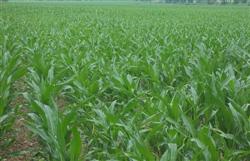
How do you manage corn cultivation? Please explain in detail
When growing corn, you can refer to the following methods for management:
I. Thinning and final thinning of seedlings
Increasing planting density is an important measure for achieving high corn yields. The suitable density should be determined according to factors such as variety characteristics and soil fertility level. Thin and final-thin the seedlings in good time to ensure the planting density. Generally, check the seedlings as soon as they emerge, and keep double plants in the same row or adjacent rows nearby so as to fill gaps early. Thin the seedlings at the 3-leaf stage, and final-thin at the 5-6 visible leaf stage (4-5 expanded leaves). Remove weak, diseased and insect-damaged seedlings, and keep strong, uniform and even seedlings to improve population uniformity. For density-tolerant varieties and high-yield fields, the suitable seedling density is about 4500 plants per mu; for sparse-planting varieties and plots with poorer soil fertility, the suitable seedling density is about 3500 plants per mu.
II. Scientific fertilization
Balanced formula fertilization should be carried out according to the corn yield target and soil fertility level of each area. On the basis of applying sufficient base fertilizer to the previous winter wheat crop, chemical fertilizer (urea) should be the main application, with attention to increasing phosphorus, potassium and micronutrient fertilizers; phosphorus and potassium fertilizers are best applied all at once as a base application. Nitrogen fertilizer management should adhere to the principle of light application of seedling fertilizer, heavy application of the large trumpet-stage fertilizer, and supplemental topdressing of the flowering and grain-filling fertilizer. At the jointing stage, open a furrow along one side of the seedlings and apply nitrogen fertilizer deeply (15-20 cm), accounting for about 30% of the total nitrogen fertilizer, to promote root growth and strengthen seedlings. At the large trumpet stage, apply about 50% of the total nitrogen as topdressing to promote large ears and many grains; pay attention to deep application and combine topdressing with intertillage and weeding. At the grain-filling stage, apply 20% of the total nitrogen as topdressing to improve leaf photosynthetic capacity and increase grain weight.
III. Rational irrigation
According to the water requirement pattern of corn and soil moisture conditions, grasp the optimal irrigation period and supply water in good time. After jointing, the roots, stems and leaves of corn grow rapidly and enter the stage of tassel and ear differentiation, so field soil water-holding capacity should be maintained at 65-75%. The flowering stage is the peak water demand period in the entire life of corn, requiring that the water content within the 1 m soil layer be no less than 70% of field capacity. The grain-filling stage is the key period for yield formation, and corn's water demand must be ensured to effectively increase the number of grains per ear, prevent barren stalks and bald tips, and increase the 1000-grain weight of corn. Except for the seedling stage, when field capacity in each growth period falls below 60%, irrigation should be carried out in good time.
IV. Weed control
For plots with relatively good soil moisture, you can directly spray 200-250 ml of 40% acetochlor-atrazine mixture per mu, or use 100 ml of 33% pendimethalin (Stomp) emulsifiable concentrate plus 75 ml of 72% Dual emulsifiable concentrate per mu, diluted in 50 L of water, for pre-emergence closed spraying. For plots with relatively poor soil moisture, at the 3-5 leaf stage of corn seedlings and the 2-5 leaf stage of weeds, you can spray 100 ml of 4% nicosulfuron suspension concentrate per mu diluted in 50 L of water, or at the 7-8 leaf stage of corn use the non-selective herbicide 20% paraquat (Gramoxone) aqueous solution diluted in 50 L of water for directed spraying; weeding can also be combined with intertillage.
V. Chemical regulation to prevent lodging
Lodging, especially lodging in the middle and late stages, is an important factor affecting corn yield. On the basis of selecting density-tolerant and lodging-resistant varieties, intertill and earth up in good time, and carry out chemical regulation at the appropriate time to prevent lodging. For plots with excessive density and serious lodging risk, spray 50% chlormequat aqueous solution at 200 times dilution before booting to enhance plant lodging resistance and improve ventilation and light transmission conditions of the population.
VI. Pest and disease control
On the basis of selecting disease-resistant varieties and carrying out seed coating, pay attention to forecasting and control of pests and diseases in the middle and late stages. Focus on the control of major pests and diseases such as corn borer, aphids and rough dwarf disease, so as to minimize corn yield losses.
Click to get more corn growing techniques
Click to get more food crop growing techniques