Key Field Management Techniques for Summer Corn in the Mid-to-Late Growth Stage
How should summer corn be managed in the mid-to-late growth stage? Please introduce some good management methods. For summer corn in the mid-to-late growth stage, the following methods can be used for reference: 1. Drought relief and waterlogging prevention. After jointing, corn enters the period of simultaneous vegetative growth and reproductive growth, which is the key period for large ears, and is also a season with frequent disastrous weather such as drought, waterlogging, wind, and hail...
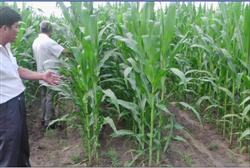
How should summer corn be managed in the mid-to-late growth stage? Please introduce some good management methods.
For summer corn in the mid-to-late growth stage, the following methods can be used for reference:
1. Drought relief and waterlogging prevention
After jointing, corn enters the period of simultaneous vegetative growth and reproductive growth, which is the key
period for large ears, and is also a season with frequent disastrous weather such as drought, waterlogging, wind, and hail. At this time, drought relief and waterlogging prevention should be carried out together, so that irrigation can be done in time during drought and drainage can be done in time during waterlogging. Entering July, irrigation should be done promptly in combination with the application of ear fertilizer to relieve drought as soon as possible and ensure normal corn growth. Irrigation in the late stage of corn is even more important. First, flowering water should be irrigated well, because tasseling and flowering are the critical period for corn water demand, and water shortage can cause floret abortion and a marked reduction in kernels. Second, grain-filling water should be irrigated well. According to rainfall conditions, generally from tasseling and flowering to maturity, corn should be irrigated 2-3 times to meet the water demand for flowering and grain filling. At the same time, attention should be paid to flood prevention and waterlogging prevention, and preparations for corn drainage should be made in advance.
2. Apply ear fertilizer heavily and supplement with grain fertilizer
Applying these two fertilizers well is the foundation for achieving a bumper corn harvest. Generally, for fields where no seedling-promoting fertilizer has been applied,
apply about 25 kg of urea per mu, and supplement with about 10 kg of urea at the grain stage. For fields where seedling-promoting fertilizer has been applied, apply 20-30 kg of urea heavily at one time, and strive to complete the topdressing and irrigation tasks before tasseling.
3. Timely control of pests and diseases
In the mid-to-late growth stage, the more serious pests and diseases include corn borer, aphids, northern and southern leaf blight, and bacterial wilt. Corn borer in particular occurs every year and must be controlled. Generally, when the rate of infested plants reaches 10%, 1% phoxim granules can be used and quantitatively scattered into the corn leaf whorl, about 1 gram per plant. For aphids, organophosphorus pesticides can be sprayed at a 1000-fold dilution. For northern and southern leaf blight and bacterial wilt, prevention should be the main approach, mainly by strengthening intertillage and weed control in the field, draining water after waterlogging, reducing moisture and lowering temperature, and maintaining a suitable microclimate in the field.
4. Chemical control technology
When 1-3% of tassels in the field begin to emerge, use 30 ml of Jianzhuangsu per mu mixed with 15-20 kg of water, and spray the leaves for chemical control. If rain occurs within 6 hours after spraying, respray, but the dosage should be halved.
5. Timely harvest
Timely harvest can ensure that corn has enough time for grain filling, and is an effective measure to increase grain weight and raise both yield and income. The standard for corn maturity is the disappearance of the milk line. Generally, varieties need to reach this standard around September 25, that is, 45-50 days after maturity. For each day the harvest time is delayed, the 1000-grain weight increases by an average of 2-3 grams per day, and the grain yield increases by an average of 5-6 kg per mu per day. Therefore, on the premise of not affecting the normal sowing of the following wheat crop, the corn harvest period should be delayed as much as possible. This technique does not increase any cost input, does not affect the sowing of the following wheat crop, and has a significant yield-increasing effect.
Click to get more corn planting techniques
Click to get more food crop planting techniques