Why do yams grow deformed? An analysis of cultivation technique causes
Why are the yams dug up from planting deformed? What causes yam deformity? What methods can prevent yam deformity? Please help us figure this out - there are mainly several causes of yam deformity, such as the yam seed material used, the soil quality of the planting site, and also the yam...
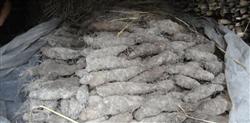 Why are the yams dug up from planting deformed? What causes yam deformity? What methods can prevent yam deformity? Please help us figure this out
There are mainly several causes of yam deformity, such as the yam seed material used, the soil quality of the planting site, the yam planting method, and pests and diseases; below is a detailed introduction to the causes of yam deformity and the control methods, for everyone's reference.
I. Deformity caused by the yam seed material:
Causes of deformity:Large-scale yam cultivation mostly uses yam "mouths" (the top portion of the tuber) and cut yam pieces as seed. Yam mouths and cut yam pieces have been cultivated in the soil for at least one year, so they easily carry root-knot nematodes and the pathogens of anthracnose and brown rot. After planting diseased yam seed pieces, under suitable conditions (the hot, rainy season from June to July) the disease breaks out over a large area, causing deformed yam growth.
In addition, 1- to 2-year-old yam mouths are rather expensive, and some growers, seeking a bargain, choose yam mouths that have been cultivated for 4 to 5 years. Because old yam mouths deteriorate, they easily mutate, forming forked, curved and otherwise deformed yams.
Solutions:1. For yam mouths or cut yam pieces about to be planted, soak the seed in a 500-800 times dilution of mancozeb or in a carbendazim solution for 3-5 minutes to kill the carried pathogens.
2. As far as possible, use one-year-old yam mouths grown from high-quality aerial yam tubers (yam beans) as seed.
3. Choose yam mouths or cut yam pieces 20-25 cm thick as seed, which helps form thick, strong stems and vines and enhances the disease resistance of the yam plants.
II. Deformity caused by soil quality:
Causes of deformity:1. The quality of the soil directly affects the growth of yam tubers. Yams grown in black clay soil often have snake-shaped and foot-shaped tubers, and the tuber surface has thick, numerous root hairs; yams grown in sandy soil have slender tubers that are not thick enough.
2. If the soil water table is too shallow, the yam plants grow poorly, and both roots and tubers are prone to waterlogging and rot.
3. Continuous cropping plots have more pests and diseases in the soil, and under the influence of hormones secreted by the roots, the tuber skin color darkens and quality deteriorates.
Solutions:1. Choose a plot that has never been cultivated with yams for production; it can be cultivated for 3 consecutive years. In the second year, open a furrow on the ridge back of the first year's yam planting; in the third year, plant in the first year's planting furrow.
2. Choose sandy loam or loam with high, dry terrain, good drainage and deep soil for planting, and require the soil quality to be consistent from top to bottom.
III. Deformity caused by mistakes in the yam planting method:
Causes of deformity:1. The trench is not dug deep enough. If the yam trench is too shallow, the basal meristem of the yam tuber begins lateral growth after extending to the bottom of the trench, growing into foot-shaped or snake-shaped yams.
2. The soil in the trench is uneven. During growth, the yam tuber easily bends or deforms when it encounters bricks, stones or hard clods of soil.
3. Improper placement of the yam mouth. Because of improper placement of the yam mouth, 2-3 stems are produced; if not dealt with in time, multiple tubers easily form underground, affecting yam quality.
Solutions:1. Dig the trench deep enough. The depth varies with the yam variety, but most yam tubers are 1-1.3 m long, so the trench should be more than 1.3 m deep.
2. Before planting yams, apply organic fertilizer mixed in, and rotary till the 20-30 cm soil layer of the yam trench 3 times so that soil and fertilizer are mixed evenly.
3. When placing cut yam pieces and mouths, the strong bud should be at a 45-degree slant to the ground to maintain the apical dominance of the strong bud and suppress the growth of other buds. At the same time, the strong bud should be placed sideways to facilitate the growth of the above-ground stems and vines and the elongation of the underground yam tuber.
IV. Deformity caused by pests and diseases:
1. Pests such as white grubs and mole crickets bite and injure the yam tuber or the basal meristem, causing wormholes or forking.
2. Root-knot nematodes, anthracnose, stem rot and the like harm yam leaves and tubers, affecting yam quality.
Solutions:
1. Organic fertilizer should be fully decomposed, and a small amount of trichlorfon should be mixed in to kill the pathogens and pests in the organic fertilizer.
2. Before planting yams, soak the seed in a 500-800 times dilution of carbendazim, and scatter fine sand or bran mixed with trichlorfon into the planting trench.
3. Starting in early June, spray a 500 times dilution of thiophanate-methyl or mancozeb once every 15 days to prevent and kill pathogens.
Click to get more yam cultivation techniques
Click to get more vegetable cultivation techniques