What are the cultivation techniques and precautions for Chinese yam (Dioscorea polystachya)?
I plan to grow Chinese yam, but what should I pay attention to when growing it? Please give guidance. When newly growing Chinese yam, pay attention to the following 4 points for reference. 1. Seed selection for yam cultivation: when selecting seeds, farmers often focus only on immediate interests and habitually choose good-quality, uniformly sized tubers for sale, keeping the inferior, deformed, and diseased root tubers and tubers for seed...
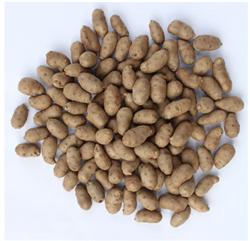 I plan to grow Chinese yam, but what should I pay attention to when growing it? Please give guidance.
When newly growing Chinese yam, pay attention to the following 4 points for reference.
1. Seed selection for yam cultivation:
When selecting seeds, farmers often focus only on immediate interests and habitually choose good-quality, uniformly sized tubers for sale, keeping the inferior, deformed, and diseased root tubers and tubers for seed.
This may make that year's income somewhat higher, but after the second and third years, pests and diseases worsen, deformed root tubers and tubers increase, and yam yield and quality decline, causing reduced returns. Therefore, yam seed should be selected from uniform, neat, disease-free tubers, and must be replaced once every 4 to 5 years to reduce the occurrence of variety degeneration caused by continuous planting year after year.
2. Fertilization precautions for yam cultivation:
Surveys show that farmers spend nearly 800 yuan per mu on fertilizer alone, with input growing larger and larger, but yield has not increased.
Using chicken manure as base fertilizer is originally beneficial to yam growth, but most farmers apply chicken manure that is not fully decomposed, causing an increase in underground pests. During its decomposition process, it competes with yam for fertilizer and water, and sometimes causes seedling burn, resulting in small and weak seedlings, aggravating the occurrence of pests and diseases, and instead having an adverse effect on yam growth.
Chinese yam relies entirely on its own transformation and transport of nutrients only after mid-June, and by then the fertilizer effect of chemical fertilizers has mostly been lost.
Trials found that when chemical fertilizers are not used as base fertilizer but instead changed to topdressing, that is, topdressing 3 times respectively in late June, late July, and mid-August, compared with the model of applying base fertilizer plus two topdressings in mid-July and mid-August, the yield from topdressing only was instead higher.
Therefore, in fertilization, apply organic fertilizer as base fertilizer all at once, and chemical fertilizer by topdressing. Each topdressing: 20 kg of diammonium phosphate, 25 to 30 kg of potassium sulfate; slow-release fertilizer can be used as base fertilizer.
3. Pesticide use precautions for yam cultivation:
Farmers generally tend to add more pesticide and less water when spraying, but this is actually the biggest taboo in pest and disease control.
First, high pesticide concentration easily causes phytotoxicity; second, using more pesticide increases cost; third, because the spray liquid is small, it easily causes uneven spraying, leading to poor control effects. Blind pesticide use is also a major problem in Chinese yam production.
Usually, multiple diseases occur mixed together. Some plots have more of one disease, while in other plots another disease dominates, yet farmers often follow the crowd too much: they see what pesticide others use and use the same one themselves, regardless of whether it is suitable for the problem. In addition, there is repeated pesticide use and an "empiricism" in pesticide application. If a certain pesticide worked last year, then this year, regardless of climate conditions or disease types, they use this pesticide every time from the seedling stage onward. As a result, plenty of money is spent, but the effect is unsatisfactory, and the disease may even worsen, causing reduced yield. This is also the main reason for the low returns from growing Chinese yam in recent years.
The correct method of pesticide use is:After disease occurs, first consult the local plant protection department or consult Zhongdiwang, determine what kind of pest or disease it is, and then prescribe the remedy according to the problem. When applying pesticide, use an appropriate concentration and alternate different pesticides, which can both improve control effect and reduce cost.
4. Precautions for using regulators in yam cultivation:
For regulators, start spraying paclobutrazol or mepiquat chloride when most Chinese yam vines have climbed to the second "chrysanthemum top"; the first two times should be about 15 days apart, and afterward, according to growth vigor, spray once every 10 days, ending at the end of August or early September. In this way, stems and leaves can be strong but not overly vigorous, obtaining a relatively high yield.
But most yam growers wait until the stems and vines have covered the trellis and the tender stem tips have intertwined and twisted into knots before starting chemical control.
When spraying, they do not spray only the young tender parts, but spray the whole plant, and are accustomed to mixing it with other pesticides, which easily leads to vigorous aboveground growth while underground root tubers and tubers grow poorly, resulting in low yield and poor returns.
Click to get more yam cultivation techniques
Click to get more vegetable cultivation techniques