Reishi mushroom cultivation techniques: How to prevent and control blue mold disease?
How to prevent and control blue mold disease when cultivating reishi mushrooms? Please introduce the methods. Reishi blue mold disease occurs commonly in edible mushroom cultivation and is an important disease on the beds of reishi and other edible mushrooms, and it also frequently occurs during the fruiting body formation stage. Symptoms: At harvest time, the reishi roots left on the cultivation bed are easily infected, and after infection they gradually infect healthy growth near the diseased tissue...
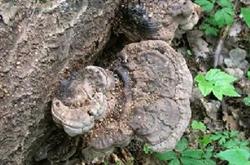
How to prevent and control blue mold disease when cultivating reishi mushrooms? Please introduce the methods.
Reishi blue mold disease occurs commonly in edible mushroom cultivation and is an important disease on the beds of reishi and other edible mushrooms, and it also frequently occurs during the fruiting body formation stage.
Symptoms: At harvest time, the reishi roots left on the cultivation bed are easily infected, and after infection they gradually infect healthy growth near the diseased tissue. It generally invades from the base of the stipe of healthy reishi, then causes yellowish-brown rot that spreads upward from the base. It affects the yield and edible value of the fruiting bodies.
Pathogen: This disease is a fungal disease, Penicilliun sp., belonging to the Deuteromycotina. The conidiophores branch in a broom-like shape, and the tips of the small conidiogenous phialides in the outermost layer are slender and flask-shaped, bearing conidia in chains. The conidia are nearly round, colorless, single-celled, about 3 microns in diameter, and can only be seen clearly under a high-power microscope at 400x magnification. When growing on potato sucrose agar medium, the early mycelium is white, slender, and lies flat on the surface of the substrate, appearing slightly powdery; when large numbers of conidia are formed, the color of the colony gradually changes from white to green or blue.
Disease characteristics: This pathogen is a weakly parasitic fungus that lives on various organic matter. After forming large numbers of conidia, it can spread through airflow, and when temperature and humidity are suitable, it will produce mycelium on organic matter. This pathogen prefers acidic conditions, and acidic substrate and conditions with relatively low moisture content are favorable for the growth and spread of this pathogen. During the reishi fruiting period, low moisture content in the substrate, excessively low relative air humidity, weak growth of young reishi, and failure to remove reishi roots left on the bed in time are all favorable for the occurrence of the disease.
Prevention and control methods
(1) After harvest, promptly clean the cultivation site and remove thin and weak young reishi and residual reishi roots to reduce the occurrence of the pathogen.
(2) Strengthen cultivation management. During the stages of reishi bud and reishi cap formation, spray water on the floor of the cultivation room to keep it moist, and provide timely ventilation.
(3) Reasonably adjust the pH of the substrate and keep the medium at a neutral to weakly alkaline reaction, which can inhibit the mycelial growth of this pathogen. Lime can be used to adjust the pH of the substrate. When mixing the substrate, 1% lime can be added. After harvesting the first flush of mushrooms, spray once with a 2% lime water clear solution.
(4) Chemical control: After the disease occurs, spray the mushroom bed with 25% carbendazim at 1:500 or 70% thiophanate-methyl at 1:800.
Commonly used agents: carbendazim and thiophanate-methyl.
Click to get more reishi mushroom cultivation techniques
Click to get more medicinal herb cultivation techniques