How to grow Eucommia ulmoides from seed? A detailed guide to medicinal plant propagation techniques
How do you propagate the medicinal plant Eucommia ulmoides? Please give an introduction. Propagation of the medicinal plant Eucommia ulmoides includes seed propagation and vegetative propagation. The methods are as follows: Seed propagation technique ① Nursery site preparation. Choose a fairly good, slightly acidic soil nursery site, plow in winter and apply sufficient base fertilizer, and after freezing and thawing, harrow level and make beds in the following spring. Generally, use 150 kg of cake fertilizer and 1,500 kg of barnyard manure per 667 sq m, ...
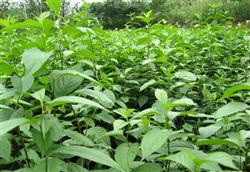
How do you propagate the medicinal plant Eucommia ulmoides? Please give an introduction
Propagation of the medicinal plant Eucommia ulmoides includes seed propagation and vegetative propagation. The methods are as follows:
Seed propagation technique ① Nursery site preparation. Choose a fairly good, slightly acidic soil nursery site, plow in winter and apply sufficient base fertilizer, and after freezing and thawing, harrow level and make beds in the following spring. Generally, use 150 kg of cake fertilizer and 1,500 kg of barnyard manure per 667 sq m. The seedbed can be made 15 m long, 1.2 m wide, and 30 cm high, leveled and harrowed fine so that it can prevent waterlogging. ② Seed pregermination. If sowing seeds in mid-to-late March, pregermination can be started half a month earlier. Generally, mix seeds and sand at a ratio of 1:10. The moisture of the sand should be such that it forms a ball when squeezed by hand and breaks apart when released. Spread it on a cool, ventilated indoor floor at a thickness of about 30 cm, and keep the seeds and sand moist. During pregermination, keep the indoor temperature above 6°C, and the seeds will fully absorb water and swell. When a small white tip appears at the gap at the top of the samara, that is, when the radicle begins to emerge, they can be sown in the prepared nursery site. Seeds pregerminated with low-temperature wet sand can reach a germination rate of 80%, and they emerge neatly and uniformly with a high seedling rate. If time is short and there is not enough time for wet sand pregermination, seeds can also be soaked before sowing in 40°C warm water or cold water for pregermination, but the germination rate is only about 50%. ③ Open furrows and evenly scatter in 50-80 seeds. After sowing, cover with 2 cm of mud ash. On relatively dry land, rice straw should also be spread over the soil to retain moisture. Generally, the sowing rate per 667 sq m is 5-8 kg. Seeds pregerminated with wet sand emerge 15-16 days after sowing. Dry-stored seeds soaked temporarily need 30 days to germinate and emerge. ④ Management after sowing. During seed germination, always keep the bed surface moist. If the weather is dry, spray water appropriately; after the seeds germinate, remove the covering straw in batches. To prevent seedlings from being infected by damping-off disease, spray Bordeaux mixture once a week on a regular basis. When the seedlings have 2-4 true leaves, carry out the first loosening of soil and weeding, and apply 1 topdressing of dilute urea solution at a concentration of about 1%. From June to August is the rapid growth period of the seedlings. At this time, strengthen loosening of the soil once. The topdressing concentration is 2% urea solution, or it can be replaced by applying human manure and urine. From September to October, to prevent the seedlings from freezing damage to the shoot tips in winter, stop topdressing and instead cover the base of the seedlings with a layer of fire soil ash to improve the cold resistance of the seedlings.
Vegetative propagation techniques. Eucommia ulmoides has very strong sprouting ability. Vegetative propagation includes the cutting method, the stump-retention regeneration method, the root-wounding sprouting method, the layering propagation method, and the residual root propagation method. ① Cutting method. The nursery site should preferably be chosen as a cool, moist, humus-rich semi-sandy or fragrant ash soil. The cutting time should preferably be in early spring before new leaves sprout. Generally, before "Jingzhe", cut off one-year-old new branches and cut them into cuttings with 5 buds. The upper bud should be level with the top cut surface, and the lower cut surface should be horseshoe-shaped. Then insert them into the seedbed as they are cut, at a depth of 2/3 of the cutting, with a plant spacing of 8-10 cm and a row spacing of 20-25 cm. After insertion, always keep the bed soil moist. In hot seasons, also build a shade frame to keep it cool and moist, which favors new root growth. In summer and autumn, weed. Remove small weeds as well, and combine with topdressing. By the following spring, they can be transplanted. ② Stump retention regeneration. In May and June, from Beginning of Summer to Summer Solstice, when cutting down Eucommia ulmoides trees, do not dig out the stumps, because the stumps after cutting can quickly sprout and regenerate. Those cut during this period can sprout and regenerate after 30-40 days; those cut in July need 60 to 70 days to sprout new shoots; some still sprout in the "Indian summer" of October, but the tender shoots sprouted in October are easily killed by frost. One stump can sometimes send up several shoots. Earth should be banked up around the base of the sprouts to favor new root growth, so that by the following spring they can be dug up and transplanted. ③ Root-wounding sprouting method. Because Eucommia ulmoides has very strong sprouting ability, the bark of the main root of a large Eucommia ulmoides tree can be wounded by digging, and then covered with soil, and new shoots can also sprout and grow (generally, wounding the roots before Jingzhe is better). After one year, they can also be cut off and transplanted. ④ Layering propagation method. In early spring around Rain Water, press the branches of young Eucommia ulmoides seedlings into the soil with earth, bricks, or stones. As long as the soil is moist and the humidity is suitable, at a depth of about 8 to 12 cm, with the branch tip exposed, the branches will sprout new roots, and in the second year they can be cut off and transplanted. ⑤ Residual root propagation method. In the seed propagation field, when digging up seedlings in spring for planting out, deliberately leave part of the lower end of the main root in the soil, then tidy up the original forest land, and after they sprout into seedlings, dig them up as seedlings for cultivation.
Click to get more Eucommia ulmoides planting techniques
Click to get more medicinal plant planting techniques