Detailed Explanation of Eucommia ulmoides Seedling Raising Methods and Planting Techniques
How to raise seedlings and plant Eucommia ulmoides? Please give an introduction. There are many propagation methods for Eucommia ulmoides, and the common ones include seed sowing seedling raising, stem cutting, residual root seedling cultivation, and seedling root seedling raising. (1) Seed sowing seedling raising: first select and breed superior seeds, then carry out seed sowing seedling raising. From robust-growing, smooth-barked, pest- and disease-free trees about 20 years old that have not been stripped of bark for use...
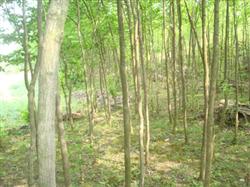
How to raise seedlings and plant Eucommia ulmoides? Please give an introduction
There are many propagation methods for Eucommia ulmoides, and the common ones include seed sowing seedling raising, stem cutting, residual root seedling cultivation, and seedling root seedling raising.
(1) Seed sowing seedling raising
First select and breed superior seeds, then carry out seed sowing seedling raising. Collect seeds from robust-growing, smooth-barked, pest- and disease-free trees about 20 years old that have not been stripped of bark for use. Each kilogram contains about 7,000 to 20,000 seeds, with a germination rate generally of 60% to 80%. After collection, place the seeds in a ventilated and shaded place to dry in the shade; do not dry them over fire or expose them to the scorching sun. Only after shade-drying and seed cleaning can the seeds be stored. The seeds can be treated for germination by sand storage stratification or water soaking. Sowing can be done in late autumn in November or early spring in March, mainly by drilling. The row spacing is 25 to 30 cm, and 40 to 50 seeds are sown per meter of sowing furrow. When sowing, scatter the seeds evenly in the furrow and cover with soil 1.5 to 2 cm deep. The sowing rate is 5 to 10 kg per mu. Seeds treated by sand storage stratification can emerge 15 days after sowing, while dry-stored seeds treated by soaking need 25 to 30 days. The seedling output is about 20,000 to 30,000 plants per mu.
(2) Stem cutting method
Use branches that sprouted in the current spring and bear young leaves, cut them into 5 to 6 cm long cuttings, and keep 3 axillary buds on each cutting. To reduce water evaporation, cut off half of each leaf, and carry out cutting in May. The upper layer of the cutting bed is sandy soil 2 to 3 cm thick, while the lower layer should remain loose soil. Insert the cuttings 1.5 to 2 cm into the soil, with plant and row spacing of 4 to 8 cm. After cutting, attention must be paid to watering and shading. After 6 to 7 days, the cuttings can produce callus tissue, and after 18 to 30 days they produce small roots.
(3) Residual root seedling cultivation method
This method is carried out when lifting seedlings in spring: dig out only about 3/5 of the entire root system of the seedlings, so that the severed 2/5 of the roots remain in the soil. After seedling lifting is completed, remove a layer of surface soil from the seedbed so that one end of the severed roots is slightly exposed above the soil surface and sprouts new seedlings. Raising seedlings by this method gives a high survival rate and fast growth.
(4) Seedling root seedling raising method
Use the thicker roots trimmed off during seedling lifting, generally those 0.5 cm or more in diameter, cut them into 5 to 6 cm long root segments and insert them as cuttings; the survival rate can reach more than 95%. In addition, roots dug from young and vigorous trees can also be used for cutting, also with a relatively high survival rate, and the seedlings grow stout.
(5) Seedling stage management
During the seedling stage of Eucommia ulmoides, management must be strengthened, and cultivating, weeding, fertilizing, irrigation, and drainage must be done in a timely manner. When the seedlings have just emerged, weeds should only be pulled out by hand to avoid injuring the seedlings. When the seedlings grow 3 to 4 true leaves, carry out the second weeding, and weed 1 to 2 times per month before August, always keeping the nursery free of weeds and the soil loose. April to August is the topdressing period for the seedlings. Fertilization is best done in small amounts and multiple times. As the seedlings grow taller, the amount of fertilizer increases accordingly, applying 5 to 10 kg of urea per mu, with fertilization carried out together with cultivating and weeding. In terms of irrigation, in areas with little rain and during dry seasons, irrigate frequently to keep the soil moist; in areas with abundant rain and during flood seasons, set up drainage ditches to avoid water accumulation in the soil.
2. Cultivation techniques
Eucommia ulmoides is a sun-loving tree species and grows best on deep, fertile, moist, well-drained soil with a pH between 6 and 7.5. It grows relatively well at the foot of mountains, on mountain slopes, and on sunny slopes with little gradient, and slight shading is better during its seedling stage. When establishing Eucommia ulmoides forests, choose the middle or middle-lower part of south-facing or southeast-facing slopes; soil that is too acidic or too alkaline is not suitable for the growth of Eucommia ulmoides. In addition to establishing large contiguous Eucommia ulmoides forests, full use should also be made of planting around homes and along field ridges. These places have sufficient light and good soil water and fertilizer conditions, are easy to manage, and are conducive to the growth and development of Eucommia ulmoides.
(1) Afforestation site preparation
Site preparation should be carried out in autumn. For barren and semi-barren forest-suitable mountain land, controlled burning should be carried out. Where the slope is above 100, terracing must be used for site preparation. The planting holes for afforestation are 70 x 70 x 70 cm, and each hole is given 10 kg of farmyard manure, 0.5 kg of phosphate fertilizer, and 0.5 kg of decomposed cake fertilizer. Where the slope is above 250, afforestation is not suitable.
(2) Afforestation techniques
Eucommia ulmoides afforestation can be carried out in spring and autumn, and in cold areas it is better carried out in spring. Afforestation density mainly depends on the management method and site conditions. The general afforestation densities are 1.5 x 2 m, 2 x 2 m, and 2 x 3 m. To ensure the progress of sexual reproduction of Eucommia ulmoides, it is better for male plants to account for 5% to 10% of the afforestation. Autumn planting is in September to October, and spring planting is in March to April. After planting, irrigate immediately and promptly remove lateral buds to promote survival. During the young forest period, leguminous crops can be intercropped, which both increases income and improves the soil, promoting tree growth.
3. Tending and management
Management of young Eucommia ulmoides forests is very important. One year after afforestation, 15 days before the young trees sprout in spring, cut off the main trunk, with the stumping position at 2 to 4 cm. For 2-year-old nursery stumped seedlings or grafted seedlings with a seedling height above 2 m, no further stumping is done after planting. After stumping, many sprouts will emerge from the cut, so keep one stout sprout and remove the rest; during the growth of the retained sprout, axillary buds will sprout, so the lower axillary buds must be removed, with the bud removal height at 1/3 to 1/2 of the seedling height. When young trees fail to have their buds removed in time and grow too many or too low lateral branches, small lateral branches below 2 m on the main trunk must be cut off from the base. Soil and fertilizer management should be strengthened. The first loosening of the soil is carried out before early April, and the second loosening of the soil and weeding is carried out in May or early June. Weeds are turned over and dried in the forest land or made into compost and applied after decomposition. Fertilization is carried out together with soil loosening and weeding, applying 10 kg of nitrogen fertilizer and 20 kg of phosphate fertilizer per mu. During the young forest period, intercropping with leguminous crops is needed, using cultivation instead of tending. In the second year after afforestation, replant missing plants, using 2-year-old first-grade seedlings for replanting.
The management of mature Eucommia ulmoides forests is similar to that of other economic forest tree species. Deep plowing is carried out every winter, and cultivating and weeding are carried out in summer. Fertilization is combined with cultivating and weeding. According to the age of the trees, apply 1,000 to 2,000 kg of farmyard manure per mu, 50 kg of compound fertilizer, or 40 kg of diammonium phosphate.
Click to get more Eucommia ulmoides planting techniques
Click to get more medicinal herb planting techniques