Why is pesticide residue so common in Chinese chive cultivation?
Why does Chinese chive easily retain pesticide residue? Please explain the reasons. Nowadays many people say that "Chinese chive very easily retains pesticide residue," but few can explain clearly why. To understand why Chinese chive has pesticide residue, we must start with the pests and diseases that Chinese chive needs to be protected against. Reporters learned yesterday that a...
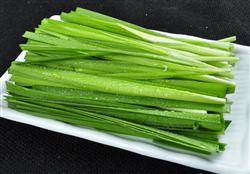 Why does Chinese chive easily retain pesticide residue? Please explain the reasons.
Nowadays many people say that "Chinese chive very easily retains pesticide residue," but few can explain clearly why. To understand why Chinese chive has pesticide residue, we must start with the pests and diseases that Chinese chive needs to be protected against. Reporters learned yesterday that, generally speaking, when pesticides are used according to regulations, Chinese chive is fine; once pesticides are used in violation of regulations, various pesticide residues will accompany Chinese chive through various channels and enter our dining tables.
"Chinese chive's most feared pests are mainly two kinds: one is called the heart-boring worm, and the other is called the chive maggot." Yesterday at the "Lüxiang" Chinese chive base in Chaijia Village, Diao Town, Zhangqiu, vegetable farmers told reporters, "The heart-boring worm hides inside the base where the Chinese chive leaves fork, gnawing the leaves from the inside; the chive maggot is at the root of the Chinese chive. The chive maggot does not like heat, so it is mainly active in autumn and spring; the heart-boring worm starts to come out at this time and continues until September and October."
The heart-boring worm the vegetable farmers mention is a kind of small diamondback moth with a silk-spinning habit, mainly gnawing the white part of the Chinese chive; its body is small, but its pesticide resistance is extremely strong. The adult of the chive maggot is called the chive gnat (Bradysia odoriphaga), the main pest in Chinese chive production. The adult lays eggs in soil cracks or under clods around the chive plants; after the larvae hatch, they gather on the bulbs and tender stems in the underground part of the Chinese chive to cause damage, causing the young stems to rot, making the Chinese chive leaves wither and yellow, then rot and die; in severe cases the entire Chinese chive plant dies.
"There is no one who grows Chinese chive without using pesticides; as long as it is done according to standards, there is no problem." Vegetable farmers generally spray regulated pesticides according to regulations, or use methods such as biogas slurry and biogas residue for prevention, and these proper prevention methods are fine. "There are also some small-scale growers who use pesticides in violation of regulations, using pesticides that do not meet the rules. Preventing the heart-boring worm is mainly by spraying pesticides on the leaves, while preventing the chive maggot is by applying pesticide directly to the roots in the soil, so there is pesticide on the leaves, and pesticide is also absorbed directly into the plant from the roots."
"Because the chive maggot hides in the soil, a large amount of highly toxic pesticide must be sprayed; an even more common practice is to drench the soil with toxic organophosphorus pesticides, such as parathion and methyl parathion." Qiao Chuanling, head of the Resistance Molecular Genetics Research Group at the Institute of Zoology, Chinese Academy of Sciences, said that through such operations, a large amount of organophosphorus pesticide will be absorbed by the roots of the Chinese chive, "and the organophosphorus pesticide that enters the interior of the Chinese chive through the roots is not easy to wash off."
Preventing the heart-boring worm is mainly by spraying pesticides on the leaves, while preventing the chive maggot is by applying pesticide directly to the roots in the soil, so there is pesticide on the leaves, and pesticide is also absorbed directly into the plant from the roots.
Click to get more Chinese chive cultivation techniques
Click to get more vegetable cultivation techniques