What pesticide is effective for controlling rice bacterial leaf blight?
What pesticide is good for rice bacterial leaf blight? What harm does rice bacterial leaf blight cause? What are the causes of rice bacterial leaf blight? Please give an introduction. Bacterial leaf blight is one of the major diseases of rice. Once it occurs, it can generally reduce yield by 10%, and in severe cases by 50-60%. Therefore, strengthening the control of bacterial leaf blight is very important...
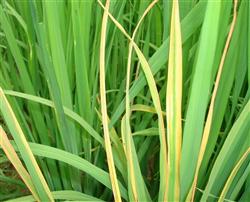 What pesticide is good for rice bacterial leaf blight? What harm does rice bacterial leaf blight cause? What are the causes of rice bacterial leaf blight? Please give an introduction
Bacterial leaf blight is one of the major diseases of rice. Once it occurs, it can generally reduce yield by 10%, and in severe cases by 50-60%. Therefore, strengthening the control of bacterial leaf blight is very important.
Causes of rice bacterial leaf blight:
1. Relationship between disease occurrence and climatic conditions
High temperature, high humidity, and strong winds and rainstorms are the climatic conditions for the epidemic of bacterial leaf blight. In the field, the disease starts when the temperature reaches 17°C, and 26-30°C is the peak period of disease occurrence. The incubation period is short, and it takes only about 3-5 days from bacterial invasion to symptom appearance, with increased numbers of reinfection. Continuous low temperatures below 17°C and high temperatures above 35°C will not cause disease occurrence. A relative humidity above 90% is favorable for the pathogen to infect the host.
2. Relationship between disease occurrence and variety resistance and growth stage
There are certain differences in resistance to bacterial leaf blight among rice varieties. Generally, glutinous rice is the most resistant, japonica rice is more resistant than indica rice, tall-stemmed narrow-leaf varieties are more resistant than short-stemmed broad-leaf varieties, fertilizer-tolerant varieties are more resistant than non-fertilizer-tolerant varieties, and varieties with fewer leaf stomata are more resistant than those with more leaf stomata, while planting susceptible varieties makes epidemics and disasters more likely. The same variety is relatively resistant from the seedling stage to the tillering stage, resistance declines at the late tillering stage, it is susceptible at the booting stage, and most susceptible at the heading stage.
3. Relationship between disease occurrence and cultivation techniques
Whenever nitrogen fertilizer is applied excessively, too late, or too concentrated, especially improper application of ear fertilizer, the plants grow rampant, the spaces between plants and rows become dense and shaded, ventilation and light penetration are poor, leaves are dark green and tender, and the disease resistance of the plants weakens. Flooded plants develop more severe disease than non-flooded plants.
Continuous irrigation and flooding irrigation in the field can directly promote the spread of the disease, and rice plants soaked in deep water for a long time are affected even more severely. This is mainly because high humidity in the field is favorable for pathogen reproduction and infection. Deep irrigation can also increase the accumulation of toxic substances in the soil, causing the disease resistance of rice plants to decline. After the jointing stage, deep irrigation makes the disease even more severe.
Control methods for rice bacterial leaf blight:
1. Use disease-free seeds.
2. Scientific management
In the field, apply sufficient basal fertilizer, topdress early, apply ear fertilizer appropriately, do not apply nitrogen fertilizer alone, and apply nitrogen, phosphorus, potassium, and micronutrient fertilizers in a balanced way. Strictly prevent seedlings from being submerged by large amounts of water, cultivate high-quality strong seedlings, and advocate dry seedling raising. The field should be irrigated frequently with shallow water, alternating dry and wet, and field drying should be done at the right time and to an appropriate degree. For fields that have already developed the disease, heavy field drying is also not suitable, so as to avoid worsening the disease.
Methods for chemical control of rice bacterial leaf blight:
For pesticide application in the field, follow the principle of "treat a patch when there is a spot, treat a block when there is a patch," and spray pesticide in time to seal off the disease center. If the climate is favorable for disease occurrence, general survey and control should be carried out in fields of the same type, thereby controlling the spread of the disease.
In areas where bacterial leaf blight frequently occurs, use Yekuning for prevention at the booting stage. For fields submerged by water and fields hit by rainstorms, after the water recedes and the weather clears, promptly use 100 grams of Yekuning per mu, diluted in 60 kg of water, and spray evenly with fine water droplets for prevention.
At the early stage of bacterial leaf blight, generally every 5-7 days, use 100 grams of Yekuning per mu, diluted in 60 kg of water, and spray evenly with fine water droplets once for control, for 2-3 consecutive times, which can reduce and lower the losses caused by the occurrence of bacterial leaf blight.
Click to get more rice cultivation techniques
Click to get more food crop cultivation techniques