Rice Pest and Disease Control: How to Control the Rice Whitefly?
How to control the rice whitefly? What harm does the rice whitefly cause? How does the rice whitefly occur? Please provide an introduction to the harm caused by the rice whitefly: The rice whitefly, also called the rice whitefly (rice powdery whitefly), is a new pest on rice. It also damages food crops such as sugarcane and corn, as well as grasses such as crabgrass, barnyardgrass and Chinese sprangletop...
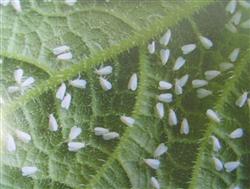 How to control the rice whitefly? What harm does the rice whitefly cause? How does the rice whitefly occur? Please provide an introduction
Harm caused by the rice whitefly:
The rice whitefly, also called the rice whitefly (rice powdery whitefly), is a new pest on rice. It also damages food crops such as sugarcane and corn, as well as grass-family plants such as crabgrass, barnyardgrass and Chinese sprangletop. Damage characteristics: adults and nymphs insert their stylets into the leaf mesophyll to suck the sap of rice leaves, causing the leaves to turn black, wither and rot, or inducing sooty mold.
The female adult of the rice whitefly is about 0.71mm long, and the male about 0.64mm. Newly emerged adults secrete a white waxy powder that covers their body and wing surfaces after 5-6 days. The first-instar nymph is 0.29mm long, with 3 pairs of thoracic legs and well-developed antennae; the body is light yellow-green, flat and oval, with 18 pairs of bristles along its outer margin, and the bristles at the front and rear ends are thicker and longer than those on the sides. After entering the second instar, the antennae and legs degenerate.
The second- and third-instar nymphs are 0.34mm and 0.57mm long. The pupal case is about 0.92mm long and 0.38mm wide, oval, with 4-6 bristles (mostly 4) at the front end of the dorsal side, an inverted "Y" ecdysial line, and 4 bristles at the rear end.
Occurrence period and causes of the rice whitefly:
The rice whitefly generally appears as adults on early-sown seedling fields in mid-to-late April when the temperature rises to 16°C. Generations 1-4 damage double-season early rice, and the 3rd generation is the main damaging generation.
At an average temperature of 26.8°C and relative humidity of 72%, the egg stage lasts 9-12 days, the first instar 2-3 days, the second instar 3-5 days, the third instar 4-6 days, the pseudopupa 6-8 days, the adult pre-oviposition period 1-2 days, and adult lifespan 9-21 days. Generations 3-6 damage single-season middle rice, and generations 4-5 are the main damaging generations. Generations 5-6 damage double-season late rice, and the 5th generation is the main damaging generation. Generations 3-5 show overlapping generations. Damage is severe from the booting stage to the grain-filling stage.
The occurrence is most severe in rice fields with deep irrigation water, many weeds, one-sided application of nitrogen fertilizer, lush plant growth, many ineffective tillers and poor ventilation. Damage is severe during the high-temperature and drought period from July to August.
Control methods for the rice whitefly:
(1) Strengthen field management: promptly clear weeds along field edges and ditches, promptly plow and turn under fallen-grain seedlings to eliminate overwintering insect sources; maintain rational close planting; manage fertilizer and water, avoid one-sided application of nitrogen fertilizer, prevent deep irrigation, and drain the field at the appropriate time to control ineffective tillers.
(2) Protect and utilize natural enemies: reduce the number of pesticide applications, use low-toxicity pesticides as much as possible, and protect natural enemies.
(3) Chemical control: adopt the strategy of suppressing the early generations and controlling the later ones, and focus on controlling generations 3-5. During the peak occurrence of young nymphs, spray 25% buprofezin wettable powder at 1000 times dilution, or 40% omethoate emulsifiable concentrate at 1000 times dilution, 8% shachongwei wettable powder at 1500 times dilution, 20% fenpropathrin emulsifiable concentrate at 1000 times dilution, 44% sukkai emulsifiable concentrate at 1500 times dilution, or 20% imidacloprid (Confidor) soluble concentrate at 3000-4000 times dilution.
Commonly used pesticides: buprofezin, omethoate, shachongwei, fenpropathrin, sukkai, imidacloprid.
Click to get more rice cultivation techniques
Click to get more food crop cultivation techniques