What are the control methods for rice sheath blight?
How should rice sheath blight be controlled? When is the best time to start detailed control of rice sheath blight? Please help advise. The harm of rice sheath blight to rice is very serious. The best control method is to start control from the very beginning of preparing to plant rice. The following is a detailed introduction to the control methods and reasons for your reference...
 How should rice sheath blight be controlled? When is the best time to start detailed control of rice sheath blight? Please help advise
The harm of rice sheath blight to rice is very serious. The best control method is to start control from the very beginning of preparing to plant rice. The following is a detailed introduction to the control methods and reasons for your reference.
1. The step of removing sclerotia:
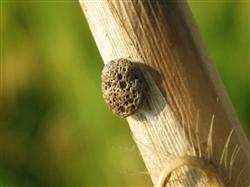
Sheath blight mainly relies on sclerotia to overwinter in rice fields. After winter and spring, by the time of early rice transplanting, generally 60-70% of the overwintering sclerotia can germinate. The number of sclerotia falling in the field has a certain relationship with disease incidence. In fields with severe disease in the previous year or previous season, the sclerotia falling in the field are all lighter than water and can float with the water for a long time. After the rice field is irrigated, removing the sclerotia floating on the water surface can reduce the source of primary infection and effectively reduce the disease incidence in the early stage of rice.
The removal method is to properly deepen the water layer after the field surface is leveled, then use tools such as a dustpan to scoop up the floating debris and sclerotia on the water surface, carry them away from the rice field, and bury them deeply or dry them and burn them.
2. Control method through fertilizer and water management:
Strengthen fertilizer and water management to improve the disease resistance of rice seedlings. Applying nitrogen fertilizer too late or too heavily and long-term deep water irrigation can easily cause the stems and leaves of rice seedlings to be soft and tender green, with severe closure, thereby reducing disease resistance and aggravating the occurrence of sheath blight.
Therefore, the following three principles should be grasped in fertilization strategy:
First, attach importance to base fertilizer and apply more farmyard manure and organic fertilizer. Generally, the amount of base fertilizer should account for 60% of the total fertilization amount.
Second, the three elements of nitrogen, phosphorus, and potassium should be reasonably combined, and especially the amount of nitrogen fertilizer applied must not be excessive.
Third, topdressing should be early and appropriate, and should be applied according to the method of "heavy at the front, controlled in the middle, and supplemented later." Nitrogen fertilizer must not be applied too late, so as to avoid causing the rice seedlings to remain green and late-maturing and leading to a major outbreak of sheath blight.
In water management, implement the irrigation method of shallow water, exposure, drying, and living water to resolve the contradiction between water and air in the soil. During the tillering stage of rice, implement frequent shallow water irrigation and appropriately expose the field to facilitate toxin discharge and increased aeration, promoting root growth and strong tillers; at the end of tillering, dry the field at the appropriate time and to an appropriate degree to control ineffective tillering and inhibit excessive growth of stems and leaves; after entering the booting stage, implement living water irrigation; during the grain-filling and ripening stage, insist on alternating dry and wet conditions to promote clean and healthy growth of rice seedlings, free from disease until maturity.
3. Chemical control method:
The occurrence of rice sheath blight generally develops slowly in the early stage and rises rapidly in the later stage. Therefore, field investigation should be strengthened during the peak tillering stage of early rice. When high-temperature and high-humidity weather occurs and the rate of diseased hills in the field is about 30%, chemical control should be applied immediately.
For chemicals, Jinggangmycin powder can be selected at 1 kg per mu or Jinggangmycin aqueous solution at 0.2 kg mixed with 50 kg of water, and sprayed 2-3 times consecutively according to the degree of disease and weather conditions. The growth period of late rice is short, and the time from the initial occurrence of sheath blight to its outbreak is generally about half a month.
Therefore, for double-cropping late rice, it is advisable to apply the chemical twice, generally once at the jointing and booting stage, and once again after 7 days.
In view of the fact that sheath blight extends upward from the lower part of diseased plants, spraying should focus on the middle and lower parts of the rice plants to achieve good results.
When the disease is relatively severe, 10% mepronil emulsifiable concentrate can be selected at 250 ml per 667 m2 or 25% validamycin wettable powder at 50-70 g per 667 m2, mixed with 75 L of water for spraying, with good effect and long efficacy.
You can choose 77% Hufengan (copper hydroxide) wettable powder at 700 times dilution, or Lubang 98 rice-specific formula at 600 times dilution, or 25% triadimefon wettable powder at 100 g, mixed with 75 L of water, and apply once each at the beginning of booting and the end of booting. The control effects on the rate of diseased hills, rate of diseased plants, and severity of lesions on functional leaf sheaths are all very significant, effectively protecting functional leaves.
You can also choose 25% propiconazole emulsifiable concentrate at 2000 times dilution and apply it once at the booting stage of rice to effectively control rice sheath blight, sheath rot, rice false smut, and rice kernel smut. It can also concurrently control multiple diseases in the middle and late stages of rice.
Get more rice planting techniques
Click to get more food crop planting techniques