What are the methods for storing cotton seeds in winter?
How should cotton seeds be stored in winter? What should be noted? Please provide methods. For winter cotton seed storage methods, refer to the following list: 1. Preparation of cotton seeds. First, select plump and mature cotton seeds. Plump and mature cotton seeds have a dense and hard seed coat structure, with a waxy outer layer that can defend against the influence of external temperature and humidity. The seed coat contains about 7.60% tannic acid substances, which have a certain antibacterial effect and good storability. Immature cotton seeds do not store well.
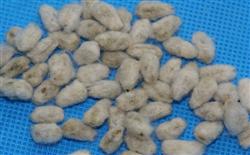 How should cotton seeds be stored in winter? What should be noted? Please provide methods.
For winter cotton seed storage methods, refer to the following list:
1. Preparation of cotton seeds. First, select plump and mature cotton seeds. Plump and mature cotton seeds have a dense and hard seed coat structure, with a waxy outer layer that can defend against the influence of external temperature and humidity. The seed coat contains about 7.60% tannic acid substances, which have a certain antibacterial effect and good storability. Immature cotton seeds do not store well.
Therefore, cotton seeds from bolls picked before frost should be selected for storage as seed. Next, remove damaged seeds, moldy and rotten seeds, diseased and insect-damaged seeds, and other unhealthy cotton seeds. Strictly control the indicators for putting cotton seeds into storage.
The safety standards for putting cotton seeds into storage are: moisture content not exceeding 11%-12%, purity not lower than 99.5%, and germination rate above 80%. If any one of these three indicators is not met, the cotton seeds are unqualified and cannot be put into storage.
2. Preparation of the warehouse. First, conduct a comprehensive inspection of the warehouse to determine whether the doors and windows close flexibly, whether the heat insulation and sealing effects are intact, and whether the instruments for monitoring warehouse temperature and humidity can work normally. Next is clearing the warehouse and disinfection. Clearing the warehouse and disinfection are the basis for preventing variety mixing and the breeding of diseases and insects. Clearing the warehouse not only removes all cotton seeds of different varieties, impurities, garbage, and so on from the warehouse, but also cleans warehouse tools, conveying pipes, and removes weeds outside the warehouse. For empty warehouse disinfection, trichlorfon or dichlorvos and similar treatments can be used.
Precautions for cotton seed storage:
Humidity inspection. After the beginning of winter, when the moisture content is below 11%, inspect once every 5 to 10 days. When it is below 12%, inspect every day. Humidity inspection should be carried out at fixed times and fixed points in different directions and different layers within the warehouse.
Ventilation must be determined according to the temperature and relative humidity inside and outside the warehouse. When both the outside temperature and humidity are lower than those inside the warehouse, it is the best time for ventilation; at this time, ventilation can both cool down and remove moisture. When the outside temperature is the same as the inside temperature and the outside humidity is lower than the inside humidity, or the humidity inside and outside the warehouse is basically the same, or the outside temperature is lower than the inside temperature, ventilation can also be carried out. The former is mainly for dissipating moisture, while the latter is mainly for cooling.
Regularly test cotton seed quality. During cotton seed storage, cotton seed quality should be checked regularly in order to promptly understand the storage condition of the cotton seeds. Testing usually includes cotton seed germination rate tests, moisture determination, and free fatty acid determination. If problems are found, they should be solved promptly.
Fire prevention. Cotton seeds have short fuzz and a high oil content, so they are prone to burning when they encounter a source of ignition. Therefore, sources of ignition must be strictly kept away from cotton seed warehouses, and flammable materials should not be piled around the warehouse.
Click to get more cotton cultivation techniques
Click to get more grain crop cultivation techniques