How do you grow celery in summer so it grows well?
How to grow celery well in summer? Please give a detailed introduction to the method. Summer celery is sown in early May, transplanted in early to mid-June, and begins to be harvested in early August. Summer celery grows during a period of high temperatures, when pest and disease damage gradually becomes more serious, and premature senescence easily occurs, causing the celery to develop curled leaves and shrunken leaves, with poor marketable characteristics, seriously affecting the celery...
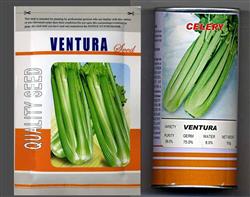 How to grow celery well in summer? Please give a detailed introduction to the method
Summer celery is sown in early May, transplanted in early to mid-June, and begins to be harvested in early August. Summer celery grows during a period of high temperatures, when pest and disease damage gradually becomes more serious, and premature senescence easily occurs, causing the celery to develop curled leaves and shrunken leaves, with poor marketable characteristics, seriously affecting the celery's time to market and its marketable appearance quality. To grow celery in summer, you can refer to the following methods:
Select suitable varieties:The requirements for varieties in summer cultivation are high temperature tolerance, fast growth, few fibers, high yield, and so on. Currently, the varieties that can meet these requirements include Italian celery, Xintai celery, and Qingbaigeng celery.
Sow at the right time and raise seedlings:Generally sown in early May, the market period falls right within the "autumn slack" season, giving good returns. Before sowing, sun-dry the seeds and remove impurities, then soak the sun-dried seeds for 12-24 hours, wash them, take them out, wrap them in gauze, and place them in a cool place to germinate or put them in the refrigerator to germinate. After two days and nights, take them out, air-dry them, mix in a small amount of cabbage seeds, and sow them into the seedling bed. After lightly firming with the foot, cover with straw curtains or a shade net. Use 1.5-2.5 kg of seed per mu, which can provide seedlings for 2000-2500 sq m. After emergence, remove the straw curtains or shade net and carry out thinning, removing diseased and pest-damaged seedlings and mixed seedlings. When the seedlings grow to 15 cm, final thinning is done.
Transplanting and field management
1. Transplant at the right age: transplant when the seedling age reaches 30-40 days and the seedlings are 17-20 cm tall. The planting spacing is 10 cm x 10 cm. When transplanting, water thoroughly to settle the roots, and water again the next day to help the plants establish.
2. Supply fertilizer at the right time: 40-50 days after the seedlings establish is the period of new root formation. Generally apply fertilizer twice; the first time topdress with 15-18 kg each of nitrogen and potassium fertilizer, and the second time topdress with 14-15 kg each of nitrogen and potassium fertilizer. Entering the middle and late stages, the root mass has already developed in large amounts, and the aboveground leaf stalks have grown tall and thick. At this time, if the plants are weak and the leaf color changes from green to yellow, you can spray ammonium nitrate, applying 4-5 kg of ammonium nitrate per mu mixed with water. If the soil is deficient in boron, boron should also be applied.
3. Supply water in time to keep moist: for water supply, irrigate frequently but do not flood-irrigate. Keep the field soil always in a moist state. Especially in the middle and late stages of celery growth, water must not be cut off, otherwise the leaf stalks will age and become pithy. For irrigation, fill the ditch about halfway, and drain after the bed surface is moistened; avoid flood irrigation, so as to prevent the spread of disease. If rainy weather occurs, clear the bed ditches so that the field dries after the rain stops.
4. Control pests and diseases: the main pests and diseases that occur include red spider mites, aphids, viral disease, and so on. To control red spider mites, use 20% dicofol 1000-fold solution; to control aphids, use 40% dimethoate 800-1000-fold solution; to control viral disease, use 20% Virus A 500-fold solution.
5. Standard harvesting: summer celery generally goes on the market in August-September, which is right in the "autumn slack" period with good prices. When the celery plant height approaches the "standard," harvest promptly, so as to obtain good returns through being "early." When the market is stable, harvest according to the "standard," so as to obtain high income through high yield. The standard is: celery height about 90 cm.
Click to get more celery growing techniques
Click to get more vegetable growing techniques